


In short
Oakmoss absolute is extracted from the lichen Evernia prunastri. It is the defining base note of the chypre family.
What Oakmoss Absolute smells like
Oakmoss absolute has an earthy top with hints of pine over moss, woods, decomposing leaves and moist earth, in a supplier's description, and is traditionally a fixative, especially in chypres. A glossary calls it phenolic and astringent, closer to wet bark than to anything floral, with a leathery bitterness and a faint marine-iodine edge like seaweed on rock. Forum perfumers find it soft, salty and slightly sweet, or bitter like steeped herbal tea. IFRA restricts it and limits atranol and chloroatranol, which form during extraction.
- Leading note
- Damp earthy moss
- Supporting facets
- Phenolic, inky, leathery bitterness, forest floor
- Faint facets
- Marine, seaweed
- Character
- Deep, damp, tenacious
What makes Oakmoss Absolute distinctive
Wet bark, forest floor and a breath of sea: the base that defined the chypre.
How Oakmoss Absolute is used
Used as a base and fixative in chypre, fougère and woody compositions, within IFRA limits.
Typical role: backbone (used in large proportions as a structural material of an accord); fixative (slow to evaporate; helps a blend last and holds lighter notes).
How Oakmoss Absolute differs from similar materials
- Treemoss Absolute
- Arctander, as quoted, finds treemoss different in odour and less aromatic than true oakmoss; treemoss is piney, drier and tarrier. (compared directly by a cited source)
- Methyl Atrarate
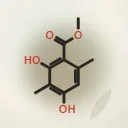
- Methyl atrarate is much less odorous, a cleaner, drier mossy note that perfumers find lacks oakmoss's complexity. (compared directly by a cited source)
- Isobutyl Quinoline
- The quinolines carry an oakmoss-like facet inside a powerful leather; oakmoss is the earthy lichen itself.
An asterisk marks a difference that a cited source states directly. The others compare the published descriptions of each material. Smell varies with grade, supplier and dilution; compare them side by side on blotters before substituting one for another.
Formulation considerations
Restricted because of its allergenic constituents atranol and chloroatranol; use low-atranol qualities that meet the current IFRA Standard. Oakmoss extract is a declarable EU allergen.
Identity and classification
- Type
- Absolute
- Origin
- Natural
- Odour family
- Chypre / Green
- Note position
- Base note
- Physical form at room temperature
- Viscous liquid
- Also known as
- Evernia prunastri extract
- Botanical source
- Evernia prunastri (L.) Ach.
- CAS number
- 9000-50-4
The CAS number was checked on 19 October 2026 against a PubChem substance record that gives it for this material. A natural material is a mixture, so it has no single formula; its composition varies with origin and processing.
Safety and compliance
The IFRA Standards Library lists a Standard covering Oakmoss Absolute:
- "Oakmoss extracts" — type not stated in the library listing, 49th Amendment, published 2020-01
Limits differ by product category and are set out in the Standard itself; this page does not reproduce them. The list above reflects the library as read on 19 October 2026.
Oakmoss Absolute is one of the 26 fragrance allergens listed individually in Annex III of the EU Cosmetics Regulation (label name: Evernia prunastri extract), which must be named on cosmetic labels above 0.001% in leave-on and 0.01% in rinse-off products. Regulation (EU) 2023/1545 extended the list; see the fragrance allergens list.
This page is general information, not a safety assessment or a specification. Confirm identity, composition, IFRA status and allergen content from your supplier's documents for the lot you hold.
Materials it works with
-
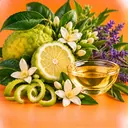
 Bergamot Oil (Expressed)
Essential oil · Citrus / Aromatic — citrus, zesty, floral, tea-like
-
 Labdanum Absolute
Absolute · Amber / Leather — amber, balsamic, leathery, animalic
-

 Patchouli Oil
Essential oil · Woody / Chypre — earthy, woody, camphoraceous, dark
-
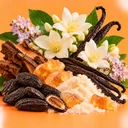
 Coumarin
Aroma chemical · Powdery / Fougère — hay, sweet, almond, tobacco
-

 Treemoss Absolute
Absolute · Chypre / Woody — mossy, woody, piney, earthy
-

 Methyl Atrarate
Aroma chemical · Chypre / Woody — mossy, earthy, woody, phenolic
Oakmoss Absolute is also suggested as a partner on the pages for 1-Octen-3-one, Cistus Absolute, Cypress Absolute, Galbanum Resinoid, Hercolyn D and Lavandin Absolute.
Used in formulas and accords
Used in 20 published formulas
Oakmoss Absolute is an ingredient in 14 perfume formulas, 3 accords and 3 bases in the Formula & Accord Library.
Community formulas
RUŌOD House Originals
Original compositions by RUŌOD House.
Further reading
Questions about Oakmoss Absolute
Is Oakmoss Absolute natural or synthetic?
Oakmoss Absolute is natural. It is a concentrated extract obtained from plant material with a solvent, then washed with ethanol to remove the waxes.
What is the CAS number of Oakmoss Absolute?
9000-50-4, the registry number for the absolute as a substance rather than a single molecule. It was checked against PubChem on 19 October 2026.
Which published formulas use Oakmoss Absolute?
Oakmoss Absolute is used in 20 published formulas in the RUŌOD Lab Formula & Accord Library, including 1882 Naturals, Anise Ink and Bitter Bridle. Each is listed with a link under "Used in formulas and accords" on this page.
Is Oakmoss Absolute covered by an IFRA Standard?
Yes. The IFRA Standards Library lists a Standard covering it: "Oakmoss extracts" — type not stated in the library listing, 49th Amendment. The limits depend on the product category; read the Standard itself before formulating.
Sources
- PubChem — substance 135334490, checked 19 October 2026.
- IFRA — Standards Library, read 19 October 2026.
- EUR-Lex — Regulation (EC) No 1223/2009, Annex III.
- Lush — Oakmoss absolute — published perfumery reference.
- Premiere Peau — Oakmoss — published perfumery reference.
- IFRA Standard — Oakmoss extracts — published perfumery reference.
- Basenotes — Oakmoss (forum) — published perfumery reference.
- Olfactory profile: the RUŌOD Lab team's synthesis of the published descriptions above, reviewed 21 October 2026. Evidence: more than one published description. Classification and the short description: revision 1. Descriptions of odour are judgement, not measurement.