
In short
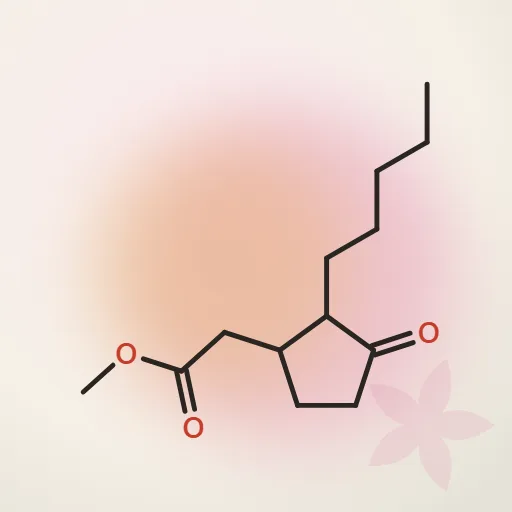
Hedione is the trade name for methyl dihydrojasmonate, a jasmine-related molecule introduced by Firmenich in the 1960s. It gives a transparent, airy jasmine-citrus radiance and is used in very large amounts in modern perfumery.
What Hedione smells like
Hedione (methyl dihydrojasmonate) is, in Firmenich's words, an elegant, transparent floral jasmine note with a citrus freshness. On its own it is quiet — a faint green-citrus shimmer that some describe as barely registering — but it gives lift, space and diffusion to everything around it, which is why it is used in very large proportions. It occurs in jasmine at under a percent yet accounts for much of the flower's airy character. Its strength depends on its isomers: the high-cis grade, Hedione HC, is far more powerful and is described as reminiscent of magnolia.
- Leading note
- Airy jasmine
- Clear facets
- Citrus
- Supporting facets
- Green tea-like
- Faint facets
- Red fruit
- Character
- Transparent, airy, diffusive, soft
What makes Hedione distinctive
Air rather than smell. It does less on its own than any other jasmine material and more for a composition: it opens and lightens what surrounds it, where methyl jasmonate is the sweet, powerful jasmine itself.
Concentration and dilution
Faint on its own; its effect shows in a blend, where it adds radiance even at high levels.
Where the descriptions disagree: How strong it is alone is disputed — from near-odourless to a clear floral-citrus; isomer content explains much of it.
How Hedione is used
Used at very high levels in fine fragrance, from fresh citrus colognes to florals and chypres, for transparency, lift and a jasmine radiance.
Typical role: backbone (used in large proportions as a structural material of an accord); blender (smooths the joins between other materials); lift (adds diffusion and radiance, especially at the top).
How Hedione differs from similar materials
- Methyl Jasmonate
- A trade listing describes Hedione as an economical substitute for methyl jasmonate without its overwhelming sweetness and diffusive power; methyl jasmonate is the richer, more natural jasmine. (compared directly by a cited source)
- Jasmine Absolute (Grandiflorum)
- Jasmine absolute is lush, heady and indolic; Hedione is the airy, transparent fraction of that character on its own.
- Jasmal
- Jasmal is a herbaceous, tea-like jasmine with an oily, slightly mushroomy side; Hedione is airier, citrus-fresh and far more diffusive.
- Veloutone
- Firmenich describes Veloutone as a by-product of Hedione's synthesis; Veloutone is fruitier — peach-apricot and lactonic — where Hedione is a transparent, airy jasmine. (compared directly by a cited source)
- Kharismal
- Kharismal is IFF's trade name for the same molecule, methyl dihydrojasmonate. Its isomer ratio is not in the sources read, so it is kept as a separate material rather than assumed to be the same grade as Hedione.
An asterisk marks a difference that a cited source states directly. The others compare the published descriptions of each material. Smell varies with grade, supplier and dilution; compare them side by side on blotters before substituting one for another.
Formulation considerations
Stable and easy to work with. Quality varies with the cis isomer content; record which grade you use.
Identity and classification
- Type
- Aroma chemical
- Origin
- Synthetic
- Odour family
- Floral / Citrus
- Note position
- Heart note
- Physical form at room temperature
- Liquid
- Also known as
- Methyl dihydrojasmonate, MDJ
- CAS number
- 24851-98-7
- Molecular formula
- C13H22O3
- Molecular weight
- 226.31 g/mol
- IUPAC name
- methyl 2-(3-oxo-2-pentylcyclopentyl)acetate
The CAS number, formula and molecular weight are taken from PubChem compound 102861, whose own record lists this CAS number; checked 19 October 2026.
Safety and compliance
Hazard classification of the neat substance, as PubChem summarises it, read 26 October 2026. Companies notifying the ECHA C&L Inventory report it as not meeting the GHS hazard criteria (1,818 of 1,820 reports). Unless it is harmonised, this is the notifiers' own classification, not a binding one.
This page is general information, not a safety assessment or a specification. Confirm identity, composition, IFRA status and allergen content from your supplier's documents for the lot you hold.
Materials it works with
-
 Bergamot Oil (Expressed)
Essential oil · Citrus / Aromatic — citrus, zesty, floral, tea-like
-

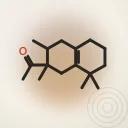 Iso E Super
Aroma chemical · Woody / Amber — woody, velvety, amber, cedar
-

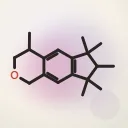 Galaxolide
Aroma chemical · Musky / Floral — musky, clean, sweet, floral
-
 Jasmine Absolute (Grandiflorum)
Absolute · Floral / Animalic — jasmine, floral, indolic, fruity
-

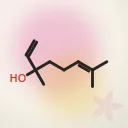 Linalool
Aroma chemical · Floral / Citrus — floral, fresh, woody, citrus
-

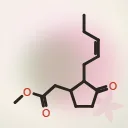 Methyl Jasmonate
Aroma chemical · Floral / Green — jasmine, floral, herbal, sweet
Hedione is also suggested as a partner on the pages for Amylcinnamyl Alcohol, Benzyl Isobutyrate, Benzylacetone, Berryflor, Cascalone and Cetalox.
Used in formulas and accords
Used in 94 published formulas
Hedione is an ingredient in 47 perfume formulas, 43 accords and 4 bases in the Formula & Accord Library.
Community formulas
RUŌOD House Originals
Original compositions by RUŌOD House.
Further reading
Questions about Hedione
Is Hedione natural or synthetic?
Hedione is synthetic — it is made by chemical synthesis.
What is the CAS number of Hedione?
24851-98-7. It was checked against PubChem on 19 October 2026.
Which published formulas use Hedione?
Hedione is used in 94 published formulas in the RUŌOD Lab Formula & Accord Library, including Açaí Accord, Aperol Spritz Accord and Apricot Dust. Each is listed with a link under "Used in formulas and accords" on this page.
Sources
- PubChem — compound 102861, checked 19 October 2026.
- PubChem — GHS classification (the ECHA C&L Inventory notifications and any harmonised EU entry), read 26 October 2026.
- The Good Scents Company — methyl dihydrojasmonate (with Firmenich's descriptions) — odour database.
- University of Bristol — Molecule of the Month: Hedione — published literature.
- Wikipedia — Methyl dihydrojasmonate — published perfumery reference.
- Premiere Peau — Hedione — published perfumery reference.
- Olfactory profile: the RUŌOD Lab team's synthesis of the published descriptions above, reviewed 20 October 2026. Evidence: several independent published descriptions, which agree. Classification and the short description: revision 1. Descriptions of odour are judgement, not measurement.