


In short
Geranium oil is steam-distilled from the leaves of Pelargonium graveolens. It has a rosy, minty-green character and is one of the most used natural rose-like materials.
What Geranium Oil smells like
Geranium oil is rosy and green, with a minty, slightly fruity and metallic facet, and its qualities differ noticeably by origin. Suppliers describe Bourbon geranium as the rich, sweet rose type with a minty hint; Egyptian as sharper and fresher, with a more obvious citrus aspect (Firmenich: floral, fresh, sweet, with a fruity, rose note); and Chinese as the sharpest and greenest, with herbal undertones. Early harvests are greener, later ones rosier. Rose oxide and citronellyl formate are among the constituents that give it its geranium character.
- Leading note
- Rosy green leaf
- Supporting facets
- Minty, metallic
- Faint facets
- Fruity, citrus (Egyptian)
- Character
- Fresh, green, sharp, rosy
What makes Geranium Oil distinctive
Rose with a leaf and a mint sprig: the minty, metallic green that separates it from rose oil, and from palmarosa's plain rose-grass.
Where the descriptions disagree: Sources disagree whether Egyptian geranium is closer to Bourbon or more citrus.
How Geranium Oil is used
Used in rose, fougère and fresh compositions, often to extend or support rose; Bourbon is the most rose-like, Chinese the greenest and cheapest.
Typical role: backbone (used in large proportions as a structural material of an accord); blender (smooths the joins between other materials).
How Geranium Oil differs from similar materials
- Rose Oxide
- Rose oxide is the oil's hard, metallic green on its own; the oil adds a rosy, minty body.
- Peonile
- Peonile is a simpler, stable rose-geranium synthetic; the oil is greener, mintier and more complex.
- Citronellyl Formate
- A glossary notes Bourbon geranium is richer in citronellyl formate; the ester alone is the leafy rose-geranium note without the oil's mint. (compared directly by a cited source)
- Palmarosa Oil
- Palmarosa is less complex — rose and grass with no minty edge; geranium is greener and mintier.
- Geranium Absolute
- Geranium absolute is described as softer and richer, leafy-sweet with a persistent rose undertone.
An asterisk marks a difference that a cited source states directly. The others compare the published descriptions of each material. Smell varies with grade, supplier and dilution; compare them side by side on blotters before substituting one for another.
Formulation considerations
Rich in citronellol and geraniol, both declarable allergens with IFRA Standards; take their levels from the supplier's composition.
Identity and classification
- Type
- Essential oil
- Origin
- Natural
- Odour family
- Floral / Green
- Note position
- Heart note
- Physical form at room temperature
- Liquid
- Also known as
- Rose geranium oil
- Botanical source
- Pelargonium graveolens L'Hér.
- CAS number
- 8000-46-2
The CAS number was checked on 19 October 2026 against a PubChem substance record that gives it for this material. A natural material is a mixture, so it has no single formula; its composition varies with origin and processing.
Safety and compliance
This page is general information, not a safety assessment or a specification. Confirm identity, composition, IFRA status and allergen content from your supplier's documents for the lot you hold.
Materials it works with
-

 Rose Oil (Rosa damascena)
Essential oil · Floral / Fruity — rose, honeyed, spicy, fresh
-

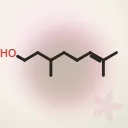 Citronellol
Aroma chemical · Floral / Green — rosy, fresh, citrus, waxy
-

 Lavender Oil
Essential oil · Aromatic / Floral — lavender, herbal, floral, fresh
-

 Patchouli Oil
Essential oil · Woody / Chypre — earthy, woody, camphoraceous, dark
-

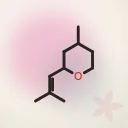 Rose Oxide
Aroma chemical · Floral / Metallic — metallic, green, geranium, rosy
Geranium Oil is also suggested as a partner on the pages for 4,5-Dimethyl-2-isobutylthiazole, Benzophenone, Geranium Absolute, Geranyl Formate, Isomenthone and Palmarosa Oil.
Used in formulas and accords
Used in 15 published formulas
Geranium Oil is an ingredient in 15 perfume formulas in the Formula & Accord Library.
RUŌOD House Originals
Original compositions by RUŌOD House.
Further reading
Questions about Geranium Oil
Is Geranium Oil natural or synthetic?
Geranium Oil is natural. It is a volatile oil obtained from plant material by steam distillation or, for citrus peels, by cold expression.
What is the CAS number of Geranium Oil?
8000-46-2, the registry number for the essential oil as a substance rather than a single molecule. It was checked against PubChem on 19 October 2026.
Which published formulas use Geranium Oil?
Geranium Oil is used in 15 published formulas in the RUŌOD Lab Formula & Accord Library, including Bitter Bridle, Bright Wolf and Fern Signal. Each is listed with a link under "Used in formulas and accords" on this page.
Sources
- PubChem — substance 347832439, checked 19 October 2026.
- Premiere Peau — Geranium — published perfumery reference.
- dsm-firmenich — Geranium Egypt EO — manufacturer's description.
- Fraterworks — geranium oil, China — distributor's description.
- De Hekserij — EO Geranium Egypt — distributor's description.
- Olfactory profile: the RUŌOD Lab team's synthesis of the published descriptions above, reviewed 24 October 2026. Evidence: more than one published description. Classification and the short description: revision 1. Descriptions of odour are judgement, not measurement.