

In short
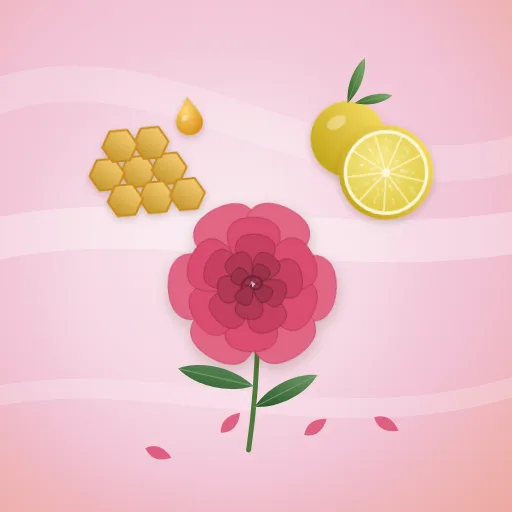
Rose oil, or rose otto, is steam-distilled from the flowers of Rosa × damascena, mainly in Bulgaria and Turkey. It takes several tonnes of petals to make a kilogram, which makes it one of the most precious perfumery materials.
What Rose Oil (Rosa damascena) smells like
Rose oil (rose otto), steam-distilled from the petals, is the fresher, lighter and more delicate face of rose, sometimes slightly green or herbaceous. Its floral body comes from citronellol and geraniol, with phenylethyl alcohol largely lost to the distillation water, while trace rose ketones such as beta-damascenone carry much of its diffusion. Its character varies with origin and harvest year, and it is often adulterated — geranium oil, geraniol, eugenol and phenylethyl alcohol are common cutting agents.
- Leading note
- Fresh, deep rose
- Supporting facets
- Honeyed, lemony
- Faint facets
- Spicy, green, herbaceous
- Character
- Fresh, delicate, radiant, complex
What makes Rose Oil (Rosa damascena) distinctive
Freshness and radiance: lighter than the absolute, with the lemony, spicy and green facets of citronellol, geraniol and the rose ketones rather than the absolute's honeyed weight.
How Rose Oil (Rosa damascena) is used
Used in fine fragrance as the most prized natural rose; its price, and adulteration, make quality checks important.
Typical role: backbone (used in large proportions as a structural material of an accord); modifier (used in small amounts to change the character of a blend).
How Rose Oil (Rosa damascena) differs from similar materials
- Rose Absolute (Rosa centifolia)
- The absolute is heavier, richer and more honeyed; the otto is fresher, lighter and more delicate. (compared directly by a cited source)
- beta-Damascenone
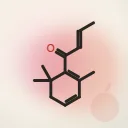
- Beta-damascenone is a trace in rose oil but, with its tiny threshold, one of its most important odorants — the baked-apple, honeyed glow without the citronellol and geraniol body. (compared directly by a cited source)
- Guaiac Wood Oil
- Guaiac wood has been used to adulterate rose oil for its tea-rose note, but is a smoky, balsamic wood. (compared directly by a cited source)
- Rose Absolute (Rosa damascena)
- The damask rose absolute is solvent-extracted, deeper and mellower, with spice and honey.
An asterisk marks a difference that a cited source states directly. The others compare the published descriptions of each material. Smell varies with grade, supplier and dilution; compare them side by side on blotters before substituting one for another.
Formulation considerations
Rose otto can partly solidify in the cold because of its stearoptene (paraffin waxes); warm it gently before weighing. It naturally contains citronellol, geraniol and eugenol, which count toward allergen declarations.
Identity and classification
- Type
- Essential oil
- Origin
- Natural
- Odour family
- Floral / Fruity
- Note position
- Heart note
- Physical form at room temperature
- Liquid
- Also known as
- Rose otto, Bulgarian rose oil
- Botanical source
- Rosa × damascena Herrm.
- CAS number
- 8007-01-0
The CAS number was checked on 19 October 2026 against a PubChem substance record that gives it for this material. A natural material is a mixture, so it has no single formula; its composition varies with origin and processing.
Safety and compliance
This page is general information, not a safety assessment or a specification. Confirm identity, composition, IFRA status and allergen content from your supplier's documents for the lot you hold.
Materials it works with
-

 Rose Absolute (Rosa centifolia)
Absolute · Floral / Fruity — rose, honeyed, jammy, waxy
-

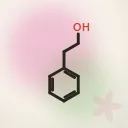 Phenylethyl Alcohol
Aroma chemical · Floral / Green — rose, honeyed, soft, floral
-

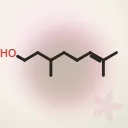 Citronellol
Aroma chemical · Floral / Green — rosy, fresh, citrus, waxy
-

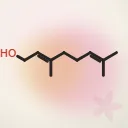 Geraniol
Aroma chemical · Floral / Citrus — rosy, sweet, citrus, fresh
-

 beta-Damascenone
Aroma chemical · Fruity / Floral — fruity, cooked apple, plum, rose
-

 Patchouli Oil
Essential oil · Woody / Chypre — earthy, woody, camphoraceous, dark
Rose Oil (Rosa damascena) is also suggested as a partner on the pages for Palmarosa Oil, Phenoxyethyl Isobutyrate, Phenylethyl Benzoate, Phenylethyl Cinnamate, Phenylethyl Salicylate and Pomarose.
Used in formulas and accords
Used in 6 published formulas
Rose Oil (Rosa damascena) is an ingredient in 6 perfume formulas in the Formula & Accord Library.
RUŌOD House Originals
Original compositions by RUŌOD House.
Further reading
Questions about Rose Oil (Rosa damascena)
Is Rose Oil (Rosa damascena) natural or synthetic?
Rose Oil (Rosa damascena) is natural. It is a volatile oil obtained from plant material by steam distillation or, for citrus peels, by cold expression.
What is the CAS number of Rose Oil (Rosa damascena)?
8007-01-0, the registry number for the essential oil as a substance rather than a single molecule. It was checked against PubChem on 19 October 2026.
Which published formulas use Rose Oil (Rosa damascena)?
Rose Oil (Rosa damascena) is used in 6 published formulas in the RUŌOD Lab Formula & Accord Library, including Cardamom Crema, Galbanum Courtyard and Guaiac Rose. Each is listed with a link under "Used in formulas and accords" on this page.
Sources
- PubChem — substance 441080346, checked 19 October 2026.
- Premiere Peau — Rose — published perfumery reference.
- Basenotes — rose essential oil discussion (forum) — published perfumery reference.
- Olfactory profile: the RUŌOD Lab team's synthesis of the published descriptions above, reviewed 24 October 2026. Evidence: more than one published description. Classification and the short description: revision 1. Descriptions of odour are judgement, not measurement.