
In short
Pomarose is a trade name for an unsaturated ketone with a powerful fruity-rose odour. Its character sits between apple, plum and the rose ketones.
What Pomarose smells like
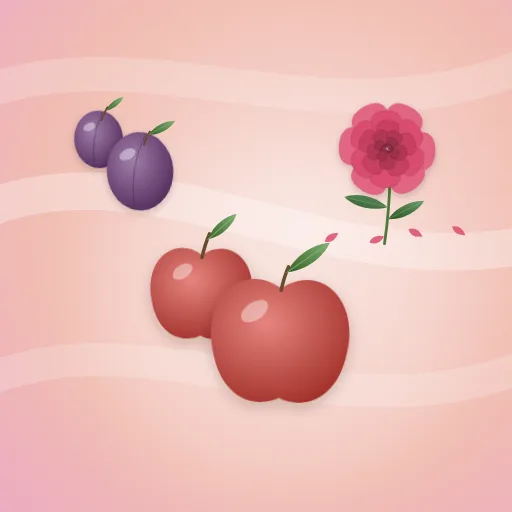
Pomarose (Givaudan) has, per Wikipedia, a powerful fruity rose odour with nuances of apples, plums and raisins, almost entirely due to one of its stereoisomers, and a very low odour threshold. The Good Scents Company lists fruity rose, dried apple, plum, raisin and dried fruit. Descriptions of its apple differ — cooked, dried, green or pear-like. It was discovered from a trace component with a damascone odour, and perfumers value it for a damascone-like effect with fewer restrictions.
- Leading note
- Fruity rose
- Clear facets
- Dried apple
- Supporting facets
- Plum, raisin
- Character
- Fruity, powerful, warm, jammy
What makes Pomarose distinctive
Dried fruit and rose: a damascone-type effect built around apple, plum and raisin, usable where damascones are tightly capped.
Where the descriptions disagree: Its apple is described variously as cooked, dried, green-tart or pear-like.
How Pomarose is used
Used in fruity-rose and fruity compositions as a powerful damascone-like note.
Typical role: modifier (used in small amounts to change the character of a blend).
How Pomarose differs from similar materials
- beta-Damascenone
- Damascenone is warmer, honeyed and baked; Pomarose is a dried-fruit rose with apple, plum and raisin.
- alpha-Damascone
- Perfumers use Pomarose for a damascone-like effect with fewer restrictions; alpha-damascone is greener, with mint and blackcurrant. (compared directly by a cited source)
An asterisk marks a difference that a cited source states directly. The others compare the published descriptions of each material. Smell varies with grade, supplier and dilution; compare them side by side on blotters before substituting one for another.
Formulation considerations
Covered by an IFRA Standard; check the limit for your product category. Very potent; dose from dilution.
Identity and classification
- Type
- Aroma chemical
- Origin
- Synthetic
- Odour family
- Fruity / Floral
- Note position
- Heart note
- Physical form at room temperature
- Liquid
- Also known as
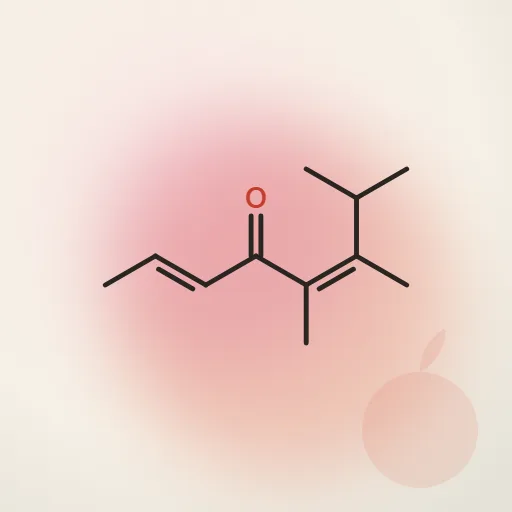
- (2E,5Z)-5,6,7-Trimethylocta-2,5-dien-4-one
- CAS number
- 357650-26-1
- Molecular formula
- C11H18O
- Molecular weight
- 166.26 g/mol
- IUPAC name
- (2E,5Z)-5,6,7-trimethylocta-2,5-dien-4-one
The CAS number, formula and molecular weight are taken from PubChem compound 11030204, whose own record lists this CAS number; checked 19 October 2026.
Safety and compliance
The IFRA Standards Library lists a Standard covering Pomarose:
- "2,5-Octadien-4-one, 5,6,7-trimethyl-, (2E)-" — Restriction, 51st Amendment, published 2023-06
Limits differ by product category and are set out in the Standard itself; this page does not reproduce them. The list above reflects the library as read on 19 October 2026.
This page is general information, not a safety assessment or a specification. Confirm identity, composition, IFRA status and allergen content from your supplier's documents for the lot you hold.
Materials it works with
-
 beta-Damascone
Aroma chemical · Fruity / Floral — fruity, rose, plum, blackcurrant
-

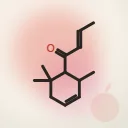 delta-Damascone
Aroma chemical · Fruity / Floral — fruity, rosy, plum, blackcurrant
-

 Rose Oil (Rosa damascena)
Essential oil · Floral / Fruity — rose, honeyed, spicy, fresh
-

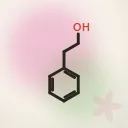 Phenylethyl Alcohol
Aroma chemical · Floral / Green — rose, honeyed, soft, floral
Used in formulas and accords
Used in 2 published formulas
Pomarose is an ingredient in 1 perfume formula and 1 accord in the Formula & Accord Library.
RUŌOD House Originals
Original compositions by RUŌOD House.
Further reading
Questions about Pomarose
Is Pomarose natural or synthetic?
Pomarose is synthetic — it is made by chemical synthesis.
What is the CAS number of Pomarose?
357650-26-1. It was checked against PubChem on 19 October 2026.
Which published formulas use Pomarose?
Pomarose is used in 2 published formulas in the RUŌOD Lab Formula & Accord Library: Bright Resin Accord and Citrus Censer. Each is listed with a link under "Used in formulas and accords" on this page.
Is Pomarose covered by an IFRA Standard?
Yes. The IFRA Standards Library lists a Standard covering it: "2,5-Octadien-4-one, 5,6,7-trimethyl-, (2E)-" — Restriction, 51st Amendment. The limits depend on the product category; read the Standard itself before formulating.
Sources
- PubChem — compound 11030204, checked 19 October 2026.
- IFRA — Standards Library, read 19 October 2026.
- Wikipedia — Pomarose — published perfumery reference.
- The Good Scents Company — plum odour category (Pomarose) — odour database.
- Basenotes — Pomarose substitute discussion (forum) — published perfumery reference.
- Olfactory profile: the RUŌOD Lab team's synthesis of the published descriptions above, reviewed 20 October 2026. Evidence: several independent published descriptions, which agree. Classification and the short description: revision 1. Descriptions of odour are judgement, not measurement.