
In short
alpha-Damascone is a rose ketone with a fruity, apple-rose character, greener and more apple-like than beta-damascone.
What alpha-Damascone smells like
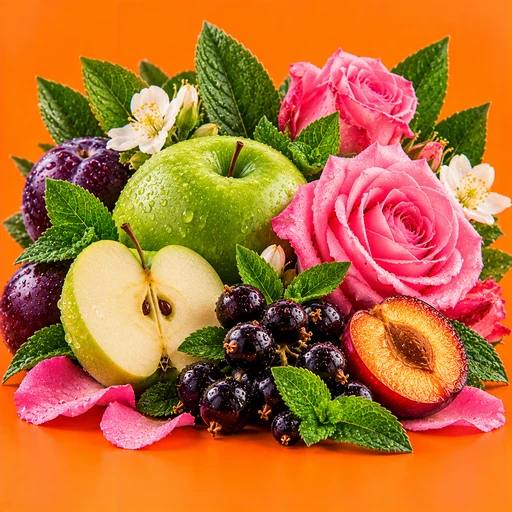
Alpha-damascone is an intensely fruity rose ketone. Firmenich describes a very complex odour of rose, apple, blackcurrant and mint with a rich plum undertone; a glossary calls it the cleaner, more floral damascone — rose petal and green apple skin with a metallic brightness the beta isomer lacks. Suppliers describe it as lighter and fruitier than beta-damascone. Like all rose ketones it is extremely potent and tightly restricted by IFRA.
- Leading note
- Fruity rose
- Clear facets
- Green apple
- Supporting facets
- Blackcurrant, minty
- Faint facets
- Plum
- Character
- Bright, fruity, fresh, powerful
What makes alpha-Damascone distinctive
The bright, green-apple damascone — fresher, cleaner and mintier than the darker beta isomer.
Concentration and dilution
Extremely potent; used in traces from a dilution.
How alpha-Damascone is used
Used in traces in rose, fruity-floral and fruity compositions; rose ketones are capped together by IFRA.
Typical role: modifier (used in small amounts to change the character of a blend).
How alpha-Damascone differs from similar materials
- beta-Damascone
- Suppliers describe beta as richer and deeper, with plum, blackcurrant preserve and tobacco; alpha is lighter, fruitier and greener, with apple and mint. (compared directly by a cited source)
- delta-Damascone
- Delta-damascone is darker and fruitier, with plum and blackcurrant; alpha is the greener, apple-and-mint damascone.
- Pomarose
- Pomarose is a damascone-like fruity rose with apple, plum and raisin, used partly because it is less restricted; alpha-damascone is greener and mintier. (compared directly by a cited source)
- Ethyl Safranate
- A distributor finds ethyl safranate very similar to the damascones (apple, rose) but sweeter and fruitier, with a saffron-spice and anise side. (compared directly by a cited source)
An asterisk marks a difference that a cited source states directly. The others compare the published descriptions of each material. Smell varies with grade, supplier and dilution; compare them side by side on blotters before substituting one for another.
Formulation considerations
Extremely potent; dose from a high dilution. Covered by the IFRA Standard on rose ketones.
Identity and classification
- Type
- Aroma chemical
- Origin
- Occurs in nature
- Odour family
- Fruity / Floral
- Note position
- Heart note
- Physical form at room temperature
- Liquid
- CAS number
- 43052-87-5
- Molecular formula
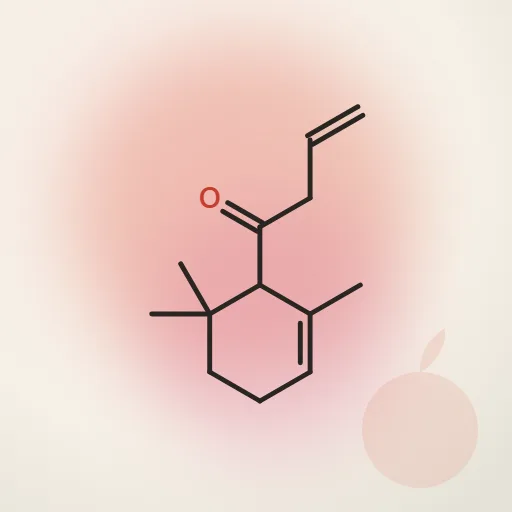
- C13H20O
- Molecular weight
- 192.3 g/mol
- IUPAC name
- 1-(2,6,6-trimethylcyclohex-2-en-1-yl)but-3-en-1-one
The CAS number, formula and molecular weight are taken from PubChem compound 520506, whose own record lists this CAS number; checked 19 October 2026.
Safety and compliance
The IFRA Standards Library lists a Standard covering alpha-Damascone:
- "Rose ketones" — Restriction, 49th Amendment, published 2020-01
Limits differ by product category and are set out in the Standard itself; this page does not reproduce them. The list above reflects the library as read on 19 October 2026.
Hazard classification of the neat substance, as PubChem summarises it, read 26 October 2026. Companies notifying the ECHA C&L Inventory classify it (396 reports): H317 may cause an allergic skin reaction (100% of reports); H302 harmful if swallowed (99.5% of reports). A skin sensitiser classification concerns handling the neat material and the dose in a finished product; the IFRA Standards, where they apply, set the limits. Unless it is harmonised, this is the notifiers' own classification, not a binding one.
This page is general information, not a safety assessment or a specification. Confirm identity, composition, IFRA status and allergen content from your supplier's documents for the lot you hold.
Materials it works with
-
 beta-Damascone
Aroma chemical · Fruity / Floral — fruity, rose, plum, blackcurrant
-

 Rose Oil (Rosa damascena)
Essential oil · Floral / Fruity — rose, honeyed, spicy, fresh
-

 Manzanate
Aroma chemical · Fruity / Green — apple, fruity, fresh
alpha-Damascone is also suggested as a partner on the pages for delta-Damascone.
Used in formulas and accords
Used in 4 published formulas
alpha-Damascone is an ingredient in 1 perfume formula and 3 accords in the Formula & Accord Library.
Community formulas
RUŌOD House Originals
Original compositions by RUŌOD House.
Further reading
Questions about alpha-Damascone
Is alpha-Damascone natural or synthetic?
The molecule occurs in nature. Commercial alpha-Damascone may be made by synthesis or obtained from natural sources, so check the supplier's specification if the distinction matters to you.
What is the CAS number of alpha-Damascone?
43052-87-5. It was checked against PubChem on 19 October 2026.
Which published formulas use alpha-Damascone?
alpha-Damascone is used in 4 published formulas in the RUŌOD Lab Formula & Accord Library, including Apple Cellar, Green Apple Accord and Honeyed Rose Accord. Each is listed with a link under "Used in formulas and accords" on this page.
Is alpha-Damascone covered by an IFRA Standard?
Yes. The IFRA Standards Library lists a Standard covering it: "Rose ketones" — Restriction, 49th Amendment. The limits depend on the product category; read the Standard itself before formulating.
Sources
- PubChem — compound 520506, checked 19 October 2026.
- PubChem — GHS classification (the ECHA C&L Inventory notifications and any harmonised EU entry), read 26 October 2026.
- IFRA — Standards Library, read 19 October 2026.
- Premiere Peau — Damascone — published perfumery reference.
- Perflavory (The Good Scents Company) — damascone (with Firmenich's description) — odour database.
- Bioshop — Beta damascone (comparison with alpha) — distributor's description.
- Olfactory profile: the RUŌOD Lab team's synthesis of the published descriptions above, reviewed 20 October 2026. Evidence: several independent published descriptions, which agree. Classification and the short description: revision 1. Descriptions of odour are judgement, not measurement.