
In short
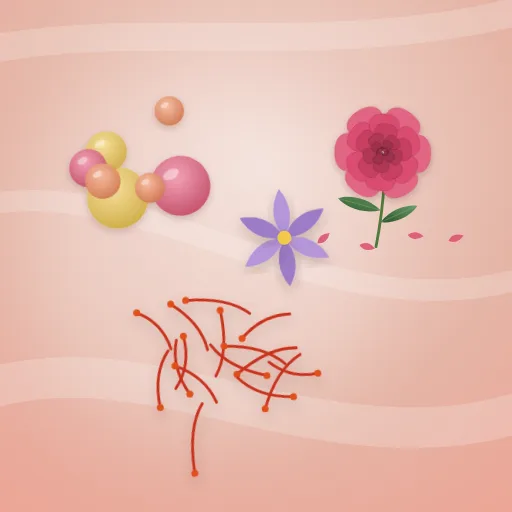
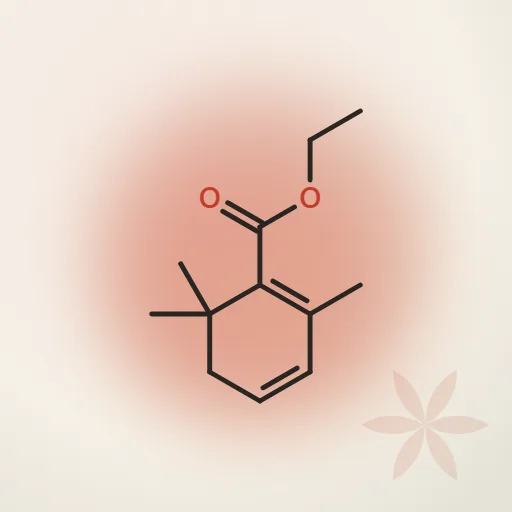
Ethyl safranate is a cyclohexadiene ester structurally related to safranal. It gives a fruity, saffron-like spicy note with a rosy facet.
What Ethyl Safranate smells like
Ethyl safranate (Givaudan) is hard to pin down, one distributor says: a spicy, anise-like scent with apple and mint on one side, and a clear fruity floral in the direction of rose and red fruit, much like the damascones, on the other. Another supplier lists floral-rose, herbal, damascone-like, spicy-saffron, fruity-apple, rose and woody. A third finds it very similar to the damascones (apple, rose) but a little sweeter and fruitier — and, unlike them, not heavily restricted. One user found it overwhelming at higher doses.
- Leading note
- Fruity rose with saffron spice
- Clear facets
- Apple
- Supporting facets
- Saffron spice, anise, mint
- Faint facets
- Woody
- Character
- Fruity, spicy, warm, sweet
What makes Ethyl Safranate distinctive
A damascone with saffron in it: rose and apple with a spice-and-anise edge, and far fewer restrictions.
How Ethyl Safranate is used
Used to add a saffron note to damascone-rich rose bases and in fruity-spicy compositions.
Typical role: modifier (used in small amounts to change the character of a blend).
How Ethyl Safranate differs from similar materials
- alpha-Damascone
- A distributor finds ethyl safranate very similar to the damascones but sweeter and fruitier, with a saffron-spice and anise side. (compared directly by a cited source)
- Safranal
- Safranal is the cold, metallic, leathery saffron itself; ethyl safranate is fruitier and rosier, with saffron as a spice nuance.
An asterisk marks a difference that a cited source states directly. The others compare the published descriptions of each material. Smell varies with grade, supplier and dilution; compare them side by side on blotters before substituting one for another.
Identity and classification
- Type
- Aroma chemical
- Origin
- Synthetic
- Odour family
- Spicy / Fruity
- Note position
- Heart note
- Physical form at room temperature
- Liquid
- Also known as
- Ethyl 2,6,6-trimethylcyclohexa-1,3-diene-1-carboxylate
- CAS number
- 35044-59-8
- Molecular formula
- C12H18O2
- Molecular weight
- 194.27 g/mol
- IUPAC name
- ethyl 2,6,6-trimethylcyclohexa-1,3-diene-1-carboxylate
The CAS number, formula and molecular weight are taken from PubChem compound 118201, whose own record lists this CAS number; checked 19 October 2026.
Safety and compliance
Hazard classification of the neat substance, as PubChem summarises it, read 26 October 2026. Companies notifying the ECHA C&L Inventory classify it (1,542 reports): H317 may cause an allergic skin reaction (86.8% of reports); H412 harmful to aquatic life with long lasting effects (86.8% of reports). 204 of the reports find it does not meet the hazard criteria. A skin sensitiser classification concerns handling the neat material and the dose in a finished product; the IFRA Standards, where they apply, set the limits. Unless it is harmonised, this is the notifiers' own classification, not a binding one.
This page is general information, not a safety assessment or a specification. Confirm identity, composition, IFRA status and allergen content from your supplier's documents for the lot you hold.
Materials it works with
-
 Safranal
Aroma chemical · Spicy / Leather — saffron, leathery, spicy, warm
-

 Rose Oil (Rosa damascena)
Essential oil · Floral / Fruity — rose, honeyed, spicy, fresh
-
 Agarwood Oil (Oud)
Essential oil · Woody / Animalic — woody, animalic, smoky, leathery
-

 beta-Damascenone
Aroma chemical · Fruity / Floral — fruity, cooked apple, plum, rose
Used in formulas and accords
Used in 3 published formulas
Ethyl Safranate is an ingredient in 3 perfume formulas in the Formula & Accord Library.
RUŌOD House Originals
Original compositions by RUŌOD House.
Further reading
Questions about Ethyl Safranate
Is Ethyl Safranate natural or synthetic?
Ethyl Safranate is synthetic — it is made by chemical synthesis.
What is the CAS number of Ethyl Safranate?
35044-59-8. It was checked against PubChem on 19 October 2026.
Which published formulas use Ethyl Safranate?
Ethyl Safranate is used in 3 published formulas in the RUŌOD Lab Formula & Accord Library: Dune Spice Market, Guaiac Rose and Saffron Lacquer. Each is listed with a link under "Used in formulas and accords" on this page.
Sources
- PubChem — compound 118201, checked 19 October 2026.
- PubChem — GHS classification (the ECHA C&L Inventory notifications and any harmonised EU entry), read 26 October 2026.
- De Hekserij — Ethyl safranate — distributor's description.
- The Fragrance Foundry — Ethyl safranate (Givaudan) — distributor's description.
- Anthea — Ethyl safranate — manufacturer's description.
- Olfactory profile: the RUŌOD Lab team's synthesis of the published descriptions above, reviewed 20 October 2026. Evidence: more than one published description. Classification and the short description: revision 1. Descriptions of odour are judgement, not measurement.