
In short
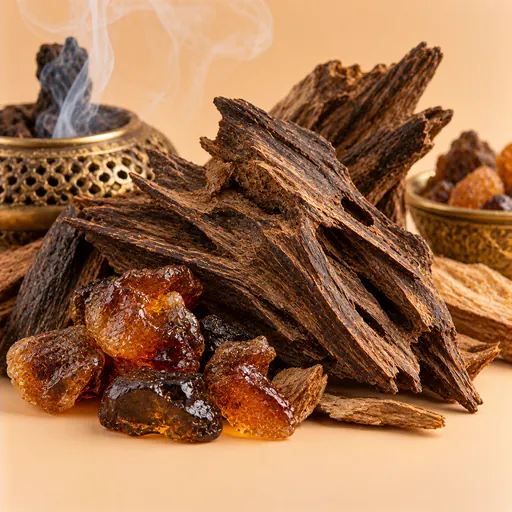
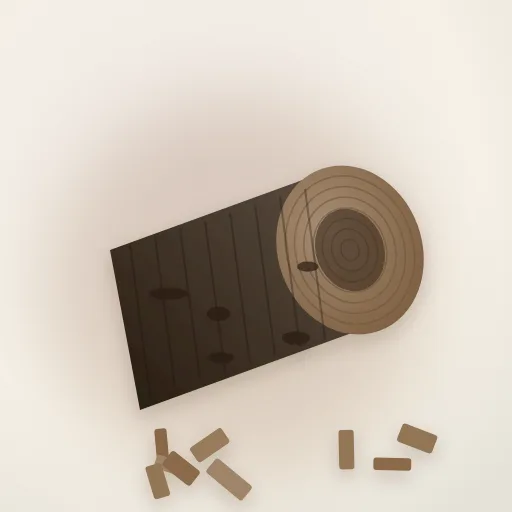
Agarwood oil, known as oud, is distilled from agarwood — resin-infused heartwood that forms in Aquilaria trees in response to infection. It is one of the most expensive and variable perfumery materials.
What Agarwood Oil (Oud) smells like
Oud (agarwood) oil is consistently described as woody, smoky and animalic: a perfume dictionary calls it animalic, earthy, dark and rich-woody; others add leathery and balsamic nuances and slightly sweet undertones. It smells different depending on age and origin, and grades range from sweet to smoky to animalic; a 'barnyard' character attributed to fermentation appears only in weaker sources.
- Leading note
- Dark animalic wood
- Clear facets
- Smoky
- Supporting facets
- Leathery, balsamic, sweet
- Faint facets
- Medicinal
- Character
- Dark, rich, complex, tenacious
What makes Agarwood Oil (Oud) distinctive
Resin-infected wood: dark, animalic and smoky in a way that varies from one oil to the next.
How Agarwood Oil (Oud) is used
Used in traditional attars and in oriental, woody and leather compositions.
Typical role: backbone (used in large proportions as a structural material of an accord); fixative (slow to evaporate; helps a blend last and holds lighter notes).
How Agarwood Oil (Oud) differs from similar materials
- Cypriol Oil (Nagarmotha)
- Cypriol is a drier, cold-smoky earth often used to suggest oud; oud is more animalic and balsamic.
- Ambrocenide
- Ambrocenide is a mineral ambergris sometimes compared to oud; oud is the darker, animalic natural wood. (compared directly by a cited source)
- Black Agar Givco 215/2
- Black Agar Givco is an oud replacer built on olibanum and amber, brighter and without the animalic side.
An asterisk marks a difference that a cited source states directly. The others compare the published descriptions of each material. Smell varies with grade, supplier and dilution; compare them side by side on blotters before substituting one for another.
Formulation considerations
Aquilaria species are listed in CITES Appendix II, so international trade needs permits. Adulteration is common; buy from documented sources. No single CAS number is given because composition varies so widely.
Identity and classification
- Type
- Essential oil
- Origin
- Natural
- Odour family
- Woody / Animalic
- Note position
- Base note
- Physical form at room temperature
- Viscous liquid
- Also known as
- Oud oil, Oudh
- Botanical source
- Aquilaria spp.
No CAS number is shown: suppliers use different identifiers for this material, and none could be confirmed as its own.
Safety and compliance
CITES: Aquilaria spp., Gyrinops spp. is listed in Appendix II. All parts and derivatives, with exceptions that include finished products packaged and ready for retail trade. Checked on Species+ on 11 October 2026; see CITES and perfume materials.
This page is general information, not a safety assessment or a specification. Confirm identity, composition, IFRA status and allergen content from your supplier's documents for the lot you hold.
Materials it works with
-

 Rose Oil (Rosa damascena)
Essential oil · Floral / Fruity — rose, honeyed, spicy, fresh
-
 Cypriol Oil (Nagarmotha)
Essential oil · Woody / Leather — smoky, woody, earthy, leathery
-

 Guaiac Wood Oil
Essential oil · Woody / Resinous — smoky, woody, rosy, sweet
-

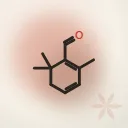 Safranal
Aroma chemical · Spicy / Leather — saffron, leathery, spicy, warm
Agarwood Oil (Oud) is also suggested as a partner on the pages for Azarbre, Black Agar Givco 215/2 and Ethyl Safranate.
Used in formulas and accords
Used in 5 published formulas
Agarwood Oil (Oud) is an ingredient in 5 perfume formulas in the Formula & Accord Library.
RUŌOD House Originals
Original compositions by RUŌOD House.
Further reading
Questions about Agarwood Oil (Oud)
Is Agarwood Oil (Oud) natural or synthetic?
Agarwood Oil (Oud) is natural. It is a volatile oil obtained from plant material by steam distillation or, for citrus peels, by cold expression.
Which published formulas use Agarwood Oil (Oud)?
Agarwood Oil (Oud) is used in 5 published formulas in the RUŌOD Lab Formula & Accord Library, including Agar Lantern, Bright Wolf and Myrrh Lantern. Each is listed with a link under "Used in formulas and accords" on this page.
Sources
- CITES — Species+, checked 11 October 2026.
- Phlur — Oud scent in perfumery — published perfumery reference.
- Frédéric Malle — Oud: the most precious wood in perfumery — published perfumery reference.
- Khaleej Times — An ode to the oud — published perfumery reference.
- Olfactory profile: the RUŌOD Lab team's synthesis of the published descriptions above, reviewed 26 October 2026. Evidence: more than one published description. Classification and the short description: revision 1. Descriptions of odour are judgement, not measurement.