


In short
Palmarosa oil is distilled from the grass Cymbopogon martini and is very rich in geraniol. It gives a soft, rosy-grassy note and is a natural source of geraniol.
What Palmarosa Oil smells like
Palmarosa oil smells rose-like with a grassy note and a herbaceous undertone — one glossary likens it to rose seen through a window of cut grass. Arctander described a sweet floral-rosy odour with undertones and top notes that vary with quality and age. It is very rich in geraniol, which makes it the classic starting material for geraniol and geranyl esters and a frequent adulterant of rose oil. A distributor adds a fresh grassy-citrus opening and gentle metallic, herbaceous undertones.
- Leading note
- Rosy grass
- Clear facets
- Grassy
- Supporting facets
- Herbaceous
- Faint facets
- Citrus
- Character
- Sweet, fresh, simple, grassy
What makes Palmarosa Oil distinctive
Rose plus grass — sweeter and simpler than geranium, with no minty edge, because it is mostly geraniol.
How Palmarosa Oil is used
Used for rosy-grassy effects in soap and cosmetics, as a source of geraniol, and in rose extensions.
Typical role: blender (smooths the joins between other materials).
How Palmarosa Oil differs from similar materials
- Geraniol
- Geraniol is the oil's main constituent on its own — cleaner sweet rose; the oil adds grassy and herbaceous notes.
- Geranium Oil
- Geranium is greener and mintier, with a metallic edge; palmarosa is simpler, rose and grass.
Each difference compares the published descriptions of the two materials. Smell varies with grade, supplier and dilution; compare them side by side on blotters before substituting one for another.
Formulation considerations
Very high in geraniol, which is a declarable allergen with an IFRA Standard.
Identity and classification
- Type
- Essential oil
- Origin
- Natural
- Odour family
- Floral / Green
- Note position
- Heart note
- Physical form at room temperature
- Liquid
- Botanical source
- Cymbopogon martini (Roxb.) W.Watson
- CAS number
- 8014-19-5
The CAS number was checked on 19 October 2026 against a PubChem substance record that gives it for this material. A natural material is a mixture, so it has no single formula; its composition varies with origin and processing.
Safety and compliance
This page is general information, not a safety assessment or a specification. Confirm identity, composition, IFRA status and allergen content from your supplier's documents for the lot you hold.
Materials it works with
-

 Geranium Oil
Essential oil · Floral / Green — rosy, green, minty, fresh
-

 Rose Oil (Rosa damascena)
Essential oil · Floral / Fruity — rose, honeyed, spicy, fresh
-

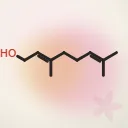 Geraniol
Aroma chemical · Floral / Citrus — rosy, sweet, citrus, fresh
Used in formulas and accords
Not currently used in any published formula.
The Formula & Accord Library lists Palmarosa Oil here as soon as a published formula, accord or base uses it.
Further reading
Questions about Palmarosa Oil
Is Palmarosa Oil natural or synthetic?
Palmarosa Oil is natural. It is a volatile oil obtained from plant material by steam distillation or, for citrus peels, by cold expression.
What is the CAS number of Palmarosa Oil?
8014-19-5, the registry number for the essential oil as a substance rather than a single molecule. It was checked against PubChem on 19 October 2026.
Sources
- PubChem — substance 135298800, checked 19 October 2026.
- Journal of the Society of Cosmetic Chemists — palmarosa and related oils — published literature.
- Premiere Peau — Palmarosa — published perfumery reference.
- Fraterworks — palmarosa oil — distributor's description.
- Olfactory profile: the RUŌOD Lab team's synthesis of the published descriptions above, reviewed 20 October 2026. Evidence: more than one published description. Classification and the short description: revision 1. Descriptions of odour are judgement, not measurement.