
In short
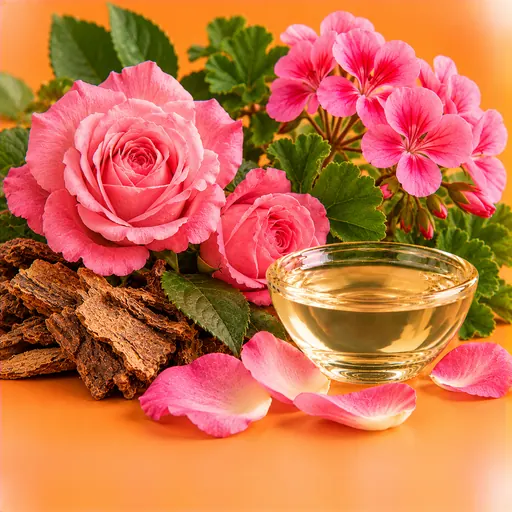
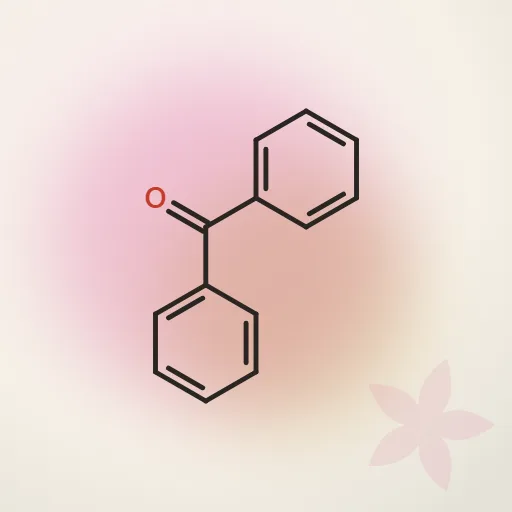
Benzophenone is an aromatic ketone with a faint, sweet rose-geranium odour. It has long been used as an inexpensive floral fixative, especially in soaps.
What Benzophenone smells like
Benzophenone has a faint, sweet rose odour with a light herbal, geranium-like nuance, in several industry references; one retailer calls it powdery rose and sharp geranium with a plastic-metallic edge. Arctander, as quoted, notes its extensive use for sweet-woody-geranium notes in low-cost fragrances and soap perfumes, and as a fixative whose effect is perceptible mainly in mixtures with lower-boiling materials. One glossary considers its odour too weak to matter.
- Leading note
- Faint sweet rose
- Supporting facets
- Geranium
- Faint facets
- Woody, metallic
- Character
- Faint, sweet, tenacious
What makes Benzophenone distinctive
A rose-geranium fixative so faint that its effect shows mainly in what it holds.
Where the descriptions disagree: One glossary calls its odour barely detectable and not used for its scent; Arctander records extensive use for sweet-woody-geranium notes.
How Benzophenone is used
Used historically as a fixative in soap and low-cost perfumes for sweet rose-geranium notes. Its regulatory status should be checked before use.
Typical role: fixative (slow to evaporate; helps a blend last and holds lighter notes).
How Benzophenone differs from similar materials
- Phenylethyl Benzoate
- Both are faint fixatives for the heavy end of a floral; phenylethyl benzoate leans towards honey, benzophenone towards geranium.
- Rose Oxide
- Rose oxide is a powerful, metallic-green geranium-rose top note; benzophenone is a faint rose-geranium fixative.
Each difference compares the published descriptions of the two materials. Smell varies with grade, supplier and dilution; compare them side by side on blotters before substituting one for another.
Formulation considerations
A solid that must be dissolved. Its regulatory status in cosmetics has been reviewed in some markets; check the current position before use.
Identity and classification
- Type
- Aroma chemical
- Origin
- Synthetic
- Odour family
- Floral / Resinous
- Note position
- Base note
- Physical form at room temperature
- Solid
- Also known as
- Diphenylmethanone
- CAS number
- 119-61-9
- Molecular formula
- C13H10O
- Molecular weight
- 182.22 g/mol
- IUPAC name
- diphenylmethanone
The CAS number, formula and molecular weight are taken from PubChem compound 3102, whose own record lists this CAS number; checked 19 October 2026.
Safety and compliance
Hazard classification of the neat substance, as PubChem summarises it, read 26 October 2026. It has a harmonised EU classification (Regulation (EC) No 1272/2008, Annex VI): H350 may cause cancer. Companies notifying the ECHA C&L Inventory classify it (4,790 reports): H411 toxic to aquatic life with long lasting effects (74.8% of reports); H373 may causes damage to organs through prolonged or repeated exposure (37.4% of reports). 84 of the reports find it does not meet the hazard criteria. Unless it is harmonised, this is the notifiers' own classification, not a binding one.
This page is general information, not a safety assessment or a specification. Confirm identity, composition, IFRA status and allergen content from your supplier's documents for the lot you hold.
Materials it works with
-

 Geranium Oil
Essential oil · Floral / Green — rosy, green, minty, fresh
-

 Phenylethyl Alcohol
Aroma chemical · Floral / Green — rose, honeyed, soft, floral
-

 Diphenyl Oxide
Aroma chemical · Floral / Green — geranium, rosy, metallic, green
-

 Benzyl Benzoate
Solvent or carrier · No odour family — faint, balsamic
Used in formulas and accords
Not currently used in any published formula.
The Formula & Accord Library lists Benzophenone here as soon as a published formula, accord or base uses it.
Further reading
Questions about Benzophenone
Is Benzophenone natural or synthetic?
Benzophenone is synthetic — it is made by chemical synthesis.
What is the CAS number of Benzophenone?
119-61-9. It was checked against PubChem on 19 October 2026.
Sources
- PubChem — compound 3102, checked 19 October 2026.
- PubChem — GHS classification (the ECHA C&L Inventory notifications and any harmonised EU entry), read 26 October 2026.
- The Good Scents Company — benzophenone (with Arctander) — odour database.
- Fraterworks — benzophenone crystals — distributor's description.
- Premiere Peau — Benzophenone — published perfumery reference.
- Olfactory profile: the RUŌOD Lab team's synthesis of the published descriptions above, reviewed 20 October 2026. Evidence: more than one published description. Classification and the short description: revision 1. Descriptions of odour are judgement, not measurement.