

In short
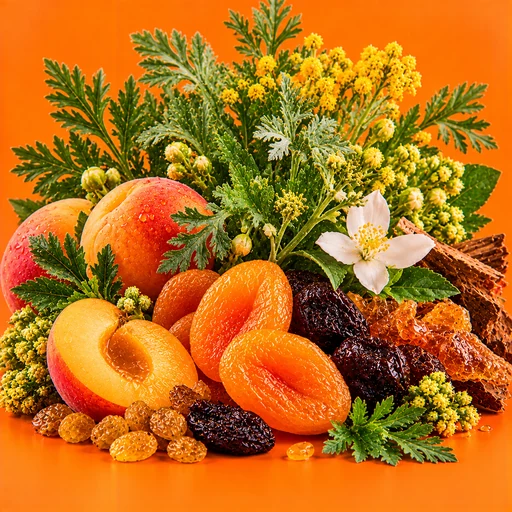
Davana oil is distilled from Artemisia pallens in southern India. It gives a rich, fruity, boozy note.
What Davana Oil smells like
Davana oil is rich, fruity and boozy, with a herbaceous edge. Eden Botanicals calls it very fruity and boozy, with warm wood and a slight camphor note; Synthite strongly boozy, sweet and herbaceous; Fraterworks pairs fruit and liqueur notes with sharp herbal undertones and a sweet-balsamic warmth. Descriptions variously name dried apricot, plum, rum or brandy, and a bitterish wormwood facet.
- Leading note
- Boozy dried fruit
- Clear facets
- Dried apricot
- Supporting facets
- Herbaceous, rum, brandy
- Faint facets
- Wormwood bitterness
- Character
- Rich, boozy, warm, sweet
What makes Davana Oil distinctive
Fruit soaked in liqueur, with a herb's bitterness: no other natural gives this boozy dried-fruit note.
How Davana Oil is used
Used in fruity, boozy and oriental compositions and in flavours.
Typical role: modifier (used in small amounts to change the character of a blend).
How Davana Oil differs from similar materials
- Tagetes Oil
- Tagetes is greener and sharper, green apple with a ketonic bite; davana is boozy dried fruit.
- Armoise Oil
- Armoise is a cool, bitter-sweet camphor; davana, another Artemisia, is boozy and fruity.
Each difference compares the published descriptions of the two materials. Smell varies with grade, supplier and dilution; compare them side by side on blotters before substituting one for another.
Formulation considerations
Strong; a little adds a lot of character.
Identity and classification
- Type
- Essential oil
- Origin
- Natural
- Odour family
- Fruity / Aromatic
- Note position
- Heart note
- Physical form at room temperature
- Liquid
- Botanical source
- Artemisia pallens Wall. ex DC.
- CAS number
- 8016-03-3
The CAS number was checked on 19 October 2026 against a PubChem substance record that gives it for this material. A natural material is a mixture, so it has no single formula; its composition varies with origin and processing.
Safety and compliance
This page is general information, not a safety assessment or a specification. Confirm identity, composition, IFRA status and allergen content from your supplier's documents for the lot you hold.
Materials it works with
-
 beta-Damascenone
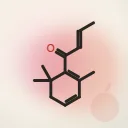
Aroma chemical · Fruity / Floral — fruity, cooked apple, plum, rose
-

 Osmanthus Absolute
Absolute · Floral / Fruity — apricot, leathery, floral, tea-like
-
 Roman Chamomile Oil
Essential oil · Aromatic / Fruity — herbal, fruity, apple, sweet
Davana Oil is also suggested as a partner on the pages for Cognac Oil (Green) and Rum CO2 Extract.
Used in formulas and accords
Used in 13 published formulas
Davana Oil is an ingredient in 9 perfume formulas and 4 accords in the Formula & Accord Library.
Community formulas
RUŌOD House Originals
Original compositions by RUŌOD House.
Further reading
Questions about Davana Oil
Is Davana Oil natural or synthetic?
Davana Oil is natural. It is a volatile oil obtained from plant material by steam distillation or, for citrus peels, by cold expression.
What is the CAS number of Davana Oil?
8016-03-3, the registry number for the essential oil as a substance rather than a single molecule. It was checked against PubChem on 19 October 2026.
Which published formulas use Davana Oil?
Davana Oil is used in 13 published formulas in the RUŌOD Lab Formula & Accord Library, including Açaí Accord, Apricot Dust and Dark Rum Cabinet. Each is listed with a link under "Used in formulas and accords" on this page.
Sources
- PubChem — substance 135302761, checked 19 October 2026.
- Eden Botanicals — Davana — distributor's description.
- Synthite — Davana essential oil — manufacturer's description.
- Fraterworks — davana oil CSM — distributor's description.
- Olfactory profile: the RUŌOD Lab team's synthesis of the published descriptions above, reviewed 21 October 2026. Evidence: more than one published description. Classification and the short description: revision 1. Descriptions of odour are judgement, not measurement.