

In short
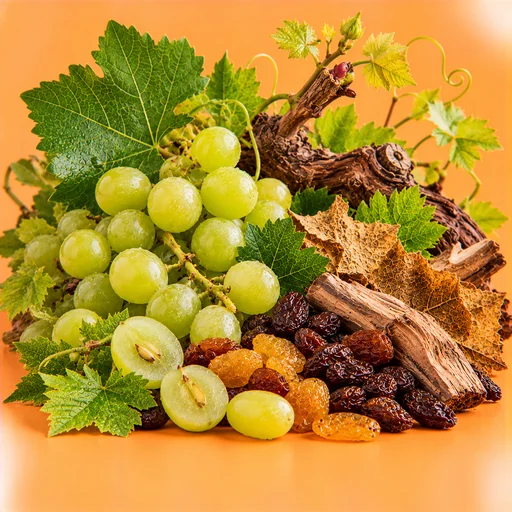
Green cognac oil is distilled from the lees left after wine fermentation. It is rich in ethyl esters of fatty acids and has a fruity, winey and oily odour.
What Cognac Oil (Green) smells like
Cognac oil (green cognac oil, wine-lees oil) is steam-distilled from the yeast and sediment of wine. It has an intensely strong, almost harsh, fruity, oily-fatty yet green herbaceous odour of great tenacity and diffusive power; The Good Scents Company lists fresh, green, fruity, winey, fusel, fatty, waxy and lychee. Its main constituents are the ethyl and isoamyl esters of fatty acids formed during fermentation. It is used mostly in flavours, and only in very small amounts in perfumes.
- Leading note
- Oily winey fruit
- Clear facets
- Green herbaceous
- Supporting facets
- Fatty, waxy
- Faint facets
- Fusel, lychee
- Character
- Harsh, oily, diffusive, tenacious
What makes Cognac Oil (Green) distinctive
The smell of the cellar rather than the glass: oily, green, winey and fatty, the esters of fermentation concentrated.
Concentration and dilution
Almost harsh at strength; it is used in very small amounts.
How Cognac Oil (Green) is used
Used in traces in perfumery for winey, cognac and fruity effects, and more widely in flavours.
Typical role: modifier (used in small amounts to change the character of a blend).
How Cognac Oil (Green) differs from similar materials
- Ethyl Hexanoate
- Ethyl hexanoate is one clean fruity ester, pineapple and banana; cognac oil is a harsh, oily blend of fermentation esters with a green herbaceous note.
- Cognac Oil (White)
- White cognac oil, rectified or steel-distilled from the same lees, is described as rounder and more champagne-like.
Each difference compares the published descriptions of the two materials. Smell varies with grade, supplier and dilution; compare them side by side on blotters before substituting one for another.
Formulation considerations
Powerful; use sparingly.
Identity and classification
- Type
- Essential oil
- Origin
- Natural
- Odour family
- Fruity / Green
- Note position
- Top to heart note
- Physical form at room temperature
- Liquid
- Also known as
- Wine lees oil, Oenanthic ether
- Botanical source
- Vitis vinifera
- CAS number
- 8016-21-5
The CAS number was checked on 19 October 2026 against a PubChem substance record that gives it for this material. A natural material is a mixture, so it has no single formula; its composition varies with origin and processing.
Safety and compliance
This page is general information, not a safety assessment or a specification. Confirm identity, composition, IFRA status and allergen content from your supplier's documents for the lot you hold.
Materials it works with
-

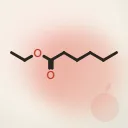 Ethyl Hexanoate
Aroma chemical · Fruity — fruity, pineapple, banana, winey
-

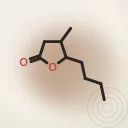 Whisky Lactone
Aroma chemical · Woody / Gourmand — oak, coconut, woody, sweet
-

 Tobacco Absolute
Absolute · Leather / Gourmand — tobacco, honey, hay, leathery
-

 Davana Oil
Essential oil · Fruity / Aromatic — fruity, boozy, dried fruit, herbal
Cognac Oil (Green) is also suggested as a partner on the pages for Cognac Oil (White), Ethyl Acetate, Ethyl Heptanoate, Ethyl Undecylenate, Oakwood CO2 Extract and Rum Ether.
Used in formulas and accords
Used in 4 published formulas
Cognac Oil (Green) is an ingredient in 3 perfume formulas and 1 accord in the Formula & Accord Library.
Community formulas
RUŌOD House Originals
Original compositions by RUŌOD House.
Further reading
Questions about Cognac Oil (Green)
Is Cognac Oil (Green) natural or synthetic?
Cognac Oil (Green) is natural. It is a volatile oil obtained from plant material by steam distillation or, for citrus peels, by cold expression.
What is the CAS number of Cognac Oil (Green)?
8016-21-5, the registry number for the essential oil as a substance rather than a single molecule. It was checked against PubChem on 19 October 2026.
Which published formulas use Cognac Oil (Green)?
Cognac Oil (Green) is used in 4 published formulas in the RUŌOD Lab Formula & Accord Library, including Dark Rum Cabinet, Mahogany Library and Mezcal Accord. Each is listed with a link under "Used in formulas and accords" on this page.
Sources
- PubChem — substance 496716465, checked 19 October 2026.
- ChemicalBook — cognac oil (CAS 8016-21-5) — odour database.
- The Good Scents Company — cognac odour category — odour database.
- Fraterworks — cognac oil, green — distributor's description.
- Olfactory profile: the RUŌOD Lab team's synthesis of the published descriptions above, reviewed 24 October 2026. Evidence: more than one published description. Classification and the short description: revision 1. Descriptions of odour are judgement, not measurement.