
In short
Osmanthus absolute is extracted from the small flowers of Osmanthus fragrans, mainly in China. It is prized for a unique apricot-leather floral character.
What Osmanthus Absolute smells like
Osmanthus absolute is a powerful fruity floral with dried-apricot facets, floral and tea nuances and leathery undertones, in IFF's description. Its main components include linalool and its oxides, dihydro-beta-ionone, beta-ionone and gamma-decalactone, which explain the profile: the lactone gives apricot, the ionones a violet-powdery thread, the linalool oxides a tea-like quality. A reviewer sums it up as apricots, leather and tea; others note a long, waxy, faintly woody drydown.
- Leading note
- Dried apricot
- Clear facets
- Leathery, suede-like, tea
- Supporting facets
- Violet, ionone
- Faint facets
- Waxy
- Character
- Rich, fruity, suede, powerful
What makes Osmanthus Absolute distinctive
Apricot and suede. No other floral combines a lactonic apricot with a leathery, ionone-powdery depth and a tea-like dryness.
How Osmanthus Absolute is used
Used in fine fragrance for fruity, leathery and tea effects; because it is costly, its character is often built from ionones, damascones, lactones and theaspirane.
Typical role: modifier (used in small amounts to change the character of a blend).
How Osmanthus Absolute differs from similar materials
- Champaca Absolute
- Champaca is warmer and spicier, with clove and hay; osmanthus is more leathery, with a violet-ionone powderiness.
- beta-Ionone
- Osmanthus contains beta- and dihydro-beta-ionone; beta-ionone alone is the woody violet without the apricot, leather and tea. (compared directly by a cited source)
- gamma-Decalactone
- gamma-Decalactone is the peach-apricot fruit alone; osmanthus combines a lactonic apricot note with ionones, leather and tea.
An asterisk marks a difference that a cited source states directly. The others compare the published descriptions of each material. Smell varies with grade, supplier and dilution; compare them side by side on blotters before substituting one for another.
Formulation considerations
Costly and dark in colour, which can tint light fragrances.
Identity and classification
- Type
- Absolute
- Origin
- Natural
- Odour family
- Floral / Fruity
- Note position
- Heart note
- Physical form at room temperature
- Liquid
- Botanical source
- Osmanthus fragrans Lour.
- CAS number
- 68917-05-5
The CAS number was checked on 19 October 2026 against a PubChem substance record that gives it for this material. A natural material is a mixture, so it has no single formula; its composition varies with origin and processing.
Safety and compliance
This page is general information, not a safety assessment or a specification. Confirm identity, composition, IFRA status and allergen content from your supplier's documents for the lot you hold.
Materials it works with
-
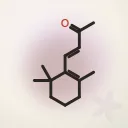 beta-Ionone
Aroma chemical · Powdery / Woody — violet, woody, fruity, raspberry
-
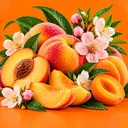
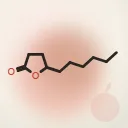 gamma-Decalactone
Aroma chemical · Fruity / Gourmand — peach, fruity, creamy
-
 Jasmine Sambac Absolute
Absolute · Floral / Fruity — jasmine, green, fruity, tea-like
-
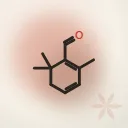 Safranal
Aroma chemical · Spicy / Leather — saffron, leathery, spicy, warm
Osmanthus Absolute is also suggested as a partner on the pages for Boronia Absolute, Champaca Absolute, Davana Oil, Dihydro-beta-ionone, gamma-Dodecalactone and Nectaryl.
Used in formulas and accords
Used in 14 published formulas
Osmanthus Absolute is an ingredient in 9 perfume formulas and 5 accords in the Formula & Accord Library.
Community formulas
RUŌOD House Originals
Original compositions by RUŌOD House.
Further reading
Questions about Osmanthus Absolute
Is Osmanthus Absolute natural or synthetic?
Osmanthus Absolute is natural. It is a concentrated extract obtained from plant material with a solvent, then washed with ethanol to remove the waxes.
What is the CAS number of Osmanthus Absolute?
68917-05-5, the registry number for the absolute as a substance rather than a single molecule. It was checked against PubChem on 19 October 2026.
Which published formulas use Osmanthus Absolute?
Osmanthus Absolute is used in 14 published formulas in the RUŌOD Lab Formula & Accord Library, including Açaí Accord, Agar Lantern and Apricot Dust. Each is listed with a link under "Used in formulas and accords" on this page.
Sources
- PubChem — substance 135314850, checked 19 October 2026.
- IFF — Osmanthus absolute — manufacturer's description.
- Premiere Peau — Osmanthus absolute — published perfumery reference.
- Eden Botanicals — Osmanthus absolute — distributor's description.
- Bois de Jasmin — 20 osmanthus perfumes — published perfumery reference.
- Olfactory profile: the RUŌOD Lab team's synthesis of the published descriptions above, reviewed 20 October 2026. Evidence: several independent published descriptions, which agree. Classification and the short description: revision 1. Descriptions of odour are judgement, not measurement.