

In short
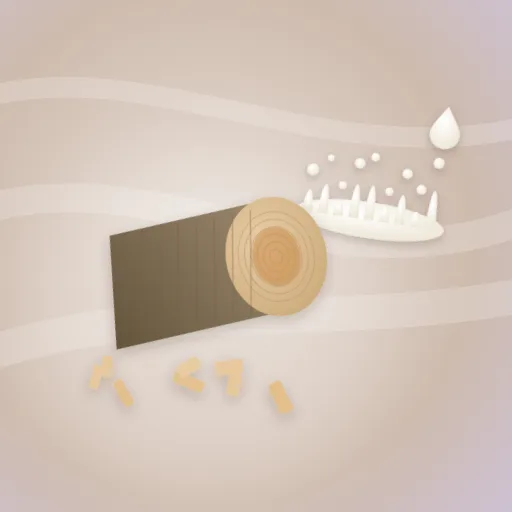
Sandalwood oil from Santalum album is steam-distilled from the heartwood of East Indian sandalwood. It is the classic creamy, milky wood of perfumery, rich in santalols.
What Sandalwood Oil (Santalum album) smells like
East Indian (Mysore) sandalwood oil, from Santalum album, is known for a creamy, rich aroma and a high santalol content — creamy, buttery and soft, in a retailer's comparison — against the drier, greener Australian oil. A forum perfumer notes that the Australian wood has the same chemicals in different proportions, with much less santalol. Synthetic sandalwoods are measured against it.
- Leading note
- Creamy sandalwood
- Clear facets
- Milky, buttery
- Supporting facets
- Sweet, soft woody
- Character
- Creamy, soft, rich, tenacious
What makes Sandalwood Oil (Santalum album) distinctive
The reference sandalwood: creamy, rich and soft, the profile every synthetic tries to approach.
Where the descriptions disagree: Santalol figures come from a retailer; no controlled sensory comparison was found.
How Sandalwood Oil (Santalum album) is used
Used as a base note and fixative in woody, oriental, floral and chypre compositions.
Typical role: fixative (slow to evaporate; helps a blend last and holds lighter notes); backbone (used in large proportions as a structural material of an accord).
How Sandalwood Oil (Santalum album) differs from similar materials
- Australian Sandalwood Oil
- Australian sandalwood is drier and greener, with less santalol; Mysore is creamier and richer. (compared directly by a cited source)
- alpha-Santalol
- alpha-Santalol is its main constituent alone, a woody sandalwood; the oil is fuller and creamier. (compared directly by a cited source)
- Amyris Oil
- Amyris is sold as a cheaper alternative; a glossary finds it sharper and less milky, with an angular resinous edge. (compared directly by a cited source)
An asterisk marks a difference that a cited source states directly. The others compare the published descriptions of each material. Smell varies with grade, supplier and dilution; compare them side by side on blotters before substituting one for another.
Formulation considerations
Supply of Santalum album is limited and closely regulated in its producing countries; plantation-grown oil is now common. Ask suppliers for origin and legal-sourcing documentation.
Identity and classification
- Type
- Essential oil
- Origin
- Natural
- Odour family
- Woody / Musky
- Note position
- Base note
- Physical form at room temperature
- Viscous liquid
- Also known as
- East Indian sandalwood oil
- Botanical source
- Santalum album L.
- CAS number
- 8006-87-9
The CAS number was checked on 19 October 2026 against a PubChem substance record that gives it for this material. A natural material is a mixture, so it has no single formula; its composition varies with origin and processing.
Safety and compliance
This page is general information, not a safety assessment or a specification. Confirm identity, composition, IFRA status and allergen content from your supplier's documents for the lot you hold.
Materials it works with
-

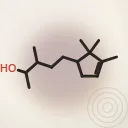 Sandalore
Aroma chemical · Woody / Musky — sandalwood, warm, soft, woody
-

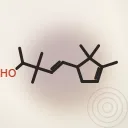 Polysantol
Aroma chemical · Woody / Musky — sandalwood, creamy, milky, woody
-
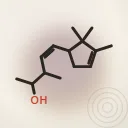 Ebanol
Aroma chemical · Woody / Musky — sandalwood, creamy, woody, musky
-

 Rose Oil (Rosa damascena)
Essential oil · Floral / Fruity — rose, honeyed, spicy, fresh
-

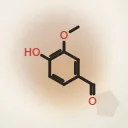 Vanillin
Aroma chemical · Gourmand / Amber — vanilla, sweet, creamy
-

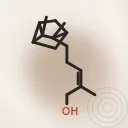 alpha-Santalol
Natural isolate · Woody — sandalwood, creamy, soft, woody
Sandalwood Oil (Santalum album) is also suggested as a partner on the pages for Australian Sandalwood Oil, Bacdanol, Butter CO2 Extract and Javanol.
Used in formulas and accords
Used in 18 published formulas
Sandalwood Oil (Santalum album) is an ingredient in 17 perfume formulas and 1 accord in the Formula & Accord Library.
Community formulas
RUŌOD House Originals
Original compositions by RUŌOD House.
Further reading
Questions about Sandalwood Oil (Santalum album)
Is Sandalwood Oil (Santalum album) natural or synthetic?
Sandalwood Oil (Santalum album) is natural. It is a volatile oil obtained from plant material by steam distillation or, for citrus peels, by cold expression.
What is the CAS number of Sandalwood Oil (Santalum album)?
8006-87-9, the registry number for the essential oil as a substance rather than a single molecule. It was checked against PubChem on 19 October 2026.
Which published formulas use Sandalwood Oil (Santalum album)?
Sandalwood Oil (Santalum album) is used in 18 published formulas in the RUŌOD Lab Formula & Accord Library, including 1882 Naturals, Beeswax Throne and Bright Wolf. Each is listed with a link under "Used in formulas and accords" on this page.
Sources
- PubChem — substance 135309309, checked 19 October 2026.
- Scento — Sandalwood in perfume: Indian Mysore vs Australian — published perfumery reference.
- Basenotes — sandalwood (forum) — published perfumery reference.
- Olfactory profile: the RUŌOD Lab team's synthesis of the published descriptions above, reviewed 21 October 2026. Evidence: more than one published description. Classification and the short description: revision 1. Descriptions of odour are judgement, not measurement.