
In short
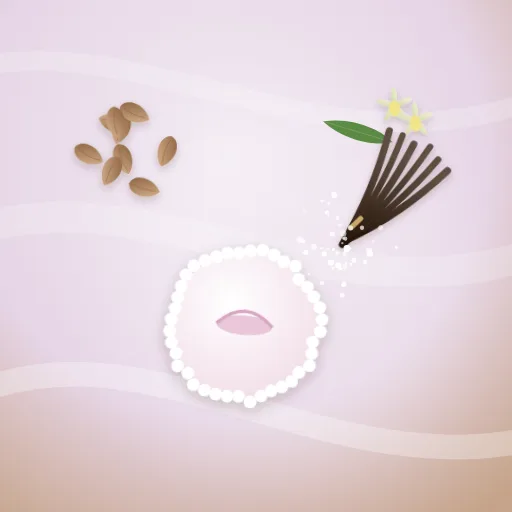
Heliotropin, also called piperonal, has a sweet, powdery almond-vanilla note associated with the heliotrope flower. It is a key material in powdery and gourmand accords.
What Heliotropin smells like
Heliotropin (piperonal) is sweet and powdery, with almond, vanilla and cherry tones. It is named after the 'cherry pie' smell of heliotrope, although it is not actually in the flower; perfumers have used it since the 1880s for vanilla and almond tones with a balsamic, powdery character. ChemicalBook, at 1%, lists sweet, anise-like, almond, vanilla, floral, black cherry pit, raspberry-like berry and powdery, coumarin-like with a hint of hay. Perfumers find it persistent, with a somewhat chemical almond character.
- Leading note
- Powdery almond-vanilla
- Clear facets
- Cherry pit
- Supporting facets
- Floral
- Faint facets
- Coumarin, hay, anise
- Character
- Powdery, sweet, soft, persistent
What makes Heliotropin distinctive
Cherry pie and face powder: the almond-cherry-vanilla powder that defines heliotrope accords and old-fashioned cosmetic scents.
How Heliotropin is used
Used for heliotrope, almond-blossom and powdery effects, in gourmand and oriental compositions and in cosmetic fragrance.
Typical role: modifier (used in small amounts to change the character of a blend); fixative (slow to evaporate; helps a blend last and holds lighter notes).
How Heliotropin differs from similar materials
- Anisaldehyde
- Anisaldehyde is sweeter, more floral and anisic, with hawthorn; heliotropin is powdery almond, cherry and vanilla.
- Methyl Anisate
- Methyl anisate is a herbaceous anise with a heliotropin-like side; heliotropin is the fuller almond-cherry powder. (compared directly by a cited source)
- Dulcinyl
- Dulcinyl is raspberry jam and cotton candy with a heliotrope finish; heliotropin is the classic almond-cherry powder.
- Coumarin
- Coumarin is hay-like and tonka-sweet; heliotropin is powdery almond-heliotrope without the hay.
- Benzaldehyde
- Benzaldehyde is the sharp, direct bitter almond; heliotropin is powdery heliotrope with a soft almond.
An asterisk marks a difference that a cited source states directly. The others compare the published descriptions of each material. Smell varies with grade, supplier and dilution; compare them side by side on blotters before substituting one for another.
Formulation considerations
A crystalline solid; dissolve before use. It can discolour in some bases.
Identity and classification
- Type
- Aroma chemical
- Origin
- Occurs in nature
- Odour family
- Powdery / Gourmand
- Note position
- Heart to base note
- Physical form at room temperature
- Solid
- Also known as
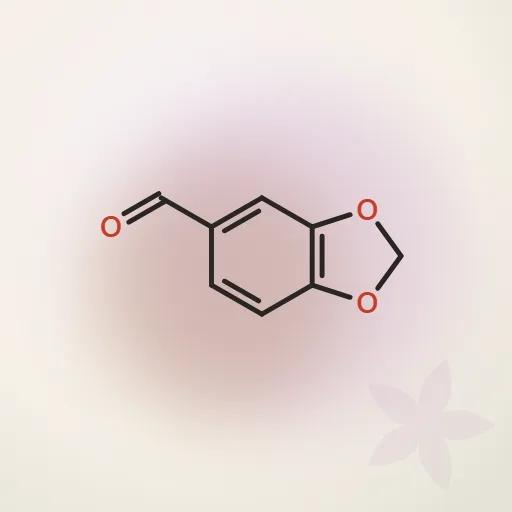
- Piperonal
- CAS number
- 120-57-0
- Molecular formula
- C8H6O3
- Molecular weight
- 150.13 g/mol
- IUPAC name
- 1,3-benzodioxole-5-carbaldehyde
The CAS number, formula and molecular weight are taken from PubChem compound 8438, whose own record lists this CAS number; checked 19 October 2026.
Safety and compliance
Hazard classification of the neat substance, as PubChem summarises it, read 26 October 2026. Companies notifying the ECHA C&L Inventory classify it (2,063 reports): H317 may cause an allergic skin reaction (81.6% of reports). 329 of the reports find it does not meet the hazard criteria. A skin sensitiser classification concerns handling the neat material and the dose in a finished product; the IFRA Standards, where they apply, set the limits. Unless it is harmonised, this is the notifiers' own classification, not a binding one.
This page is general information, not a safety assessment or a specification. Confirm identity, composition, IFRA status and allergen content from your supplier's documents for the lot you hold.
Materials it works with
-

 Vanillin
Aroma chemical · Gourmand / Amber — vanilla, sweet, creamy
-
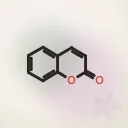 Coumarin
Aroma chemical · Powdery / Fougère — hay, sweet, almond, tobacco
-

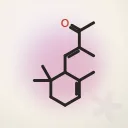 alpha-Isomethyl Ionone
Aroma chemical · Powdery / Floral — powdery, violet, orris, woody
-
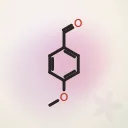 Anisaldehyde
Aroma chemical · Powdery / Floral — anisic, hawthorn, floral, sweet
Heliotropin is also suggested as a partner on the pages for Acetanisole, Anisylacetone, Benzaldehyde Diethyl Acetal, Dulcinyl, Heliotropex N and Methyl Anisate.
Used in formulas and accords
Used in 41 published formulas
Heliotropin is an ingredient in 30 perfume formulas, 10 accords and 1 base in the Formula & Accord Library.
Community formulas
RUŌOD House Originals
Original compositions by RUŌOD House.
Further reading
Questions about Heliotropin
Is Heliotropin natural or synthetic?
The molecule occurs in nature. Commercial Heliotropin may be made by synthesis or obtained from natural sources, so check the supplier's specification if the distinction matters to you.
What is the CAS number of Heliotropin?
120-57-0. It was checked against PubChem on 19 October 2026.
Which published formulas use Heliotropin?
Heliotropin is used in 41 published formulas in the RUŌOD Lab Formula & Accord Library, including Açaí Accord, Anise Ink and Birch Ghost. Each is listed with a link under "Used in formulas and accords" on this page.
Sources
- PubChem — compound 8438, checked 19 October 2026.
- PubChem — GHS classification (the ECHA C&L Inventory notifications and any harmonised EU entry), read 26 October 2026.
- Wikipedia — Piperonal — published perfumery reference.
- The Good Scents Company — heliotropin — odour database.
- ChemicalBook — piperonal — odour database.
- Olfactory profile: the RUŌOD Lab team's synthesis of the published descriptions above, reviewed 20 October 2026. Evidence: several independent published descriptions, which agree. Classification and the short description: revision 1. Descriptions of odour are judgement, not measurement.