
In short
Dipropylene glycol (DPG) is a colourless, nearly odourless solvent widely used to dilute fragrance materials and as a carrier for fragrance oils.
What Dipropylene Glycol (DPG) smells like
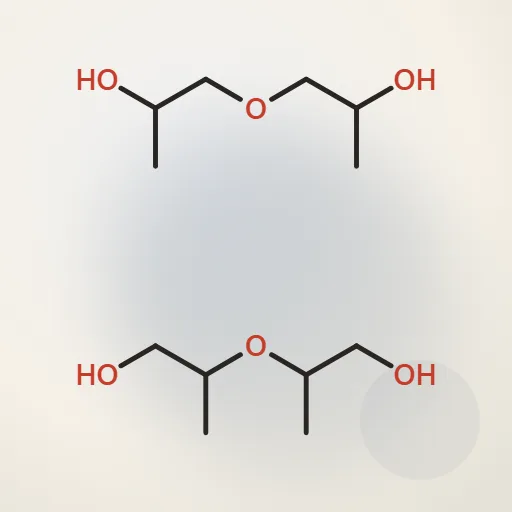
Dipropylene glycol (DPG) is a colourless, nearly odourless liquid with a high boiling point and low toxicity, in Wikipedia's description; a supplier finds it almost odourless, with a very faint, alcohol-like smell some people detect. It is a mixture of isomers sold in perfumery (low-odour) and industrial grades. It is the most common diluent and solubiliser in perfumery, and unlike ethanol it stays in the formula, slowing the release of volatile materials.
- Leading note
- No single note leads in the published descriptions
- Faint facets
- Faint alcohol-like
- Character
- Neutral, low-volatility
What makes Dipropylene Glycol (DPG) distinctive
The perfumer's standard diluent: nearly odourless and slow to evaporate.
How Dipropylene Glycol (DPG) is used
Used to dilute perfumery materials, to carry fragrance in oils, diffusers and functional products, and to prepare smelling dilutions.
Typical role: solvent (dilutes or carries other materials).
How Dipropylene Glycol (DPG) differs from similar materials
- Ethanol (Perfumer's Alcohol)
- Ethanol evaporates quickly and lifts the top notes; DPG stays in the formula and slows evaporation. (compared directly by a cited source)
- Propylene Glycol
- Propylene glycol is also nearly odourless but with a faintly sweet taste; DPG is the usual low-odour perfumery grade.
An asterisk marks a difference that a cited source states directly. The others compare the published descriptions of each material. Smell varies with grade, supplier and dilution; compare them side by side on blotters before substituting one for another.
Formulation considerations
Mixes with ethanol and most fragrance materials; it does not dissolve some heavy resins and waxes well.
Identity and classification
- Type
- Solvent or carrier
- Origin
- Synthetic
- Odour family
- No odour family
- Note position
- Base note
- Physical form at room temperature
- Liquid
- Also known as
- DPG
- CAS number
- 25265-71-8
- Composition
- A mixture of 2 isomers, which PubChem records as one substance
The CAS number was checked on 19 October 2026 against PubChem compound 134692469, which records it as a mixture of 2 isomers; no single formula or molecular weight is given for a mixture.
Safety and compliance
Hazard classification of the neat substance, as PubChem summarises it, read 26 October 2026. Companies notifying the ECHA C&L Inventory report it as not meeting the GHS hazard criteria (3,317 of 3,330 reports). Unless it is harmonised, this is the notifiers' own classification, not a binding one.
This page is general information, not a safety assessment or a specification. Confirm identity, composition, IFRA status and allergen content from your supplier's documents for the lot you hold.
Materials it works with
-
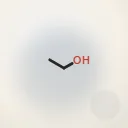 Ethanol (Perfumer's Alcohol)
Solvent or carrier · No odour family — alcoholic, volatile
-

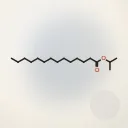 Isopropyl Myristate
Solvent or carrier · No odour family — odourless, oily
-

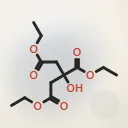 Triethyl Citrate
Solvent or carrier · No odour family — odourless
Dipropylene Glycol (DPG) is also suggested as a partner on the pages for Benzyl Alcohol, Diethyl Phthalate (DEP), Glycerol, Hercolyn D, Propylene Glycol and Triacetin.
Used in formulas and accords
Used in 48 published formulas
Dipropylene Glycol (DPG) is an ingredient in 45 accords and 3 bases in the Formula & Accord Library.
Further reading
Questions about Dipropylene Glycol (DPG)
Is Dipropylene Glycol (DPG) natural or synthetic?
Dipropylene Glycol (DPG) is synthetic — it is made by chemical synthesis.
What is the CAS number of Dipropylene Glycol (DPG)?
25265-71-8. It was checked against PubChem on 19 October 2026.
Which published formulas use Dipropylene Glycol (DPG)?
Dipropylene Glycol (DPG) is used in 48 published formulas in the RUŌOD Lab Formula & Accord Library, including Açaí Accord, Blue Accord and Blueberry Accord. Each is listed with a link under "Used in formulas and accords" on this page.
Sources
- PubChem — compound 134692469, checked 19 October 2026.
- PubChem — GHS classification (the ECHA C&L Inventory notifications and any harmonised EU entry), read 26 October 2026.
- Wikipedia — Dipropylene glycol — published perfumery reference.
- Scentspiracy — Dipropylene glycol — distributor's description.
- Premiere Peau — Dipropylene glycol — published perfumery reference.
- Olfactory profile: the RUŌOD Lab team's synthesis of the published descriptions above, reviewed 21 October 2026. Evidence: several independent published descriptions, which agree. Classification and the short description: revision 1. Descriptions of odour are judgement, not measurement.