


In short
Grapefruit oil is the cold-pressed peel oil of the grapefruit. It gives a bitter-sweet, sparkling citrus with a slightly sulphurous, juicy character that sets it apart from orange and lemon.
What Grapefruit Oil (Expressed) smells like
Grapefruit oil is fresh, bitter and juicy, and its character is built on traces. Limonene makes up most of the oil and gives juicy citrus freshness; nootkatone, at a fraction of a percent, supplies the bitter, woody, green note that sets grapefruit apart; and trace sulphur compounds, especially grapefruit mercaptan, add a juicy, tropical, faintly blackcurrant-like quality at parts-per-trillion levels. Nootkatone outlasts the limonene top, so the oil's drydown is bitter and woody.
- Leading note
- Bitter, juicy grapefruit
- Clear facets
- Bitter woody
- Supporting facets
- Sulphurous, tropical, green
- Character
- Bitter, juicy, sparkling, tart
What makes Grapefruit Oil (Expressed) distinctive
Bitterness plus juice. No other citrus oil combines a bitter, woody peel note with a sulphurous, tropical juiciness — which is also why a reconstitution from limonene alone does not smell of grapefruit.
How Grapefruit Oil (Expressed) is used
Used for fresh, bitter-juicy citrus tops in colognes, fresh and fruity compositions, and flavours.
Typical role: lift (adds diffusion and radiance, especially at the top).
How Grapefruit Oil (Expressed) differs from similar materials
- Nootkatone
- Nootkatone is the oil's bitter, woody peel note on its own; the oil adds juicy limonene and sulphurous traces. (compared directly by a cited source)
- Grapefruit Mercaptan
- The mercaptan is the oil's juicy, sulphurous trace isolated — repellent neat; the oil balances it with peel and bitterness. (compared directly by a cited source)
- Methyl Pamplemousse
- Methyl Pamplemousse is a simpler, greener grapefruit top; the oil is fuller, bitter-woody and juicy.
- Yuzu Oil
- Yuzu is grapefruit crossed with mandarin, drier and more herbal; grapefruit is more bitter and juicier.
An asterisk marks a difference that a cited source states directly. The others compare the published descriptions of each material. Smell varies with grade, supplier and dilution; compare them side by side on blotters before substituting one for another.
Formulation considerations
Expressed grapefruit oil is phototoxic and restricted for skin products. It oxidises and loses its fresh juicy notes with age.
Identity and classification
- Type
- Essential oil
- Origin
- Natural
- Odour family
- Citrus / Fruity
- Note position
- Top note
- Physical form at room temperature
- Liquid
- Also known as
- Grapefruit essential oil
- Botanical source
- Citrus × paradisi Macfad.
- CAS number
- 8016-20-4
The CAS number was checked on 19 October 2026 against a PubChem substance record that gives it for this material. A natural material is a mixture, so it has no single formula; its composition varies with origin and processing.
Safety and compliance
The IFRA Standards Library lists a Standard covering Grapefruit Oil (Expressed):
- "Grapefruit oil expressed" — Restriction, 49th Amendment, published 2020-01
Limits differ by product category and are set out in the Standard itself; this page does not reproduce them. The list above reflects the library as read on 19 October 2026.
This page is general information, not a safety assessment or a specification. Confirm identity, composition, IFRA status and allergen content from your supplier's documents for the lot you hold.
Materials it works with
-

 Nootkatone
Aroma chemical · Citrus / Woody — grapefruit, woody, citrus, bitter
-

 Vetiver Oil
Essential oil · Woody / Green — earthy, smoky, woody, rooty
-

 Pink Pepper Oil
Essential oil · Spicy / Fruity — peppery, rosy, fruity, fresh
-

 Ginger Oil
Essential oil · Spicy / Citrus — spicy, warm, lemony, woody
-

 Methyl Pamplemousse
Aroma chemical · Citrus / Green — grapefruit, citrus, green, bitter
-

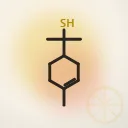 Grapefruit Mercaptan
Aroma chemical · Citrus / Fruity — grapefruit, sulfurous, juicy, tropical
Grapefruit Oil (Expressed) is also suggested as a partner on the pages for Blood Orange Oil, cis-4-Decenal, Rhubofix, Valencene, Vetikol Acetate and Yuzu Oil.
Used in formulas and accords
Used in 32 published formulas
Grapefruit Oil (Expressed) is an ingredient in 25 perfume formulas and 7 accords in the Formula & Accord Library.
Community formulas
RUŌOD House Originals
Original compositions by RUŌOD House.
Further reading
Questions about Grapefruit Oil (Expressed)
Is Grapefruit Oil (Expressed) natural or synthetic?
Grapefruit Oil (Expressed) is natural. It is a volatile oil obtained from plant material by steam distillation or, for citrus peels, by cold expression.
What is the CAS number of Grapefruit Oil (Expressed)?
8016-20-4, the registry number for the essential oil as a substance rather than a single molecule. It was checked against PubChem on 19 October 2026.
Which published formulas use Grapefruit Oil (Expressed)?
Grapefruit Oil (Expressed) is used in 32 published formulas in the RUŌOD Lab Formula & Accord Library, including Agar Lantern, Aperol Spritz Accord and Asphalt Peony. Each is listed with a link under "Used in formulas and accords" on this page.
Is Grapefruit Oil (Expressed) covered by an IFRA Standard?
Yes. The IFRA Standards Library lists a Standard covering it: "Grapefruit oil expressed" — Restriction, 49th Amendment. The limits depend on the product category; read the Standard itself before formulating.
Sources
- PubChem — substance 135277011, checked 19 October 2026.
- IFRA — Standards Library, read 19 October 2026.
- Premiere Peau — Grapefruit — published perfumery reference.
- Scentspiracy — Grapefruit oil — distributor's description.
- Eden Botanicals — Grapefruit, pink — distributor's description.
- Olfactory profile: the RUŌOD Lab team's synthesis of the published descriptions above, reviewed 20 October 2026. Evidence: more than one published description. Classification and the short description: revision 1. Descriptions of odour are judgement, not measurement.