
In short
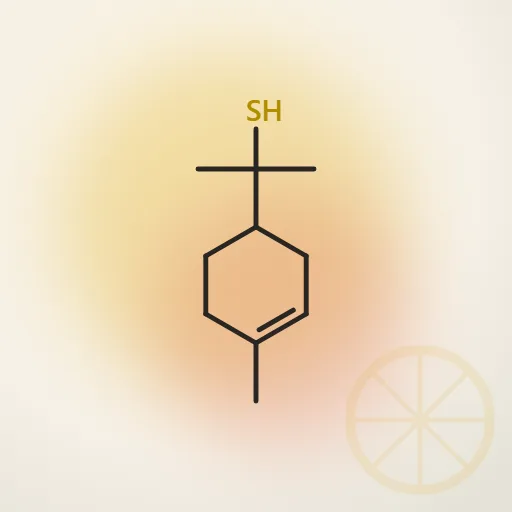
Grapefruit mercaptan, 1-p-menthene-8-thiol, is the character-impact compound of grapefruit juice. It has one of the lowest odour thresholds ever measured.
What Grapefruit Mercaptan smells like
Grapefruit mercaptan (1-p-menthene-8-thiol) is the key odorant of grapefruit juice and has one of the lowest odour thresholds ever recorded. Neat it is extremely powerful and obnoxious; diluted it smells of fresh grapefruit juice — at very high dilution grapefruit, sulphurous, citrus and slightly cooling, with a nootkatone-like juiciness. In grapefruit oil it contributes a juicy, tropical, faintly blackcurrant-like quality at levels far below a part per billion.
- Leading note
- Fresh grapefruit juice
- Clear facets
- Sulphurous
- Supporting facets
- Tropical
- Faint facets
- Cooling
- Character
- Juicy, intense, natural, sulphurous
What makes Grapefruit Mercaptan distinctive
It is grapefruit juice in a single molecule — the reason grapefruit smells mouth-watering — and it changes from repellent to delicious with dilution more dramatically than almost any other material.
Concentration and dilution
Extremely powerful and obnoxious neat; at very high dilution it becomes fresh grapefruit juice. It is sold pre-diluted.
How Grapefruit Mercaptan is used
Used at extreme dilution in grapefruit and tropical flavours and fragrances, and in citrus reconstructions to give juiciness.
Typical role: modifier (used in small amounts to change the character of a blend).
How Grapefruit Mercaptan differs from similar materials
- Grapefruit Oil (Expressed)
- The oil contains the mercaptan as a trace and balances it with peel and bitterness; the mercaptan alone is the juicy, sulphurous note. (compared directly by a cited source)
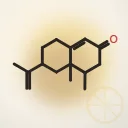
- Nootkatone
- Nootkatone is grapefruit's bitter, woody peel; the mercaptan is its juicy, sulphurous flesh.
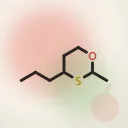
- Oxane
- Oxane is passion fruit first, with a tart grapefruit side and a catty, galbanum-green edge; the mercaptan is grapefruit juice itself.
An asterisk marks a difference that a cited source states directly. The others compare the published descriptions of each material. Smell varies with grade, supplier and dilution; compare them side by side on blotters before substituting one for another.
Formulation considerations
Extremely potent; work from 0.001–0.01% and store separately so it does not contaminate other materials.
Identity and classification
- Type
- Aroma chemical
- Origin
- Occurs in nature
- Odour family
- Citrus / Fruity
- Note position
- Top note
- Physical form at room temperature
- Liquid
- Also known as
- 1-p-Menthene-8-thiol, p-Menth-1-ene-8-thiol
- CAS number
- 71159-90-5
- Molecular formula
- C10H18S
- Molecular weight
- 170.32 g/mol
- IUPAC name
- 2-(4-methylcyclohex-3-en-1-yl)propane-2-thiol
The CAS number, formula and molecular weight are taken from PubChem compound 6427135, whose own record lists this CAS number; checked 19 October 2026.
Safety and compliance
Hazard classification of the neat substance, as PubChem summarises it, read 26 October 2026. Companies notifying the ECHA C&L Inventory report it as not meeting the GHS hazard criteria (1,482 of 1,486 reports). Unless it is harmonised, this is the notifiers' own classification, not a binding one.
This page is general information, not a safety assessment or a specification. Confirm identity, composition, IFRA status and allergen content from your supplier's documents for the lot you hold.
Materials it works with
-

 Nootkatone
Aroma chemical · Citrus / Woody — grapefruit, woody, citrus, bitter
-

 Grapefruit Oil (Expressed)
Essential oil · Citrus / Fruity — citrus, bitter, juicy, sparkling
-

 Oxane
Aroma chemical · Fruity / Green — tropical, passion fruit, sulphurous, grapefruit
-

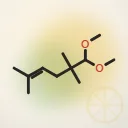 Methyl Pamplemousse
Aroma chemical · Citrus / Green — grapefruit, citrus, green, bitter
Grapefruit Mercaptan is also suggested as a partner on the pages for 2-Isopropyl-4-methylthiazole, 8-Mercapto-p-menthan-3-one, Dimethyl Sulfide and Prenyl Mercaptan.
Used in formulas and accords
Used in 2 published formulas
Grapefruit Mercaptan is an ingredient in 2 perfume formulas in the Formula & Accord Library.
RUŌOD House Originals
Original compositions by RUŌOD House.
Further reading
Questions about Grapefruit Mercaptan
Is Grapefruit Mercaptan natural or synthetic?
The molecule occurs in nature. Commercial Grapefruit Mercaptan may be made by synthesis or obtained from natural sources, so check the supplier's specification if the distinction matters to you.
What is the CAS number of Grapefruit Mercaptan?
71159-90-5. It was checked against PubChem on 19 October 2026.
Which published formulas use Grapefruit Mercaptan?
Grapefruit Mercaptan is used in 2 published formulas in the RUŌOD Lab Formula & Accord Library: Guava Monsoon and Pith & Pepper. Each is listed with a link under "Used in formulas and accords" on this page.
Sources
- PubChem — compound 6427135, checked 19 October 2026.
- PubChem — GHS classification (the ECHA C&L Inventory notifications and any harmonised EU entry), read 26 October 2026.
- Wikipedia — Grapefruit mercaptan — published perfumery reference.
- Schoenauer and Schieberle — structure–odour activity of monoterpenoid mercaptans (2016) — published literature.
- ChemicalBook — 1-p-menthene-8-thiol (CAS 71159-90-5) — odour database.
- Olfactory profile: the RUŌOD Lab team's synthesis of the published descriptions above, reviewed 20 October 2026. Evidence: several independent published descriptions, which agree. Classification and the short description: revision 1. Descriptions of odour are judgement, not measurement.