
In short
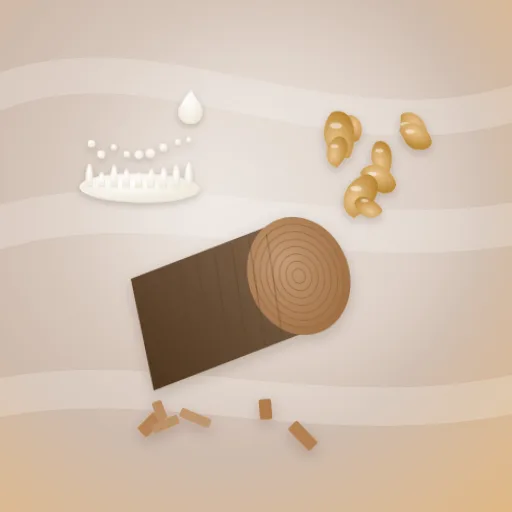
Clearwood is a Firmenich patchouli material made by fermentation rather than distilled from the plant. It is a soft, clean patchouli without the oil's earthy, leathery and rubbery notes.
What Clearwood smells like
Firmenich describes Clearwood, as The Good Scents Company records it, as a soft, clean version of patchouli without the earthy, leathery and rubbery notes; on its page for the concentrated Clearwood Prisma it says Clearwood offers the creamy warmth of amber and a dark woody character reminiscent of patchouli, and contains at least 90% patchoulol. Fraterworks finds a rich, warm woody scent with creamy patchouli-like notes and a subtle amber sweetness.
- Leading note
- Clean patchouli
- Clear facets
- Woody
- Supporting facets
- Creamy, amber
- Character
- Clean, soft
What makes Clearwood distinctive
Patchouli without its earth: the woody heart of the oil, cleaned of the leathery, rubbery parts.
How Clearwood is used
Used for a clean patchouli effect in woody, amber and modern chypre accords, alongside or in place of patchouli oil.
Typical role: backbone (used in large proportions as a structural material of an accord); modifier (used in small amounts to change the character of a blend).
How Clearwood differs from similar materials
- Patchouli Oil
- Firmenich presents Clearwood as a soft, clean patchouli without the earthy, leathery and rubbery notes found in the natural oil. (compared directly by a cited source)
An asterisk marks a difference that a cited source states directly. The others compare the published descriptions of each material. Smell varies with grade, supplier and dilution; compare them side by side on blotters before substituting one for another.
Formulation considerations
Firmenich states that it is made by white biotechnology (fermentation) and contains at least 90% patchoulol; the rest of its composition is not published. It is not patchouli oil. Suppliers give different CAS numbers for it, so none is given here.
Identity and classification
- Type
- Specialty base
- Origin
- Composition not published
- Odour family
- Woody / Amber
- Note position
- Base note
- Physical form at room temperature
- Liquid
No CAS number is shown: Clearwood is a proprietary blend, and a blend has no registry number of its own. Its maker does not publish its composition, so none is given here.
Safety and compliance
This page is general information, not a safety assessment or a specification. Confirm identity, composition, IFRA status and allergen content from your supplier's documents for the lot you hold.
Materials it works with
-

 Patchouli Oil
Essential oil · Woody / Chypre — earthy, woody, camphoraceous, dark
-

 Iso E Super
Aroma chemical · Woody / Amber — woody, velvety, amber, cedar
-
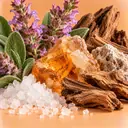
 Ambroxan
Aroma chemical · Amber / Woody — amber, ambergris, woody, mineral
Used in formulas and accords
Used in 13 published formulas
Clearwood is an ingredient in 11 perfume formulas and 2 accords in the Formula & Accord Library.
Community formulas
RUŌOD House Originals
Original compositions by RUŌOD House.
Further reading
Questions about Clearwood
Is Clearwood natural or synthetic?
Clearwood is a proprietary blend whose maker does not publish its composition, so whether it contains natural or synthetic materials is not stated.
Which published formulas use Clearwood?
Clearwood is used in 13 published formulas in the RUŌOD Lab Formula & Accord Library, including Anise Ink, Bitter Bridle and Bright Wolf. Each is listed with a link under "Used in formulas and accords" on this page.
Sources
- The Good Scents Company — Clearwood (Firmenich) — odour database.
- dsm-firmenich — Clearwood Prisma — manufacturer's description.
- Fraterworks — Clearwood — distributor's description.
- Olfactory profile: the RUŌOD Lab team's synthesis of the published descriptions above, reviewed 25 October 2026. Evidence: more than one published description. Classification and the short description: revision 1. Descriptions of odour are judgement, not measurement.