
In short
Timbersilk is an IFF woody-amber material, a grade of the molecules in Iso E Super with a different isomer balance. It is smooth and warm, with cedarwood facets.
What Timbersilk smells like
Fraterworks describes Timbersilk as effectively the same material as Iso E Super but with a different balance of isomers, and gives its odour as a smooth, warm woody-amber character with refined cedarwood facets; its laboratory notes list woody, amber, ambergris, floral and warm.
- Leading note
- Woody amber
- Supporting facets
- Cedarwood, ambergris
- Faint facets
- Floral
- Character
- Smooth, warm
What makes Timbersilk distinctive
Iso E Super's molecules in a different balance, read as smoother and warmer.
How Timbersilk is used
Used as a woody-amber backbone and blender in the way Iso E Super is, where a smoother, warmer character is wanted.
Typical role: backbone (used in large proportions as a structural material of an accord); blender (smooths the joins between other materials).
How Timbersilk differs from similar materials
- Iso E Super
- Fraterworks calls Timbersilk effectively the same material as Iso E Super with a different isomer balance, smoother and warmer, with refined cedarwood facets. (compared directly by a cited source)
An asterisk marks a difference that a cited source states directly. The others compare the published descriptions of each material. Smell varies with grade, supplier and dilution; compare them side by side on blotters before substituting one for another.
Formulation considerations
Sold under the CAS number of Iso E Super, of which it is a different isomer balance; the two are separate products.
Identity and classification
- Type
- Aroma chemical
- Origin
- Synthetic
- Odour family
- Woody / Amber
- Note position
- Base note
- Physical form at room temperature
- Liquid
No CAS number is shown. The identity of Timbersilk is taken from documentation by IFF, Fraterworks; it is a grade of the same octahydro-tetramethyl-naphthalenyl ethanone isomers as Iso E Super, with a different isomer balance, sold under Iso E Super's CAS number, so that number cannot identify it and is not published for this record. Without a verified number there is no formula, molecular weight or structure drawing either.
Safety and compliance
This page is general information, not a safety assessment or a specification. Confirm identity, composition, IFRA status and allergen content from your supplier's documents for the lot you hold.
Materials it works with
-

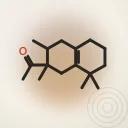 Iso E Super
Aroma chemical · Woody / Amber — woody, velvety, amber, cedar
-
 Cashmeran
Aroma chemical · Woody / Musky — musky, woody, spicy, velvety
-
 Ambroxan
Aroma chemical · Amber / Woody — amber, ambergris, woody, mineral
Used in formulas and accords
Used in 32 published formulas
Timbersilk is an ingredient in 30 perfume formulas and 2 accords in the Formula & Accord Library.
Community formulas
RUŌOD House Originals
Original compositions by RUŌOD House.
Further reading
Questions about Timbersilk
Is Timbersilk natural or synthetic?
Timbersilk is synthetic — it is made by chemical synthesis.
Which published formulas use Timbersilk?
Timbersilk is used in 32 published formulas in the RUŌOD Lab Formula & Accord Library, including Asphalt Peony, Black Pepper Sail and Bleached Driftwood. Each is listed with a link under "Used in formulas and accords" on this page.
Sources
- Fraterworks — Timbersilk — distributor's description.
- Olfactory profile: the RUŌOD Lab team's synthesis of the published descriptions above, reviewed 25 October 2026. Evidence: few published descriptions; treat the detail with caution. Classification and the short description: revision 1. Descriptions of odour are judgement, not measurement.