

In short
Indolene is the condensation product of hydroxycitronellal and indole. It gives a gentler jasmine and orange-flower indole note than indole itself.
What Indolene smells like
Fraterworks describes Indolene as the product of a reaction and vacuum distillation of hydroxycitronellal and indole, of a scent somewhat akin to mothballs and orange flowers, wonderful for a jasmine or orange-blossom base and, alone, a gentler jasmine note than pure indole. IFF's description, as The Good Scents Company lists it, is a floral jasmine note with a slight animalic character, useful for extending natural jasmine absolute.
- Leading note
- Indolic orange blossom
- Supporting facets
- Jasmine, mothball
- Character
- Soft, tenacious
What makes Indolene distinctive
A gentler jasmine than pure indole, with a mothball-and-orange-flower character, as Fraterworks describes it.
Concentration and dilution
Fraterworks sells it pure and as a 50% solution in DEP, because it is very thick.
How Indolene is used
Used to build jasmine and orange-blossom bases, and alone for a softer jasmine note than indole gives.
Typical role: modifier (used in small amounts to change the character of a blend); fixative (slow to evaporate; helps a blend last and holds lighter notes).
How Indolene differs from similar materials
- Aurantiol
- Aurantiol, the methyl anthranilate Schiff base, is honeyed and sweet orange blossom; Indolene, the hydroxycitronellal–indole condensation product, is more indolic and jasmine-like, with a mothball edge.
Each difference compares the published descriptions of the two materials. Smell varies with grade, supplier and dilution; compare them side by side on blotters before substituting one for another.
Formulation considerations
Very thick, so it is often sold diluted (Fraterworks offers it pure and at 50% in DEP). Another product, sold as "Indolene 50" under a different CAS number, is not this material.
Identity and classification
- Type
- Aroma chemical
- Origin
- Synthetic
- Odour family
- Floral / Animalic
- Note position
- Heart to base note
- Physical form at room temperature
- Viscous liquid
- Also known as
- Hydroxycitronellal–indole Schiff base
- CAS number
- 68908-82-7
The CAS number was checked on 25 October 2026 against a PubChem substance record that gives it for this material. Indolene is the condensation product of hydroxycitronellal and indole (a Schiff base), made by reaction and vacuum distillation; PubChem records it as a reaction product rather than as one molecule. So no single formula, molecular weight or structure drawing is given.
Safety and compliance
This page is general information, not a safety assessment or a specification. Confirm identity, composition, IFRA status and allergen content from your supplier's documents for the lot you hold.
Materials it works with
-

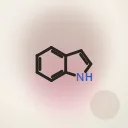 Indole
Aroma chemical · Animalic / Floral — animalic, indolic, floral, narcotic
-

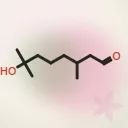 Hydroxycitronellal
Aroma chemical · Floral / Green — muguet, floral, soft, sweet
-
 Jasmine Absolute (Grandiflorum)
Absolute · Floral / Animalic — jasmine, floral, indolic, fruity
Used in formulas and accords
Used in 3 published formulas
Indolene is an ingredient in 2 perfume formulas and 1 accord in the Formula & Accord Library.
Community formulas
RUŌOD House Originals
Original compositions by RUŌOD House.
Further reading
Questions about Indolene
Is Indolene natural or synthetic?
Indolene is synthetic — it is made by chemical synthesis.
What is the CAS number of Indolene?
68908-82-7, the registry number for the aroma chemical as a substance rather than a single molecule. It was checked against PubChem on 25 October 2026.
Which published formulas use Indolene?
Indolene is used in 3 published formulas in the RUŌOD Lab Formula & Accord Library: Orange Blossom Den, Tuberose Under Neon and White Lily Accord. Each is listed with a link under "Used in formulas and accords" on this page.
Sources
- PubChem — substance 441068437, checked 25 October 2026.
- Fraterworks — Indolene — distributor's description.
- PubChem — hydroxycitronellal, indole condensation products (substance) — odour database.
- The Good Scents Company — indolene (with IFF's description) — odour database.
- Olfactory profile: the RUŌOD Lab team's synthesis of the published descriptions above, reviewed 26 October 2026. Evidence: more than one published description. Classification and the short description: revision 1. Descriptions of odour are judgement, not measurement.