
In short
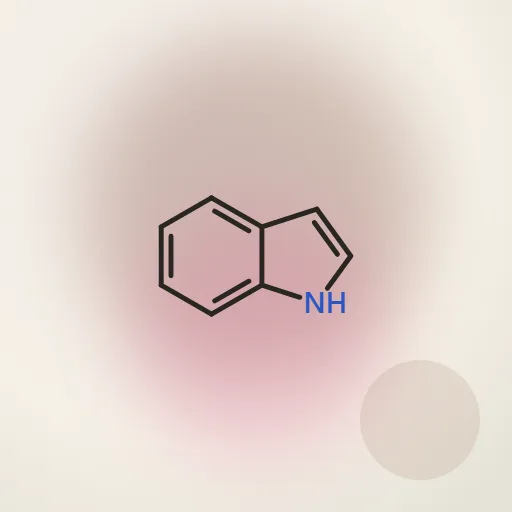
Indole is a nitrogen compound found naturally in jasmine, orange blossom and tuberose. In dilution it gives the heady, animalic depth of white flowers.
What Indole smells like
Indole is among the most concentration-dependent odorants, in a perfumery glossary: below roughly a tenth of a percent in a formula it reads as a dense, narcotic, creamy floral — the nocturnal weight of jasmine — while neat it is faecal. A forum post quoting a perfume book calls the textbook 'faecal, floral in dilution' formula an oversimplification: both indole and skatole smell faecal in faeces and floral in flowers, and a synthetic jasmine with matching indole can still smell of mothballs where natural jasmine does not.
- Leading note
- Narcotic indolic
- Clear facets
- Creamy floral
- Supporting facets
- Faecal, neat
- Faint facets
- Mothball
- Character
- Heavy, narcotic, animalic
What makes Indole distinctive
The heart of white flowers and of decay alike — what makes jasmine heady rather than pretty.
Concentration and dilution
Faecal neat; a dense, narcotic, creamy floral at low levels in a formula.
How Indole is used
Used in traces in jasmine, tuberose, orange blossom, narcissus and other white-floral accords.
Typical role: modifier (used in small amounts to change the character of a blend).
How Indole differs from similar materials
- Skatole
- Skatole is more purely faecal, and sources disagree whether it ever turns floral; indole is the narcotic floral heart. (compared directly by a cited source)
- Narcissus Absolute
- Narcissus owes part of its narcotic heaviness to indole, with green, honey and hay around it. (compared directly by a cited source)
- Jasmine Sambac Absolute
- Jasmine sambac carries indole inside a fresh, fruity-green floral; indole alone is the narcotic, animal core.
- Indolarome
- Indolarome (Indoflor) is a synthetic acetal used in its place: indolic and civet-like with leathery nuances, reported to discolour less than indole.
An asterisk marks a difference that a cited source states directly. The others compare the published descriptions of each material. Smell varies with grade, supplier and dilution; compare them side by side on blotters before substituting one for another.
Formulation considerations
A crystalline solid; dissolve before use and dose from dilution. It discolours, turning pink to brown, especially with light and some materials.
Identity and classification
- Type
- Aroma chemical
- Origin
- Occurs in nature
- Odour family
- Animalic / Floral
- Note position
- Heart to base note
- Physical form at room temperature
- Solid
- CAS number
- 120-72-9
- Molecular formula
- C8H7N
- Molecular weight
- 117.15 g/mol
- IUPAC name
- 1H-indole
The CAS number, formula and molecular weight are taken from PubChem compound 798, whose own record lists this CAS number; checked 19 October 2026.
Safety and compliance
Hazard classification of the neat substance, as PubChem summarises it, read 26 October 2026. Companies notifying the ECHA C&L Inventory classify it (1,996 reports): H302 harmful if swallowed (100% of reports); H311 toxic in contact with skin (99% of reports); H318 causes serious eye damage (11.6% of reports). Unless it is harmonised, this is the notifiers' own classification, not a binding one.
This page is general information, not a safety assessment or a specification. Confirm identity, composition, IFRA status and allergen content from your supplier's documents for the lot you hold.
Materials it works with
-
 Jasmine Absolute (Grandiflorum)
Absolute · Floral / Animalic — jasmine, floral, indolic, fruity
-
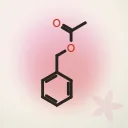 Benzyl Acetate
Aroma chemical · Floral / Fruity — jasmine, fruity, pear, sweet
-

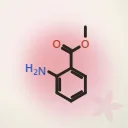 Methyl Anthranilate
Aroma chemical · Floral / Fruity — orange blossom, grape, sweet, floral
-

 Orange Flower Absolute
Absolute · Floral / Animalic — orange blossom, honeyed, indolic, floral
Indole is also suggested as a partner on the pages for Decanoic Acid, Indolarome, Indolene, Jessemal, p-Cresyl Methyl Ether and Skatole.
Used in formulas and accords
Used in 6 published formulas
Indole is an ingredient in 4 perfume formulas and 2 accords in the Formula & Accord Library.
Community formulas
RUŌOD House Originals
Original compositions by RUŌOD House.
Further reading
Questions about Indole
Is Indole natural or synthetic?
The molecule occurs in nature. Commercial Indole may be made by synthesis or obtained from natural sources, so check the supplier's specification if the distinction matters to you.
What is the CAS number of Indole?
120-72-9. It was checked against PubChem on 19 October 2026.
Which published formulas use Indole?
Indole is used in 6 published formulas in the RUŌOD Lab Formula & Accord Library, including Feral Jasmine Accord, Lilac Accord and Musk Cartouche. Each is listed with a link under "Used in formulas and accords" on this page.
Sources
- PubChem — compound 798, checked 19 October 2026.
- PubChem — GHS classification (the ECHA C&L Inventory notifications and any harmonised EU entry), read 26 October 2026.
- Premiere Peau — Indole — published perfumery reference.
- Basenotes — Indole (forum, quoting a perfume book) — published perfumery reference.
- Bioshop — Indole — distributor's description.
- Olfactory profile: the RUŌOD Lab team's synthesis of the published descriptions above, reviewed 24 October 2026. Evidence: more than one published description. Classification and the short description: revision 1. Descriptions of odour are judgement, not measurement.