

In short
Costus Oliffac is an IFF specialty base that replaces costus root oil, which IFRA prohibits and CITES restricts. It has an animalic, wet-dog and goat-like character.
What Costus Oliffac smells like
Fraterworks describes Costus Oliffac as an unusual base with an animalic character in the direction of wet dog or goat, presented as a substitute for natural costus root oil, now prohibited by IFRA and restricted by CITES. It recommends it with orris materials and one for one wherever costus oil is called for in an old formula, and gives its longevity as over 360 hours on a strip. It belongs to IFF's Oliffac range of reconstituted naturals. IFF's own description, as Perflavory lists it, is an animalic, leathery note used to replace natural costus oil and similar to labdanum.
- Leading note
- Animalic
- Clear facets
- Wet dog
- Supporting facets
- Goaty
- Character
- Tenacious, warm
What makes Costus Oliffac distinctive
The costus note, legally: a reconstruction of a prohibited, CITES-listed oil.
How Costus Oliffac is used
Used one for one wherever an older formula calls for costus oil, and with orris materials.
Typical role: modifier (used in small amounts to change the character of a blend); fixative (slow to evaporate; helps a blend last and holds lighter notes).
How Costus Oliffac differs from similar materials
- Tonquitone
- Tonquitone reconstructs deer musk, musky and sweet with ambergris; Costus Oliffac reconstructs costus root, animalic in a wet-dog, goaty direction with labdanum-like leathery facets.
Each difference compares the published descriptions of the two materials. Smell varies with grade, supplier and dilution; compare them side by side on blotters before substituting one for another.
Formulation considerations
A proprietary mixture: its maker does not publish what it contains. Natural costus root oil (Saussurea costus) is prohibited by IFRA and its trade is restricted under CITES.
Identity and classification
- Type
- Specialty base
- Origin
- Composition not published
- Odour family
- Animalic / Powdery
- Note position
- Base note
- Physical form at room temperature
- Liquid
No CAS number is shown: Costus Oliffac is a proprietary blend, and a blend has no registry number of its own. Its maker does not publish its composition, so none is given here.
Safety and compliance
This page is general information, not a safety assessment or a specification. Confirm identity, composition, IFRA status and allergen content from your supplier's documents for the lot you hold.
Materials it works with
-

 Orris Butter (Orris Concrete)
Concrete · Powdery / Woody — powdery, iris, woody, buttery
-
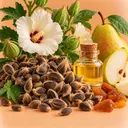
 Ambrette Seed Oil
Essential oil · Musky / Fruity — musky, fruity, pear, winey
-
 Civetone
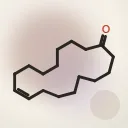
Aroma chemical · Animalic / Musky — animalic, musky, warm, fecal
Used in formulas and accords
Used in 3 published formulas
Costus Oliffac is an ingredient in 2 accords and 1 base in the Formula & Accord Library.
Further reading
Questions about Costus Oliffac
Is Costus Oliffac natural or synthetic?
Costus Oliffac is a proprietary blend whose maker does not publish its composition, so whether it contains natural or synthetic materials is not stated.
Which published formulas use Costus Oliffac?
Costus Oliffac is used in 3 published formulas in the RUŌOD Lab Formula & Accord Library: Lipstick Accord, Mousse de Chypre Base and Paper Accord. Each is listed with a link under "Used in formulas and accords" on this page.
Sources
- Fraterworks — Costus Oliffac — distributor's description.
- Scentspiracy — Inside Oliffac: how IFF re-engineered natural scents — distributor's description.
- Perflavory — Costus Oliffac (IFF) — odour database.
- Olfactory profile: the RUŌOD Lab team's synthesis of the published descriptions above, reviewed 26 October 2026. Evidence: more than one published description. Classification and the short description: revision 1. Descriptions of odour are judgement, not measurement.