
In short
Tonquitone is an IFF specialty base reconstructing Tonkin deer musk. Its composition is IFF's and is not published.
What Tonquitone smells like
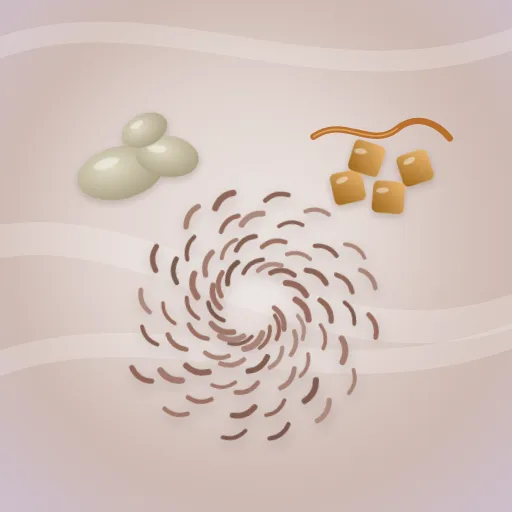
Fraterworks describes IFF's Tonquitone as a reconstruction of natural Tonkin deer musk: animalic warmth with a rich, slightly urinous musk character, ambergris-like depth, sweet caramel-vanilla facets and dry-woody undertones, with a civet character emerging at higher doses. Scentspiracy, naming IFF as the manufacturer, describes a musky-animalic fixative with a realistic deer-musk facet, ambergris, dry wood, sweet caramel-vanilla and slight urinous nuances, used as a backbone in leather, chypre, oriental and fougère accords.
- Leading note
- Animalic musk
- Supporting facets
- Ambergris, caramel
- Faint facets
- Woody
- Character
- Warm, skin-like
What makes Tonquitone distinctive
A reconstruction of Tonkin deer musk — animalic, slightly urinous, with ambergris depth and a civet side at higher doses.
How Tonquitone is used
Used in traces to fix and enrich leather, chypre, oriental and fougère accords.
Typical role: fixative (slow to evaporate; helps a blend last and holds lighter notes); modifier (used in small amounts to change the character of a blend).
How Tonquitone differs from similar materials
- Costus Oliffac
- Costus Oliffac is the goatier, leathery-labdanum animal note of costus root; Tonquitone is a deer-musk reconstruction, musky and caramel-sweet with ambergris.
- Civet Absolute
- Civet absolute is the natural fecal-animalic material; Tonquitone is a deer-musk reconstruction, musky and caramel-sweet, whose civet character emerges only at higher doses.
Each difference compares the published descriptions of the two materials. Smell varies with grade, supplier and dilution; compare them side by side on blotters before substituting one for another.
Formulation considerations
A proprietary mixture: its maker does not publish what it contains.
Identity and classification
- Type
- Specialty base
- Origin
- Composition not published
- Odour family
- Animalic / Musky
- Note position
- Base note
- Physical form at room temperature
- Liquid
No CAS number is shown: Tonquitone is a proprietary blend, and a blend has no registry number of its own. Its maker does not publish its composition, so none is given here.
Safety and compliance
This page is general information, not a safety assessment or a specification. Confirm identity, composition, IFRA status and allergen content from your supplier's documents for the lot you hold.
Materials it works with
-

 Muscone
Aroma chemical · Musky / Animalic — musky, animalic, warm, powdery
-
 Civetone
Aroma chemical · Animalic / Musky — animalic, musky, warm, fecal
-
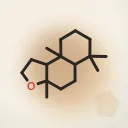 Ambroxan
Aroma chemical · Amber / Woody — amber, ambergris, woody, mineral
Used in formulas and accords
Used in 3 published formulas
Tonquitone is an ingredient in 2 perfume formulas and 1 accord in the Formula & Accord Library.
Community formulas
RUŌOD House Originals
Original compositions by RUŌOD House.
Further reading
Questions about Tonquitone
Is Tonquitone natural or synthetic?
Tonquitone is a proprietary blend whose maker does not publish its composition, so whether it contains natural or synthetic materials is not stated.
Which published formulas use Tonquitone?
Tonquitone is used in 3 published formulas in the RUŌOD Lab Formula & Accord Library: Fur & Fruit, Musk Cartouche and Oud Accord. Each is listed with a link under "Used in formulas and accords" on this page.
Sources
- Fraterworks — Tonquitone — distributor's description.
- Scentspiracy — Tonquitone — distributor's description.
- Olfactory profile: the RUŌOD Lab team's synthesis of the published descriptions above, reviewed 26 October 2026. Evidence: more than one published description. Classification and the short description: revision 1. Descriptions of odour are judgement, not measurement.