
In short
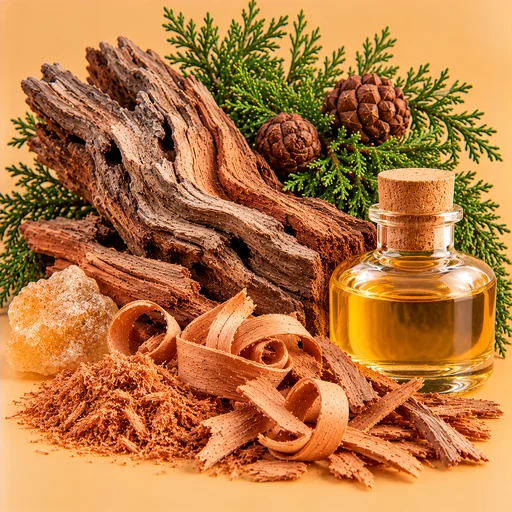
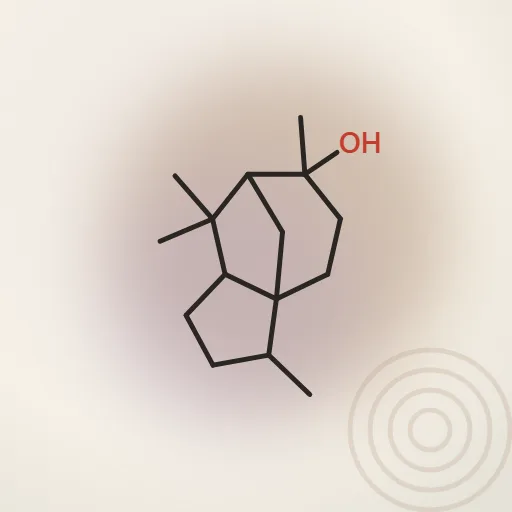
Cedrol is a sesquiterpene alcohol isolated from cedarwood oil. It has a faint, soft, dry wood note and is used mainly as a fixative.
What Cedrol smells like
Cedrol is very faint when pure — almost odourless — of the cedarwood type, with a low but tenacious woody profile, in a supplier's description. Arctander, quoted on a forum, describes the cedrol and cedrenol fractions of cedarwood as weak but very pleasant woody-balsamic. A forum perfumer found it woody, old-wood-like and warm, with a faint vanilla note, rather than 'characteristic cedar'.
- Leading note
- Faint warm wood
- Supporting facets
- Balsamic, old wood
- Faint facets
- Vanilla
- Character
- Faint, soft, tenacious
What makes Cedrol distinctive
Cedar's quiet fixative: nearly odourless pure, a soft old-wood warmth that lasts.
Where the descriptions disagree: Sources call it characteristic cedar; one forum perfumer found it more old-wood and vanilla-like.
How Cedrol is used
Used as a woody fixative and blender, and as the starting material for cedryl acetate and other derivatives.
Typical role: fixative (slow to evaporate; helps a blend last and holds lighter notes).
How Cedrol differs from similar materials
- Cedryl Acetate
- Cedryl acetate, made from cedrol, is a sweeter, clearer light cedar with a vetiver-like note. (compared directly by a cited source)
- alpha-Cedrene
- A glossary finds cedrene more angular, sharp pencil shavings; cedrol is faint and warm. (compared directly by a cited source)
- Cedarwood Oil (Virginia)
- Virginia cedarwood is the full dry pencil wood; cedrol is one of its faint, tenacious constituents.
- Cedarwood Oil (Texas)
- Texas cedarwood's heavy fractions are mainly cedrol and cedrenol; the oil adds smoke and tar. (compared directly by a cited source)
- Vertofix
- Vertofix, made from cedarwood, is a stronger dry wood with musk, leather and amber; cedrol is fainter and plainer.
An asterisk marks a difference that a cited source states directly. The others compare the published descriptions of each material. Smell varies with grade, supplier and dilution; compare them side by side on blotters before substituting one for another.
Formulation considerations
A crystalline solid; dissolve before use.
Identity and classification
- Type
- Natural isolate
- Origin
- Natural
- Odour family
- Woody / Musky
- Note position
- Base note
- Physical form at room temperature
- Solid
- CAS number
- 77-53-2
- Molecular formula
- C15H26O
- Molecular weight
- 222.37 g/mol
- IUPAC name
- (1S,2R,5S,7R,8R)-2,6,6,8-tetramethyltricyclo[5.3.1.01,5]undecan-8-ol
The CAS number, formula and molecular weight are taken from PubChem compound 65575, whose own record lists this CAS number; checked 19 October 2026.
Safety and compliance
Hazard classification of the neat substance, as PubChem summarises it, read 26 October 2026. Companies notifying the ECHA C&L Inventory classify it (1,823 reports): H411 toxic to aquatic life with long lasting effects (99.8% of reports). 2 of the reports find it does not meet the hazard criteria. Unless it is harmonised, this is the notifiers' own classification, not a binding one.
This page is general information, not a safety assessment or a specification. Confirm identity, composition, IFRA status and allergen content from your supplier's documents for the lot you hold.
Materials it works with
-

 Cedryl Acetate
Aroma chemical · Woody / Leather — woody, dry, cedar, soft
-

 Cedarwood Oil (Virginia)
Essential oil · Woody / Aromatic — woody, dry, pencil shavings, clean
Cedrol is also suggested as a partner on the pages for alpha-Cedrene, Black Pepper Absolute, Caryophyllene Oxide, Cedar Leaf Oil, Copaiba Balsam and Orivone.
Used in formulas and accords
Used in 35 published formulas
Cedrol is an ingredient in 32 perfume formulas and 3 accords in the Formula & Accord Library.
RUŌOD House Originals
Original compositions by RUŌOD House.
Further reading
Questions about Cedrol
Is Cedrol natural or synthetic?
Cedrol is natural. It is a single molecule separated from a natural raw material.
What is the CAS number of Cedrol?
77-53-2. It was checked against PubChem on 19 October 2026.
Which published formulas use Cedrol?
Cedrol is used in 35 published formulas in the RUŌOD Lab Formula & Accord Library, including Asphalt Peony, Birch Ghost and Black Pepper Sail. Each is listed with a link under "Used in formulas and accords" on this page.
Sources
- PubChem — compound 65575, checked 19 October 2026.
- PubChem — GHS classification (the ECHA C&L Inventory notifications and any harmonised EU entry), read 26 October 2026.
- Scentspiracy — Cedrol crystals — distributor's description.
- Basenotes — Need help understanding cedrenol (forum, quoting Arctander) — published perfumery reference.
- Olfactory profile: the RUŌOD Lab team's synthesis of the published descriptions above, reviewed 21 October 2026. Evidence: more than one published description. Classification and the short description: revision 1. Descriptions of odour are judgement, not measurement.