
In short
alpha-Ionone is an ionone with a sweet violet-flower character, softer and more floral than beta-ionone.
What alpha-Ionone smells like
Alpha-ionone is a sweet, powdery violet with a fruity, raspberry-like and slightly woody side. It is one of the two ionones whose combination makes violets smell like violets. Sources disagree on how it differs from beta-ionone: one glossary calls alpha the sweeter, more delicate violet-raspberry, a flavour writer found it a cleaner, more floral violet than beta, while a supplier says alpha carries more of the ionones' cedar aspect. Commercial beta-ionone can contain a substantial share of alpha, which blurs comparisons.
- Leading note
- Sweet violet
- Clear facets
- Powdery
- Supporting facets
- Raspberry, woody, cedar
- Character
- Sweet, powdery, soft, fruity
What makes alpha-Ionone distinctive
The cleaner, sweeter violet of the pair — half of the violet note, with beta-ionone the other half.
Where the descriptions disagree: Sources disagree on which ionone is woodier and which fruitier.
How alpha-Ionone is used
Used in violet, orris, powdery and floral compositions, in raspberry and berry flavours, and as a building block for woody-violet accords.
Typical role: modifier (used in small amounts to change the character of a blend).
How alpha-Ionone differs from similar materials
- beta-Ionone
- Sources disagree on the split: most describe beta as the woodier, darker and more raspberry-fruity ionone and alpha as the cleaner, sweeter violet; one supplier says the reverse for the cedar note. (compared directly by a cited source)
- alpha-Isomethyl Ionone
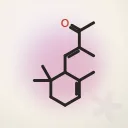
- Alpha-isomethyl ionone is more orris-like, velvety and powdery, less fruity; alpha-ionone is the sweeter, fruitier violet.
- alpha-Irone
- A supplier calls them very similar, with the cheaper ionones often used instead; alpha-irone is more diffusive and more orris-root-like, smoother and less fruity. (compared directly by a cited source)
- Allyl Ionone
- Allyl ionone, its allyl derivative, is described as fruity and woody.
An asterisk marks a difference that a cited source states directly. The others compare the published descriptions of each material. Smell varies with grade, supplier and dilution; compare them side by side on blotters before substituting one for another.
Formulation considerations
Stable; often supplied in mixtures with beta-ionone.
Identity and classification
- Type
- Aroma chemical
- Origin
- Occurs in nature
- Odour family
- Powdery / Fruity
- Note position
- Heart note
- Physical form at room temperature
- Liquid
- CAS number
- 127-41-3
- Molecular formula
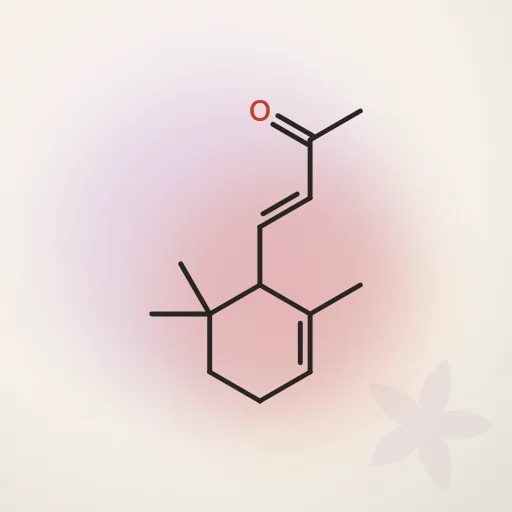
- C13H20O
- Molecular weight
- 192.3 g/mol
- IUPAC name
- (E)-4-(2,6,6-trimethylcyclohex-2-en-1-yl)but-3-en-2-one
The CAS number, formula and molecular weight are taken from PubChem compound 5282108, whose own record lists this CAS number; checked 19 October 2026.
Safety and compliance
Hazard classification of the neat substance, as PubChem summarises it, read 26 October 2026. Companies notifying the ECHA C&L Inventory report it as not meeting the GHS hazard criteria (1,609 of 1,789 reports). Unless it is harmonised, this is the notifiers' own classification, not a binding one.
This page is general information, not a safety assessment or a specification. Confirm identity, composition, IFRA status and allergen content from your supplier's documents for the lot you hold.
Materials it works with
-
 beta-Ionone
Aroma chemical · Powdery / Woody — violet, woody, fruity, raspberry
-
 alpha-Isomethyl Ionone
Aroma chemical · Powdery / Floral — powdery, violet, orris, woody
-
 Violet Leaf Absolute
Absolute · Green / Aquatic — green, leafy, cucumber, watery
alpha-Ionone is also suggested as a partner on the pages for Allyl Ionone, Cassie Absolute, Koavone, Orris Absolute, Undecavertol and Violiff.
Used in formulas and accords
Used in 23 published formulas
alpha-Ionone is an ingredient in 9 perfume formulas and 14 accords in the Formula & Accord Library.
Community formulas
RUŌOD House Originals
Original compositions by RUŌOD House.
Further reading
Questions about alpha-Ionone
Is alpha-Ionone natural or synthetic?
The molecule occurs in nature. Commercial alpha-Ionone may be made by synthesis or obtained from natural sources, so check the supplier's specification if the distinction matters to you.
What is the CAS number of alpha-Ionone?
127-41-3. It was checked against PubChem on 19 October 2026.
Which published formulas use alpha-Ionone?
alpha-Ionone is used in 23 published formulas in the RUŌOD Lab Formula & Accord Library, including Açaí Accord, Anise Ink and Birch Ghost. Each is listed with a link under "Used in formulas and accords" on this page.
Sources
- PubChem — compound 5282108, checked 19 October 2026.
- PubChem — GHS classification (the ECHA C&L Inventory notifications and any harmonised EU entry), read 26 October 2026.
- Wikipedia — Ionone — published perfumery reference.
- Perfumer & Flavorist — John Wright, Flavor bites: ionone — published literature.
- Premiere Peau — Alpha ionone — published perfumery reference.
- Olfactory profile: the RUŌOD Lab team's synthesis of the published descriptions above, reviewed 24 October 2026. Evidence: more than one published description. Classification and the short description: revision 1. Descriptions of odour are judgement, not measurement.