
In short
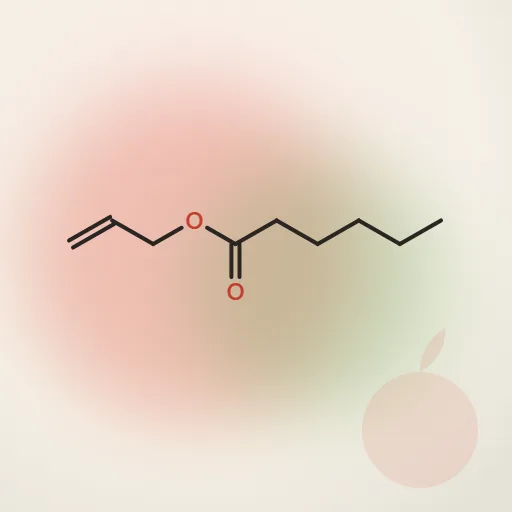
Allyl caproate (allyl hexanoate) is an ester with a sweet, fruity pineapple note.
What Allyl Caproate smells like
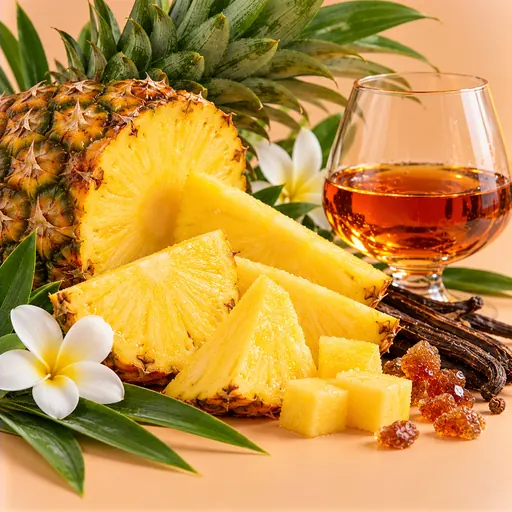
Allyl caproate smells first of ripe pineapple — sweet, fruity and noticeably fatty rather than green or sharp. The published descriptions agree on that core and add a second thread that sets it apart: a boozy warmth that several sources liken to rum, arrack or cognac. Arctander describes it as slightly pungent and fatty-fruity, recalling pineapple, rum and arrack, with a remote hint of peach. It is a volatile top-note ester — The Good Scents Company rates its substantivity at under an hour on a blotter — so its pineapple is quick and bright rather than lasting.
- Leading note
- Ripe pineapple
- Clear facets
- Fatty
- Supporting facets
- Rum and arrack
- Faint facets
- Cognac, peach
- Character
- Sweet, juicy, fatty, ripe
What makes Allyl Caproate distinctive
Among the pineapple esters it is the fatty, boozy one: its pineapple carries a rum or arrack nuance that the smoother allyl cyclohexylpropionate and the greener allyl amyl glycolate do not lead with. Arctander also judged it less ethereal, but more naturally pineapple-like, than methyl caproate.
Concentration and dilution
Strong enough that The Good Scents Company recommends smelling it at 10% or less; neat, Arctander finds it slightly pungent. The sources consulted do not describe its character changing further with dilution.
How Allyl Caproate is used
A pineapple top note, used to build pineapple and tropical-fruit accords and to make a citrus or fruity opening riper and juicier; Bedoukian suggests it as a fruity top note for citrus complexes, particularly orange. It is also a flavour material, for pineapple, rum and tropical flavours, which says something about how literal its fruit is. Because it fades quickly it gives the opening of a pineapple accord rather than its body.
Typical role: modifier (used in small amounts to change the character of a blend).
How Allyl Caproate differs from similar materials
- Allyl Cyclohexylpropionate
- Arctander found allyl cyclohexylpropionate smoother and sweeter. Allyl caproate is the fattier, more rum-like of the two, and far shorter-lived on a blotter. (compared directly by a cited source)
- Allyl Heptanoate
- Allyl heptanoate is described with banana and chamomile nuances and a waxier feel; allyl caproate's supporting note is rum and arrack instead.
- Allyl Amyl Glycolate
- Allyl amyl glycolate is green and galbanum-like with a sharp, slightly metallic edge; allyl caproate is ripe, sweet and fatty, with no galbanum character.
- Ethyl Butyrate
- Ethyl butyrate is lighter and more ethereal — a general tutti-frutti used mostly in flavours. Allyl caproate is more specifically pineapple, and fattier.
- Ethyl Hexanoate
- Ethyl hexanoate pairs its pineapple with banana and a winey, estery note; allyl caproate's supporting note is rum and arrack.
An asterisk marks a difference that a cited source states directly. The others compare the published descriptions of each material. Smell varies with grade, supplier and dilution; compare them side by side on blotters before substituting one for another.
Formulation considerations
As an allyl ester it falls under the IFRA specification on free allyl alcohol.
Identity and classification
- Type
- Aroma chemical
- Origin
- Synthetic
- Odour family
- Fruity / Green
- Note position
- Top note
- Physical form at room temperature
- Liquid
- Also known as
- Allyl hexanoate
- CAS number
- 123-68-2
- Molecular formula
- C9H16O2
- Molecular weight
- 156.22 g/mol
- IUPAC name
- prop-2-enyl hexanoate
The CAS number, formula and molecular weight are taken from PubChem compound 31266, whose own record lists this CAS number; checked 19 October 2026.
Safety and compliance
The IFRA Standards Library lists a Standard covering Allyl Caproate:
- "Allyl esters" — Specification, 44th Amendment, published 2009-01
Limits differ by product category and are set out in the Standard itself; this page does not reproduce them. The list above reflects the library as read on 19 October 2026.
Hazard classification of the neat substance, as PubChem summarises it, read 26 October 2026. Companies notifying the ECHA C&L Inventory classify it (1,663 reports): H311 toxic in contact with skin (97.2% of reports); H301 toxic if swallowed (94.9% of reports); H400 very toxic to aquatic life (80.2% of reports); H412 harmful to aquatic life with long lasting effects (78.8% of reports); H331 toxic if inhaled (76.4% of reports); H411 toxic to aquatic life with long lasting effects (14% of reports); H315 causes skin irritation (13.3% of reports); H410 very toxic to aquatic life with long lasting effects (11.8% of reports); H319 causes serious eye irritation (10.3% of reports). Unless it is harmonised, this is the notifiers' own classification, not a binding one.
This page is general information, not a safety assessment or a specification. Confirm identity, composition, IFRA status and allergen content from your supplier's documents for the lot you hold.
Materials it works with
-
 Allyl Amyl Glycolate
Aroma chemical · Green / Fruity — green, pineapple, galbanum, fruity
-

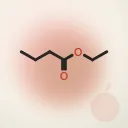 Ethyl Butyrate
Aroma chemical · Fruity / Gourmand — pineapple, fruity, sweet
-
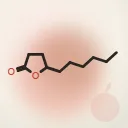 gamma-Decalactone
Aroma chemical · Fruity / Gourmand — peach, fruity, creamy
Allyl Caproate is also suggested as a partner on the pages for Allyl Cyclohexylpropionate, Allyl Heptanoate, Ethyl Hexanoate, Fructone and Isopropyl 2-Methylbutyrate.
Used in formulas and accords
Used in 10 published formulas
Allyl Caproate is an ingredient in 2 perfume formulas, 7 accords and 1 base in the Formula & Accord Library.
Community formulas
RUŌOD House Originals
Original compositions by RUŌOD House.
Further reading
Questions about Allyl Caproate
Is Allyl Caproate natural or synthetic?
Allyl Caproate is synthetic — it is made by chemical synthesis.
What is the CAS number of Allyl Caproate?
123-68-2. It was checked against PubChem on 19 October 2026.
Which published formulas use Allyl Caproate?
Allyl Caproate is used in 10 published formulas in the RUŌOD Lab Formula & Accord Library, including Banana Bread, Blueberry Accord and Cherry Accord. Each is listed with a link under "Used in formulas and accords" on this page.
Is Allyl Caproate covered by an IFRA Standard?
Yes. The IFRA Standards Library lists a Standard covering it: "Allyl esters" — Specification, 44th Amendment. The limits depend on the product category; read the Standard itself before formulating.
Sources
- PubChem — compound 31266, checked 19 October 2026.
- PubChem — GHS classification (the ECHA C&L Inventory notifications and any harmonised EU entry), read 26 October 2026.
- IFRA — Standards Library, read 19 October 2026.
- The Good Scents Company — allyl hexanoate (compiling Luebke, Mosciano, Bedoukian, Symrise, Givaudan and Pell Wall descriptions) — odour database.
- S. Arctander, Perfume and Flavor Chemicals (1969), as quoted by The Good Scents Company — published perfumery reference.
- Olfactory profile: the RUŌOD Lab team's synthesis of the published descriptions above, reviewed 20 October 2026. Evidence: several independent published descriptions, which agree. Classification and the short description: revision 1. Descriptions of odour are judgement, not measurement.