
In short
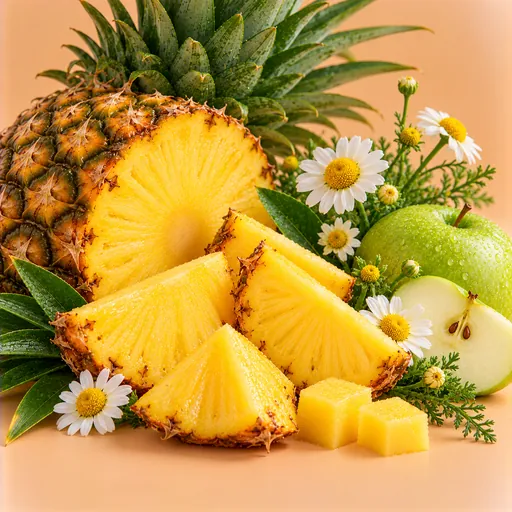
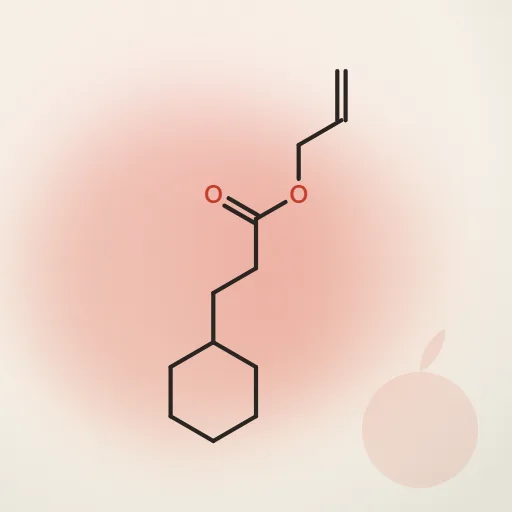
Allyl cyclohexylpropionate is an allyl ester with a strong, sweet pineapple odour. It is one of the main materials for pineapple accords.
What Allyl Cyclohexylpropionate smells like
Allyl cyclohexylpropionate gives a powerful, sweet pineapple that the published descriptions consistently call smoother and rounder than the other allyl esters. Arctander describes it as powerful and sweet-fruity, smoother and sweeter than allyl caproate, with a fruitiness he likens to that of linalyl acetate. Supplier descriptions add a floral-herbaceous nuance recalling chamomile blossom, and some note a waxy, green-apple side. It is also unusually persistent for a fruity ester: suppliers report it lasting for days on a blotter, although their figures vary widely, so it carries pineapple well beyond the opening.
- Leading note
- Sweet pineapple
- Supporting facets
- Chamomile-like floral-herbal
- Faint facets
- Waxy, green apple
- Character
- Sweet, smooth, rounded, juicy
What makes Allyl Cyclohexylpropionate distinctive
Its smoothness and its staying power. Allyl caproate is fatty and rum-like and fades within the hour; allyl cyclohexylpropionate is sweeter and rounder and lingers, which is why it is treated as a mainstay of pineapple accords rather than a fleeting top note. A faint chamomile-like herbal facet, reported for allyl heptanoate too, is the other point of recognition.
Concentration and dilution
Strong enough that it is commonly handled as a dilution in dipropylene glycol for accurate dosing. The sources consulted do not describe its character changing with dilution.
Where the descriptions disagree: Suppliers' blotter-life figures differ widely, from about two days to over ten; all agree it is long-lasting for a fruity ester.
How Allyl Cyclohexylpropionate is used
Used to build the body of pineapple and tropical accords and to give fruity florals and fruity chypres a sweet, fruity lift. Because it lasts far longer than the light fruit esters, it can carry a pineapple impression into the heart of a fragrance, where allyl caproate or ethyl butyrate gives only the opening.
Typical role: modifier (used in small amounts to change the character of a blend).
How Allyl Cyclohexylpropionate differs from similar materials
- Allyl Caproate
- Arctander judged allyl cyclohexylpropionate smoother and sweeter. Allyl caproate is fattier, with a rum-like nuance, and fades far sooner. (compared directly by a cited source)
- Allyl Heptanoate
- Both carry a chamomile-like nuance in supplier descriptions. Allyl heptanoate adds banana and a waxy, slightly fermented ripeness; allyl cyclohexylpropionate is the smoother, purer pineapple.
- Allyl Phenoxyacetate
- Allyl phenoxyacetate shares the chamomile facet but leads with honey and a green, galbanum-like edge; allyl cyclohexylpropionate is the cleaner pineapple.
An asterisk marks a difference that a cited source states directly. The others compare the published descriptions of each material. Smell varies with grade, supplier and dilution; compare them side by side on blotters before substituting one for another.
Formulation considerations
Allyl esters must meet IFRA's specification on free allyl alcohol. Check the Standard and your supplier's documents.
Identity and classification
- Type
- Aroma chemical
- Origin
- Synthetic
- Odour family
- Fruity
- Note position
- Top to heart note
- Physical form at room temperature
- Liquid
- Also known as
- Allyl 3-cyclohexylpropanoate
- CAS number
- 2705-87-5
- Molecular formula
- C12H20O2
- Molecular weight
- 196.29 g/mol
- IUPAC name
- prop-2-enyl 3-cyclohexylpropanoate
The CAS number, formula and molecular weight are taken from PubChem compound 17617, whose own record lists this CAS number; checked 19 October 2026.
Safety and compliance
The IFRA Standards Library lists Standards covering Allyl Cyclohexylpropionate:
- "Allyl 3-cyclohexylpropionate" — type not stated in the library listing, 51st Amendment, published 2023-06
- "Allyl esters" — Specification, 44th Amendment, published 2009-01
Limits differ by product category and are set out in the Standard itself; this page does not reproduce them. The list above reflects the library as read on 19 October 2026.
Hazard classification of the neat substance, as PubChem summarises it, read 26 October 2026. Companies notifying the ECHA C&L Inventory classify it (2,014 reports): H302 harmful if swallowed (99.9% of reports); H312 harmful in contact with skin (98% of reports); H332 harmful if inhaled (84% of reports); H410 very toxic to aquatic life with long lasting effects (83.2% of reports); H317 may cause an allergic skin reaction (83% of reports); H400 very toxic to aquatic life (81.9% of reports); H315 causes skin irritation (13% of reports). A skin sensitiser classification concerns handling the neat material and the dose in a finished product; the IFRA Standards, where they apply, set the limits. Unless it is harmonised, this is the notifiers' own classification, not a binding one.
This page is general information, not a safety assessment or a specification. Confirm identity, composition, IFRA status and allergen content from your supplier's documents for the lot you hold.
Materials it works with
-
 Allyl Caproate
Aroma chemical · Fruity / Green — pineapple, fruity, sweet
-

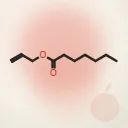 Allyl Heptanoate
Aroma chemical · Fruity — pineapple, fruity, sweet, banana
-

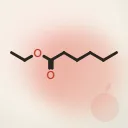 Ethyl Hexanoate
Aroma chemical · Fruity — fruity, pineapple, banana, winey
-

 Galbanum Oil
Essential oil · Green / Resinous — green, sharp, bitter, resinous
Allyl Cyclohexylpropionate is also suggested as a partner on the pages for Allyl Phenoxyacetate.
Used in formulas and accords
Used in 4 published formulas
Allyl Cyclohexylpropionate is an ingredient in 4 accords in the Formula & Accord Library.
Further reading
Questions about Allyl Cyclohexylpropionate
Is Allyl Cyclohexylpropionate natural or synthetic?
Allyl Cyclohexylpropionate is synthetic — it is made by chemical synthesis.
What is the CAS number of Allyl Cyclohexylpropionate?
2705-87-5. It was checked against PubChem on 19 October 2026.
Which published formulas use Allyl Cyclohexylpropionate?
Allyl Cyclohexylpropionate is used in 4 published formulas in the RUŌOD Lab Formula & Accord Library, including Green Apple Accord, Mango Accord and Pineapple Accord. Each is listed with a link under "Used in formulas and accords" on this page.
Is Allyl Cyclohexylpropionate covered by an IFRA Standard?
Yes. The IFRA Standards Library lists Standards covering it: "Allyl 3-cyclohexylpropionate" — type not stated in the library listing, 51st Amendment; "Allyl esters" — Specification, 44th Amendment. The limits depend on the product category; read the Standard itself before formulating.
Sources
- PubChem — compound 17617, checked 19 October 2026.
- PubChem — GHS classification (the ECHA C&L Inventory notifications and any harmonised EU entry), read 26 October 2026.
- IFRA — Standards Library, read 19 October 2026.
- The Good Scents Company — allyl cyclohexyl propionate — odour database.
- S. Arctander, Perfume and Flavor Chemicals (1969), as quoted by The Good Scents Company — published perfumery reference.
- Fraterworks — allyl cyclohexyl propionate — distributor's description.
- Scentspiracy — Allyl Cyclohexyl Propionate (ACHP) — distributor's description.
- Olfactory profile: the RUŌOD Lab team's synthesis of the published descriptions above, reviewed 20 October 2026. Evidence: several independent published descriptions, which agree. Classification and the short description: revision 1. Descriptions of odour are judgement, not measurement.