
In short
Allyl amyl glycolate (AAG) is a powerful green-fruity ester with a galbanum and pineapple character.
What Allyl Amyl Glycolate smells like
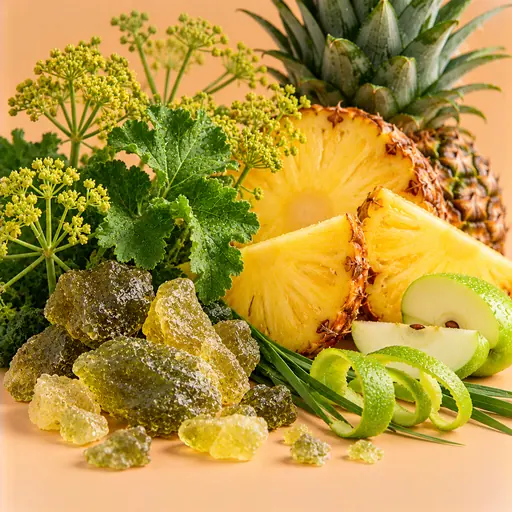
Allyl amyl glycolate (AAG) joins two smells that are usually separate: the sharp, resinous green of galbanum and the fruit of pineapple. Its manufacturer's description, as distributors report it, is strong and fruity with a galbanum character. Distributors add a tart, slightly metallic edge to the green, and one a faint sulphurous undertone. Its balance shifts as it evaporates — one supplier describes a fresh pineapple opening that turns greener and more powdery in the galbanum direction — and it is extremely potent, with a reported odour threshold in the low parts per billion. Neat it reads as acrid rather than fruity.
- Leading note
- Shared: green galbanum and pineapple
- Supporting facets
- Metallic
- Faint facets
- Tart apple, powdery, sulphurous
- Character
- Sharp, green, tart, diffusive
What makes Allyl Amyl Glycolate distinctive
It is the pineapple material in which green leads. Allyl caproate and allyl cyclohexylpropionate are sweet, ripe fruit; AAG is sharp and galbanum-green with a metallic edge, which is why a trace projects a green-fruity brightness across a whole composition. Among the galbanum-type synthetics it is the most pineapple-forward: Cyclogalbanate is described as more herbal and cool-spicy, Dynascone as adding a hyacinth-like floral tone.
Concentration and dilution
Distributors describe the neat material as acrid, with the green pineapple character emerging only at around 0.1%. It is usually weighed from a 10% dilution.
Where the descriptions disagree: One distributor describes it as watermelon, cucumber and cut grass rather than pineapple; every other source consulted names pineapple and galbanum. No primary manufacturer data sheet was found.
How Allyl Amyl Glycolate is used
Used in traces to give a sharp green-fruity lift to fresh, green, fougère and fruity compositions, bringing a galbanum-like greenness with fruit attached. Distributors note it projects strongly even at trace levels, so small changes in dose alter a formula noticeably.
Typical role: modifier (used in small amounts to change the character of a blend); lift (adds diffusion and radiance, especially at the top).
How Allyl Amyl Glycolate differs from similar materials
- Allyl Caproate
- Allyl caproate is ripe, sweet, fatty pineapple with a rum nuance; AAG is sharp and green, with galbanum and a metallic edge leading.
- Cyclogalbanate
- Cyclogalbanate is described as green-herbal galbanum with cool, dry-spicy nuances and quieter fruit; AAG puts more pineapple into its greenness.
- Dynascone
- Dynascone is described as even more powerful and diffusive, with a hyacinth-like floral side; AAG is fruitier and more metallic-green.
- Allyl Phenoxyacetate
- Allyl phenoxyacetate has a similar green-and-pineapple pairing softened by honey and chamomile; AAG is sharper, more metallic and more galbanum-like.
- Galbanum Oil
- Galbanum oil is the natural, resinous green — bitter and balsamic, with no fruit; AAG is a synthetic galbanum-type note with pineapple attached.
Each difference compares the published descriptions of the two materials. Smell varies with grade, supplier and dilution; compare them side by side on blotters before substituting one for another.
Formulation considerations
Very strong. As an allyl ester it falls under the IFRA specification on free allyl alcohol.
Identity and classification
- Type
- Aroma chemical
- Origin
- Synthetic
- Odour family
- Green / Fruity
- Note position
- Top note
- Physical form at room temperature
- Liquid
- Also known as
- AAG
- CAS number
- 67634-00-8
- Molecular formula
- C10H18O3
- Molecular weight
- 186.25 g/mol
- IUPAC name
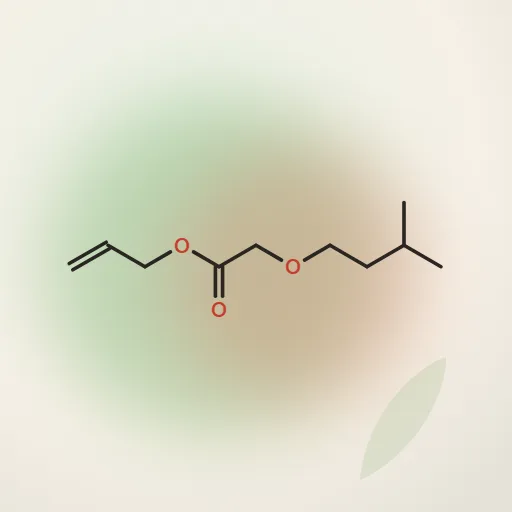
- prop-2-enyl 2-(3-methylbutoxy)acetate
The CAS number, formula and molecular weight are taken from PubChem compound 106729, whose own record lists this CAS number; checked 19 October 2026.
Safety and compliance
The IFRA Standards Library lists a Standard covering Allyl Amyl Glycolate:
- "Allyl esters" — Specification, 44th Amendment, published 2009-01
Limits differ by product category and are set out in the Standard itself; this page does not reproduce them. The list above reflects the library as read on 19 October 2026.
Hazard classification of the neat substance, as PubChem summarises it, read 26 October 2026. Companies notifying the ECHA C&L Inventory classify it (1,865 reports): H302 harmful if swallowed (97.6% of reports); H315 causes skin irritation (93.4% of reports). 4 of the reports find it does not meet the hazard criteria. Unless it is harmonised, this is the notifiers' own classification, not a binding one.
This page is general information, not a safety assessment or a specification. Confirm identity, composition, IFRA status and allergen content from your supplier's documents for the lot you hold.
Materials it works with
-
 Galbanum Oil
Essential oil · Green / Resinous — green, sharp, bitter, resinous
-
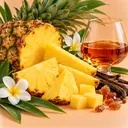
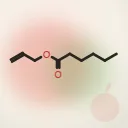 Allyl Caproate
Aroma chemical · Fruity / Green — pineapple, fruity, sweet
-
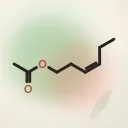 cis-3-Hexenyl Acetate
Aroma chemical · Green / Fruity — green, fruity, unripe banana, fresh
Allyl Amyl Glycolate is also suggested as a partner on the pages for Allyl Phenoxyacetate, Cyclogalbanate, Dynascone, Pharaone and Verdyl Propionate.
Used in formulas and accords
Used in 9 published formulas
Allyl Amyl Glycolate is an ingredient in 1 perfume formula and 8 accords in the Formula & Accord Library.
Community formulas
RUŌOD House Originals
Original compositions by RUŌOD House.
Further reading
Questions about Allyl Amyl Glycolate
Is Allyl Amyl Glycolate natural or synthetic?
Allyl Amyl Glycolate is synthetic — it is made by chemical synthesis.
What is the CAS number of Allyl Amyl Glycolate?
67634-00-8. It was checked against PubChem on 19 October 2026.
Which published formulas use Allyl Amyl Glycolate?
Allyl Amyl Glycolate is used in 9 published formulas in the RUŌOD Lab Formula & Accord Library, including Blood Accord, Champagne Accord and Cola Accord. Each is listed with a link under "Used in formulas and accords" on this page.
Is Allyl Amyl Glycolate covered by an IFRA Standard?
Yes. The IFRA Standards Library lists a Standard covering it: "Allyl esters" — Specification, 44th Amendment. The limits depend on the product category; read the Standard itself before formulating.
Sources
- PubChem — compound 106729, checked 19 October 2026.
- PubChem — GHS classification (the ECHA C&L Inventory notifications and any harmonised EU entry), read 26 October 2026.
- IFRA — Standards Library, read 19 October 2026.
- Fraterworks — allyl amyl glycolate — distributor's description.
- The Fragrance Foundry — allyl amyl glycolate — distributor's description.
- Scentspiracy — Allyl Amyl Glycolate — distributor's description.
- The Good Scents Company — allyl amyl glycolate — odour database.
- Olfactory profile: the RUŌOD Lab team's synthesis of the published descriptions above, reviewed 20 October 2026. Evidence: more than one published description. Classification and the short description: revision 1. Descriptions of odour are judgement, not measurement.