
In short
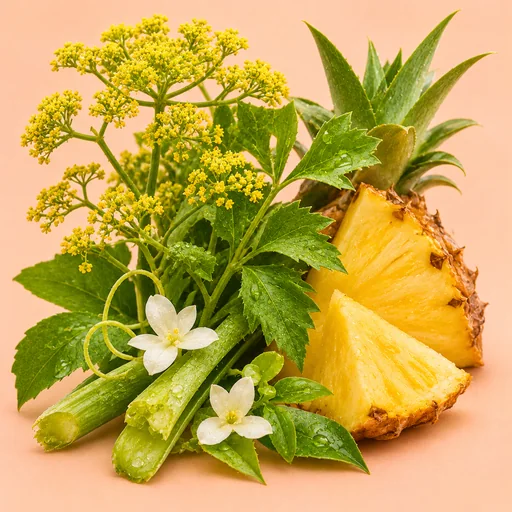
Spirogalbanone is a Givaudan green ketone with a powerful galbanum character and a fruity, pineapple facet. Unlike most galbanum notes it is highly substantive, holding its green for about a week on a blotter.
What Spirogalbanone smells like
Givaudan describes Spirogalbanone as a powerful, stable and highly substantive green galbanum note with fruity facets, one of its iconic green ingredients, lasting a week on a blotter. Fraterworks finds the smell of a freshly snapped flower stem — sharp, cool and sappy — with the clean bite of galbanum and a juicy green-pineapple facet that keeps it bright rather than bitter. A Givaudan patent describes the spiro-ketone galbanum note as fruitier and sweeter than that of related compounds.
- Leading note
- Sappy galbanum green
- Clear facets
- Pineapple, cut stem
- Supporting facets
- Sharp green
- Faint facets
- Fruity sweetness
- Character
- Sharp, sappy, powerful, linear, substantive
What makes Spirogalbanone distinctive
Galbanum that lasts. Most galbanum-type ketones flash off; this one keeps its sappy green and pineapple into the base, so a green signature can run from top to drydown.
How Spirogalbanone is used
Givaudan builds a linear green-galbanum effect by pairing it with Pharaone for the top and heart; Fraterworks uses it under fast green notes as a fixative for greenery and with Florhydral for a cut-flower accord.
Typical role: modifier (used in small amounts to change the character of a blend); fixative (slow to evaporate; helps a blend last and holds lighter notes).
How Spirogalbanone differs from similar materials
- Dynascone
- Both are galbanum-pineapple ketones. Dynascone is the sharper, more volatile top note; Spirogalbanone is fruitier and far more substantive, lasting into the base.
- Pharaone
- Givaudan pairs the two: Pharaone carries the green galbanum in the top and heart, Spirogalbanone extends it down to the base thanks to its substantivity. (compared directly by a cited source)
An asterisk marks a difference that a cited source states directly. The others compare the published descriptions of each material. Smell varies with grade, supplier and dilution; compare them side by side on blotters before substituting one for another.
Formulation considerations
Very powerful; start from traces. It is a pale yellow liquid.
Identity and classification
- Type
- Aroma chemical
- Origin
- Synthetic
- Odour family
- Green / Fruity
- Note position
- Heart note
- Physical form at room temperature
- Liquid
- Also known as
- Spirogalbanone Pure, 1-Spiro[4.5]dec-7-en-7-ylpent-4-en-1-one
- CAS number
- 224031-70-3
- Molecular formula
- C15H22O
- Molecular weight
- 218.33 g/mol
- IUPAC name
- 1-spiro[4.5]dec-8-en-9-ylpent-4-en-1-one
The CAS number, formula and molecular weight are taken from PubChem compound 15405344, whose own record lists this CAS number; checked 7 November 2026.
Safety and compliance
This page is general information, not a safety assessment or a specification. Confirm identity, composition, IFRA status and allergen content from your supplier's documents for the lot you hold.
Materials it works with
-
 Galbanum Oil
Essential oil · Green / Resinous — green, sharp, bitter, resinous
-
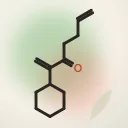 Pharaone
Aroma chemical · Green / Fruity — green, pineapple, galbanum, herbaceous
-
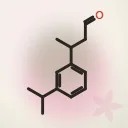 Florhydral
Aroma chemical · Floral / Green — muguet, green, watery, fresh
-
 Violet Leaf Absolute
Absolute · Green / Aquatic — green, leafy, cucumber, watery
-
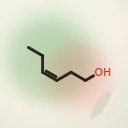 cis-3-Hexenol
Aroma chemical · Green / Fruity — green, cut grass, leafy, fresh
-
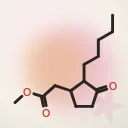 Hedione
Aroma chemical · Floral / Citrus — jasmine, transparent, citrus, airy
Used in formulas and accords
Not currently used in any published formula.
The Formula & Accord Library lists Spirogalbanone here as soon as a published formula, accord or base uses it.
Further reading
Questions about Spirogalbanone
Is Spirogalbanone natural or synthetic?
Spirogalbanone is synthetic — it is made by chemical synthesis.
What is the CAS number of Spirogalbanone?
224031-70-3. It was checked against PubChem on 7 November 2026.
Sources
- PubChem — compound 15405344, checked 7 November 2026.
- Givaudan — Spirogalbanone Pure — manufacturer's description.
- Fraterworks — Spirogalbanone — distributor's description.
- US Patent 8907134 — Perfuming ingredient of the galbanum family — published literature.
- PubChem — 1-spiro[4.5]dec-7-en-7-ylpent-4-en-1-one (CID 15405344) — odour database.
- Olfactory profile: the RUŌOD Lab team's synthesis of the published descriptions above, reviewed 7 November 2026. Evidence: several independent published descriptions, which agree. Classification and the short description: revision 1. Descriptions of odour are judgement, not measurement.