
In short
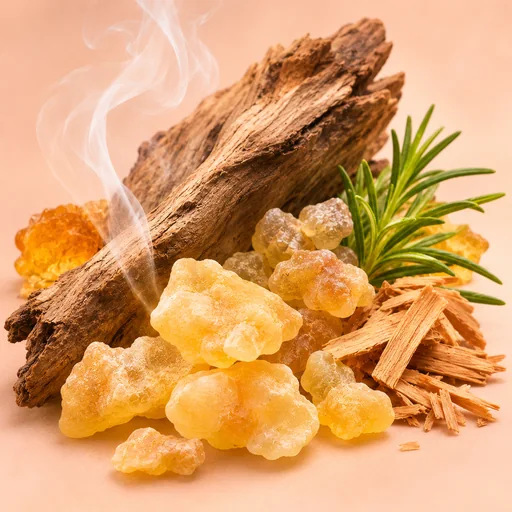
Oxyoctaline Formate is a Givaudan woody-amber ester with an original, long-lasting character and an olibanum-like effect. It is used as a blender with natural and synthetic woods.
What Oxyoctaline Formate smells like
Givaudan describes Oxyoctaline Formate as an original, ambery and long-lasting woody material that blends with most woody notes and harmonises with natural woods, bringing an interesting olibanum effect; it lasts a week on a blotter. Fraterworks finds a moist, living woodiness like freshly sawn timber, an incense-like dryness, powdery and dusty, and a refined amber warmth that recalls frankincense without its resinous bite.
- Leading note
- Incense-like wood
- Clear facets
- Amber
- Supporting facets
- Moist wood, powdery
- Faint facets
- Dusty
- Character
- Dry, tenacious, blending
What makes Oxyoctaline Formate distinctive
Wood with incense in it: an olibanum shading that gives woody accords a resinous dryness without any resin.
How Oxyoctaline Formate is used
Fraterworks uses it as mortar between woody and amber materials, in sandalwood and oud accords, with Iso E Super for a woody foundation, and with labdanum and olibanum for amber.
Typical role: blender (smooths the joins between other materials); fixative (slow to evaporate; helps a blend last and holds lighter notes).
How Oxyoctaline Formate differs from similar materials
- Dihydro Ambrate
- Dihydro Ambrate is warmer and softer, with an ambrette touch; Oxyoctaline Formate is moister and drier at once, with an incense-like, powdery amber.
Each difference compares the published descriptions of the two materials. Smell varies with grade, supplier and dilution; compare them side by side on blotters before substituting one for another.
Identity and classification
- Type
- Aroma chemical
- Origin
- Synthetic
- Odour family
- Woody / Amber
- Note position
- Heart to base note
- Also known as
- 2,4a,5,8a-Tetramethyl-1,2,3,4,4a,7,8,8a-octahydronaphthalen-1-yl formate
- CAS number
- 65405-72-3
- Molecular formula
- C15H24O2
- Molecular weight
- 236.35 g/mol
- IUPAC name
- (2,4a,5,8a-tetramethyl-1,2,3,4,7,8-hexahydronaphthalen-1-yl) formate
The CAS number, formula and molecular weight are taken from PubChem compound 103377, whose own record lists this CAS number; checked 7 November 2026.
Safety and compliance
Hazard classification of the neat substance, as PubChem summarises it, read 7 November 2026. Companies notifying the ECHA C&L Inventory classify it (1,627 reports): H319 causes serious eye irritation (82.2% of reports). 259 of the reports find it does not meet the hazard criteria. Unless it is harmonised, this is the notifiers' own classification, not a binding one.
This page is general information, not a safety assessment or a specification. Confirm identity, composition, IFRA status and allergen content from your supplier's documents for the lot you hold.
Materials it works with
-

 Iso E Super
Aroma chemical · Woody / Amber — woody, velvety, amber, cedar
-
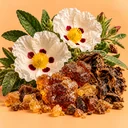
 Labdanum Absolute
Absolute · Amber / Leather — amber, balsamic, leathery, animalic
-
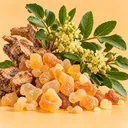
 Frankincense Oil (Olibanum)
Essential oil · Resinous / Citrus — incense, resinous, lemony, smoky
-

 Sandalwood Oil (Santalum album)
Essential oil · Woody / Musky — woody, creamy, milky, sweet
-
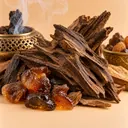
 Agarwood Oil (Oud)
Essential oil · Woody / Animalic — woody, animalic, smoky, leathery
-

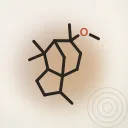 Cedramber
Aroma chemical · Woody / Amber — woody, amber, dry, cedar
Used in formulas and accords
Not currently used in any published formula.
The Formula & Accord Library lists Oxyoctaline Formate here as soon as a published formula, accord or base uses it.
Further reading
Questions about Oxyoctaline Formate
Is Oxyoctaline Formate natural or synthetic?
Oxyoctaline Formate is synthetic — it is made by chemical synthesis.
What is the CAS number of Oxyoctaline Formate?
65405-72-3. It was checked against PubChem on 7 November 2026.
Sources
- PubChem — compound 103377, checked 7 November 2026.
- PubChem — GHS classification (the ECHA C&L Inventory notifications and any harmonised EU entry), read 7 November 2026.
- Givaudan — Oxyoctaline Formate — manufacturer's description.
- Fraterworks — Oxyoctaline Formate — distributor's description.
- PubChem — 1-Naphthalenol, 1,2,3,4,4a,7,8,8a-octahydro-2,4a,5,8a-tetramethyl-, 1-formate (CID 103377) — odour database.
- Olfactory profile: the RUŌOD Lab team's synthesis of the published descriptions above, reviewed 7 November 2026. Evidence: more than one published description. Classification and the short description: revision 1. Descriptions of odour are judgement, not measurement.