
In short
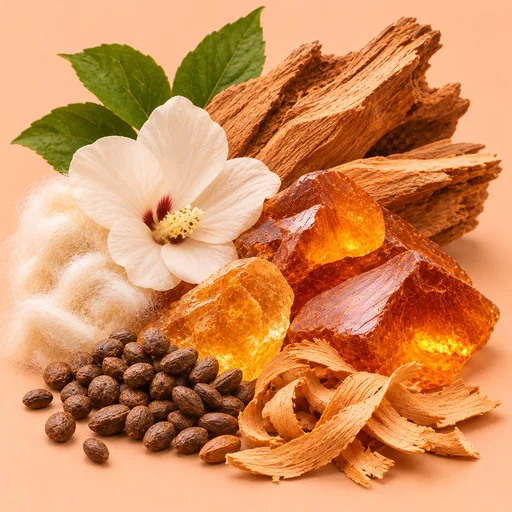
Dihydro Ambrate is a Givaudan ambery-woody acetate that gives richness, balance, warmth and fullness to a fragrance. It is also used as a diffusive woody note.
What Dihydro Ambrate smells like
Givaudan describes Dihydro Ambrate as giving richness and balance to compounds, strengthening them and adding warmth and fullness, and also as a diffusive woody note; it lasts a day on a blotter. Fraterworks finds a warm, rounded woody-amber impression — not sharp, not sweet — with a subtle ambrette-like seed-musk warmth and dry cedar facets, a material that amplifies what is already there rather than imposing its own character.
- Leading note
- Warm woody amber
- Supporting facets
- Ambrette, dry cedar
- Faint facets
- Musky
- Character
- Warm, rounded, quiet, stable
What makes Dihydro Ambrate distinctive
An invisible foundation: it makes a blend warmer and fuller rather than adding a recognisable note.
How Dihydro Ambrate is used
Fraterworks pairs it with Ambroxan for a modern amber and uses it under sandalwood materials for depth; Givaudan and Fraterworks both note its stability in functional bases.
Typical role: blender (smooths the joins between other materials).
How Dihydro Ambrate differs from similar materials
- Oxyoctaline Formate
- Both are Givaudan woody-amber blenders. Oxyoctaline formate is moist, incense-like and powdery; Dihydro Ambrate is drier and warmer, with an ambrette softness.
Each difference compares the published descriptions of the two materials. Smell varies with grade, supplier and dilution; compare them side by side on blotters before substituting one for another.
Formulation considerations
Stable in most functional bases.
Identity and classification
- Type
- Aroma chemical
- Origin
- Synthetic
- Odour family
- Amber / Woody
- Note position
- Heart to base note
- Physical form at room temperature
- Liquid
- Also known as
- Dihydroambrate, 1-Ethenyl-2-(butan-2-yl)cyclohexyl acetate
- CAS number
- 37172-02-4
- Molecular formula
- C14H24O2
- Molecular weight
- 224.34 g/mol
- IUPAC name
- (2-butan-2-yl-1-ethenylcyclohexyl) acetate
The CAS number, formula and molecular weight are taken from PubChem compound 162248, whose own record lists this CAS number; checked 7 November 2026.
Safety and compliance
Hazard classification of the neat substance, as PubChem summarises it, read 7 November 2026. Companies notifying the ECHA C&L Inventory classify it (1,445 reports): H315 causes skin irritation (94.1% of reports). 85 of the reports find it does not meet the hazard criteria. Unless it is harmonised, this is the notifiers' own classification, not a binding one.
This page is general information, not a safety assessment or a specification. Confirm identity, composition, IFRA status and allergen content from your supplier's documents for the lot you hold.
Materials it works with
-
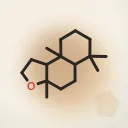 Ambroxan
Aroma chemical · Amber / Woody — amber, ambergris, woody, mineral
-
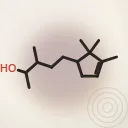 Sandalore
Aroma chemical · Woody / Musky — sandalwood, warm, soft, woody
-
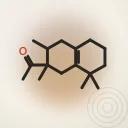 Iso E Super
Aroma chemical · Woody / Amber — woody, velvety, amber, cedar
-
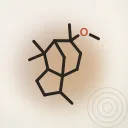 Cedramber
Aroma chemical · Woody / Amber — woody, amber, dry, cedar
-
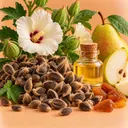
 Ambrette Seed Oil
Essential oil · Musky / Fruity — musky, fruity, pear, winey
Used in formulas and accords
Not currently used in any published formula.
The Formula & Accord Library lists Dihydro Ambrate here as soon as a published formula, accord or base uses it.
Further reading
Questions about Dihydro Ambrate
Is Dihydro Ambrate natural or synthetic?
Dihydro Ambrate is synthetic — it is made by chemical synthesis.
What is the CAS number of Dihydro Ambrate?
37172-02-4. It was checked against PubChem on 7 November 2026.
Sources
- PubChem — compound 162248, checked 7 November 2026.
- PubChem — GHS classification (the ECHA C&L Inventory notifications and any harmonised EU entry), read 7 November 2026.
- Givaudan — Dihydro Ambrate — manufacturer's description.
- Fraterworks — Dihydroambrate — distributor's description.
- PubChem — 1-ethenyl-2-(1-methylpropyl)cyclohexyl acetate (CID 162248) — odour database.
- Olfactory profile: the RUŌOD Lab team's synthesis of the published descriptions above, reviewed 7 November 2026. Evidence: more than one published description. Classification and the short description: revision 1. Descriptions of odour are judgement, not measurement.