

In short
Vernaldehyde is a Givaudan aldehyde with a fresh, green, mountain-air character. It adds a natural, airy freshness to muguet, lilac and citrus, and a cool lift to woody bases.
What Vernaldehyde smells like
Givaudan describes Vernaldehyde as a fresh, green, mountain-air note that blends well with aldehydic citrus and woody notes and gives a natural aura and diffusion to florals such as lily of the valley and lilac; it lasts a day on a blotter. Fraterworks finds a bright outdoor-air aldehyde over a cool, dewy green freshness and a light waxy-citrus edge, closer to spring air than to the fatty C-10 to C-12 aldehydes.
- Leading note
- Green open air
- Clear facets
- Dewy green
- Supporting facets
- Waxy citrus, aldehydic
- Character
- Airy, clean, cool, diffusive
What makes Vernaldehyde distinctive
An aldehydic sparkle without the fat: green and airy where the classic linear aldehydes are waxy and soapy.
How Vernaldehyde is used
Fraterworks uses it in muguet, lilac and freesia, in colognes to support bergamot, with woods for a cool lift, overdosed in modern chypre tops, and in traces to lighten heavy ambers.
Typical role: lift (adds diffusion and radiance, especially at the top); modifier (used in small amounts to change the character of a blend).
How Vernaldehyde differs from similar materials
- Aldehyde C-11 Undecylic (Undecanal)
- Fraterworks contrasts Vernaldehyde with the fatty C-10 to C-12 aldehydes: undecanal is waxy and soapy, Vernaldehyde green, airy and closer to spring air. (compared directly by a cited source)
An asterisk marks a difference that a cited source states directly. The others compare the published descriptions of each material. Smell varies with grade, supplier and dilution; compare them side by side on blotters before substituting one for another.
Identity and classification
- Type
- Aroma chemical
- Origin
- Synthetic
- Odour family
- Green / Aldehydic
- Note position
- Top to heart note
- Physical form at room temperature
- Liquid
- Also known as
- 1-Methyl-4-(4-methylpentyl)cyclohex-3-ene-1-carbaldehyde
- CAS number
- 66327-54-6
- Molecular formula
- C14H24O
- Molecular weight
- 208.34 g/mol
- IUPAC name
- 1-methyl-4-(4-methylpentyl)cyclohex-3-ene-1-carbaldehyde
The CAS number, formula and molecular weight are taken from PubChem compound 106684, whose own record lists this CAS number; checked 7 November 2026.
Safety and compliance
Hazard classification of the neat substance, as PubChem summarises it, read 7 November 2026. Companies notifying the ECHA C&L Inventory classify it (1,699 reports): H315 causes skin irritation (99.8% of reports); H319 causes serious eye irritation (94.5% of reports). 3 of the reports find it does not meet the hazard criteria. Unless it is harmonised, this is the notifiers' own classification, not a binding one.
This page is general information, not a safety assessment or a specification. Confirm identity, composition, IFRA status and allergen content from your supplier's documents for the lot you hold.
Materials it works with
-
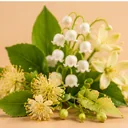
 Hydroxycitronellal
Aroma chemical · Floral / Green — muguet, floral, soft, sweet
-

 Bergamot Oil (Expressed)
Essential oil · Citrus / Aromatic — citrus, zesty, floral, tea-like
-

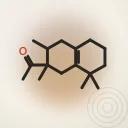 Iso E Super
Aroma chemical · Woody / Amber — woody, velvety, amber, cedar
-

 Cedarwood Oil (Virginia)
Essential oil · Woody / Aromatic — woody, dry, pencil shavings, clean
-
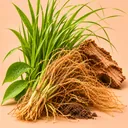
 Vetiver Oil
Essential oil · Woody / Green — earthy, smoky, woody, rooty
-

 Lilyflore
Aroma chemical · Floral / Green — muguet, floral, fresh, soft
Used in formulas and accords
Not currently used in any published formula.
The Formula & Accord Library lists Vernaldehyde here as soon as a published formula, accord or base uses it.
Further reading
Questions about Vernaldehyde
Is Vernaldehyde natural or synthetic?
Vernaldehyde is synthetic — it is made by chemical synthesis.
What is the CAS number of Vernaldehyde?
66327-54-6. It was checked against PubChem on 7 November 2026.
Sources
- PubChem — compound 106684, checked 7 November 2026.
- PubChem — GHS classification (the ECHA C&L Inventory notifications and any harmonised EU entry), read 7 November 2026.
- Givaudan — Vernaldehyde — manufacturer's description.
- Fraterworks — Vernaldehyde — distributor's description.
- PubChem — 1-Methyl-4-(4-methylpentyl)cyclohex-3-ene-1-carbaldehyde (CID 106684) — odour database.
- Olfactory profile: the RUŌOD Lab team's synthesis of the published descriptions above, reviewed 7 November 2026. Evidence: more than one published description. Classification and the short description: revision 1. Descriptions of odour are judgement, not measurement.