

In short
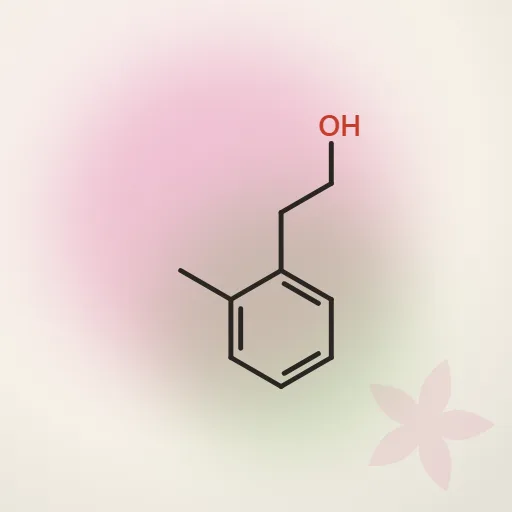
Peomosa is IFF's 2-methylphenethyl alcohol, a floral relative of phenylethyl alcohol with a peony and mimosa character.
What Peomosa smells like
The Good Scents Company lists Peomosa as IFF's 2-methylphenethyl alcohol with a natural floral, peony, mimosa, rose, green, earthy, wet and cyclamen odour. ChemicalBook gives floral as its odour type and describes natural floral, rose, peony, waxy and mimosa. PubChem lists Peomosa among the compound's synonyms.
- Leading note
- Peony
- Clear facets
- Mimosa
- Supporting facets
- Rose, green
- Faint facets
- Earthy
- Character
- Natural, soft
What makes Peomosa distinctive
A methyl on phenylethyl alcohol's ring moves the rose towards peony and mimosa.
How Peomosa is used
Used for peony and mimosa effects in floral accords. The Good Scents Company and ChemicalBook both describe a natural floral note with peony, mimosa and rose, so it builds peony hearts and softens rose and mimosa compositions.
Typical role: modifier (used in small amounts to change the character of a blend).
How Peomosa differs from similar materials
- Phenylethyl Alcohol
- Phenylethyl alcohol is the plain rose alcohol; Peomosa, its ring-methylated relative, is described as peony and mimosa with green, earthy facets.
Each difference compares the published descriptions of the two materials. Smell varies with grade, supplier and dilution; compare them side by side on blotters before substituting one for another.
Identity and classification
- Type
- Aroma chemical
- Origin
- Synthetic
- Odour family
- Floral / Green
- Note position
- Heart note
- Physical form at room temperature
- Liquid
- Also known as
- 2-Methylphenethyl alcohol, 2-(2-Methylphenyl)ethanol
- CAS number
- 19819-98-8
- Molecular formula
- C9H12O
- Molecular weight
- 136.19 g/mol
- IUPAC name
- 2-(2-methylphenyl)ethanol
The CAS number, formula and molecular weight are taken from PubChem compound 88267, whose own record lists this CAS number; checked 24 October 2026.
Safety and compliance
Hazard classification of the neat substance, as PubChem summarises it, read 26 October 2026. Companies notifying the ECHA C&L Inventory report it as not meeting the GHS hazard criteria (1,510 of 1,513 reports). Unless it is harmonised, this is the notifiers' own classification, not a binding one.
This page is general information, not a safety assessment or a specification. Confirm identity, composition, IFRA status and allergen content from your supplier's documents for the lot you hold.
Materials it works with
-

 Phenylethyl Alcohol
Aroma chemical · Floral / Green — rose, honeyed, soft, floral
-

 Mimosa Absolute
Absolute · Floral / Powdery — powdery, honeyed, green, floral
-

 Hedione
Aroma chemical · Floral / Citrus — jasmine, transparent, citrus, airy
Used in formulas and accords
Used in 5 published formulas
Peomosa is an ingredient in 4 perfume formulas and 1 accord in the Formula & Accord Library.
Community formulas
RUŌOD House Originals
Original compositions by RUŌOD House.
Further reading
Questions about Peomosa
Is Peomosa natural or synthetic?
Peomosa is synthetic — it is made by chemical synthesis.
What is the CAS number of Peomosa?
19819-98-8. It was checked against PubChem on 24 October 2026.
Which published formulas use Peomosa?
Peomosa is used in 5 published formulas in the RUŌOD Lab Formula & Accord Library, including Asphalt Peony, Blackcurrant Signal and Bright Wolf. Each is listed with a link under "Used in formulas and accords" on this page.
Sources
- PubChem — compound 88267, checked 24 October 2026.
- PubChem — GHS classification (the ECHA C&L Inventory notifications and any harmonised EU entry), read 26 October 2026.
- The Good Scents Company — Peomosa — odour database.
- ChemicalBook — 19819-98-8 — odour database.
- Olfactory profile: the RUŌOD Lab team's synthesis of the published descriptions above, reviewed 26 October 2026. Evidence: more than one published description. Classification and the short description: revision 1. Descriptions of odour are judgement, not measurement.