

In short
Neofolione is methyl 2-nonenoate, a powerful green note with a violet character. Givaudan offers it as a replacement for Folione (methyl heptine carbonate) in violet and floral accords.
What Neofolione smells like
Givaudan describes NeoFolione as a powerful green-floral material that blends well with most florals, especially violet, where it replaces Folione, imparting freshness and diffusion; it lasts about sixteen hours on a blotter. JECFA records a green, violet aroma. Fraterworks finds vivid green — crushed violet leaves, sliced green apple, a flash of cucumber — with a metallic, almost aldehydic brightness, and calls it a standard building block for violet.
- Leading note
- Violet-leaf green
- Supporting facets
- Cucumber, green apple, metallic, violet
- Character
- Vivid, sharp, powerful, fresh
What makes Neofolione distinctive
The violet-leaf green of the alkyne carbonates in an ester, which is why it took their place in violet accords.
How Neofolione is used
Fraterworks pairs it with alpha-ionone and methyl ionones for violet, with violet leaf absolute for depth, and with cassis and nonadienol for a green-fruity effect.
Typical role: lift (adds diffusion and radiance, especially at the top); modifier (used in small amounts to change the character of a blend).
How Neofolione differs from similar materials
- Methyl Heptine Carbonate
- Givaudan positions NeoFolione as its replacement for Folione (methyl heptine carbonate) in violet accords: the same violet-leaf green, as an ester rather than an alkyne. (compared directly by a cited source)
An asterisk marks a difference that a cited source states directly. The others compare the published descriptions of each material. Smell varies with grade, supplier and dilution; compare them side by side on blotters before substituting one for another.
Formulation considerations
Powerful; measure carefully. It fades within about a day, so layer it over longer-lasting materials.
Identity and classification
- Type
- Aroma chemical
- Origin
- Synthetic
- Odour family
- Green / Floral
- Note position
- Top note
- Physical form at room temperature
- Liquid
- Also known as
- Methyl 2-nonenoate, Methyl non-2-enoate
- CAS number
- 111-79-5
- Molecular formula
- C10H18O2
- Molecular weight
- 170.25 g/mol
- IUPAC name
- methyl (E)-non-2-enoate
The CAS number, formula and molecular weight are taken from PubChem compound 5368076, whose own record lists this CAS number; checked 7 November 2026.
Safety and compliance
Hazard classification of the neat substance, as PubChem summarises it, read 7 November 2026. Companies notifying the ECHA C&L Inventory report it as not meeting the GHS hazard criteria (1,597 of 1,700 reports). Unless it is harmonised, this is the notifiers' own classification, not a binding one.
This page is general information, not a safety assessment or a specification. Confirm identity, composition, IFRA status and allergen content from your supplier's documents for the lot you hold.
Materials it works with
-

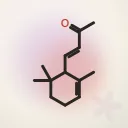 alpha-Ionone
Aroma chemical · Powdery / Fruity — violet, powdery, fruity, sweet
-

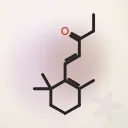 Methyl Beta Ionone
Aroma chemical · Powdery / Woody — orris, violet, powdery, woody
-

 Violet Leaf Absolute
Absolute · Green / Aquatic — green, leafy, cucumber, watery
-

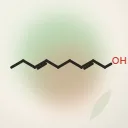 2,6-Nonadienol
Aroma chemical · Green / Fruity — cucumber, violet leaf, green, melon
-

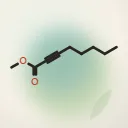 Methyl Heptine Carbonate
Aroma chemical · Green / Aquatic — green, violet leaf, cucumber, fatty
Used in formulas and accords
Not currently used in any published formula.
The Formula & Accord Library lists Neofolione here as soon as a published formula, accord or base uses it.
Further reading
Questions about Neofolione
Is Neofolione natural or synthetic?
Neofolione is synthetic — it is made by chemical synthesis.
What is the CAS number of Neofolione?
111-79-5. It was checked against PubChem on 7 November 2026.
Sources
- PubChem — compound 5368076, checked 7 November 2026.
- PubChem — GHS classification (the ECHA C&L Inventory notifications and any harmonised EU entry), read 7 November 2026.
- Givaudan — NeoFolione — manufacturer's description.
- Fraterworks — Neofolione — distributor's description.
- PubChem — methyl 2-nonenoate (JECFA description) (CID 5368076) — odour database.
- Olfactory profile: the RUŌOD Lab team's synthesis of the published descriptions above, reviewed 7 November 2026. Evidence: several independent published descriptions, which agree. Classification and the short description: revision 1. Descriptions of odour are judgement, not measurement.