
In short
Mahagonate is a woody carboxylate ester with a dry, clean mahogany-sawdust note. It is herbal and patchouli-like, and shares its CAS number with Poivrol.
What Mahagonate smells like
The Good Scents Company's evaluation lists woody, dry, clean, mahogany, dank and sawdust. Pell Wall Perfumes, as quoted there, describes Mahagonate as woody, dry, herbal-patchouli and laurel leaf, and says the peppery note of Poivrol, which shares its CAS number, is almost entirely absent from it. Hekserij, which says Mahagonate is the same molecule as Symrise's Poivrol, likewise finds it almost completely without Poivrol's peppery top note.
- Leading note
- Dry wood
- Clear facets
- Mahogany
- Supporting facets
- Sawdust, herbal
- Faint facets
- Patchouli
- Character
- Dry, clean
What makes Mahagonate distinctive
Freshly cut hardwood rather than a scented wood oil: dry, clean sawdust.
How Mahagonate is used
Used to give a dry, diffusive woody-herbal lift to woody and leather accords.
Typical role: modifier (used in small amounts to change the character of a blend).
How Mahagonate differs from similar materials
- Timberol
- Timberol is sawdust and ambergris, powdery and diffusive; Mahagonate is a dry, clean sawdust with herbal-patchouli and laurel, without the amber.
- Theaspirane
- Theaspirane is a camphoraceous, minty tea-wood; Mahagonate is drier sawdust with herbal patchouli.
Each difference compares the published descriptions of the two materials. Smell varies with grade, supplier and dilution; compare them side by side on blotters before substituting one for another.
Formulation considerations
Shares its CAS number with Symrise's Poivrol; Pell Wall Perfumes treats them as different products and finds Poivrol's peppery note almost entirely absent from Mahagonate.
Identity and classification
- Type
- Aroma chemical
- Origin
- Synthetic
- Odour family
- Woody / Aromatic
- Note position
- Heart to base note
- Physical form at room temperature
- Liquid
- Also known as
- Woody carboxylate
No CAS number is shown. The identity of Mahagonate is taken from documentation by The Good Scents Company, Pell Wall Perfumes; the number is shared with Symrise's Poivrol, which suppliers treat as a different product, and PubChem holds no compound record for it, so it is not published here as verified. Without a verified number there is no formula, molecular weight or structure drawing either.
Safety and compliance
This page is general information, not a safety assessment or a specification. Confirm identity, composition, IFRA status and allergen content from your supplier's documents for the lot you hold.
Materials it works with
-

 Patchouli Oil
Essential oil · Woody / Chypre — earthy, woody, camphoraceous, dark
-
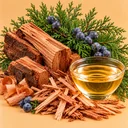
 Cedarwood Oil (Virginia)
Essential oil · Woody / Aromatic — woody, dry, pencil shavings, clean
-

 Vetiver Oil
Essential oil · Woody / Green — earthy, smoky, woody, rooty
Used in formulas and accords
Used in 6 published formulas
Mahagonate is an ingredient in 5 perfume formulas and 1 accord in the Formula & Accord Library.
Community formulas
RUŌOD House Originals
Original compositions by RUŌOD House.
Further reading
Questions about Mahagonate
Is Mahagonate natural or synthetic?
Mahagonate is synthetic — it is made by chemical synthesis.
Which published formulas use Mahagonate?
Mahagonate is used in 6 published formulas in the RUŌOD Lab Formula & Accord Library, including Apple Cellar, Champaca Tea Room and Dark Rum Cabinet. Each is listed with a link under "Used in formulas and accords" on this page.
Sources
- The Good Scents Company — woody carboxylate (Mahagonate) — odour database.
- Hekserij — Mahagonate — distributor's description.
- Olfactory profile: the RUŌOD Lab team's synthesis of the published descriptions above, reviewed 26 October 2026. Evidence: more than one published description. Classification and the short description: revision 1. Descriptions of odour are judgement, not measurement.