
In short
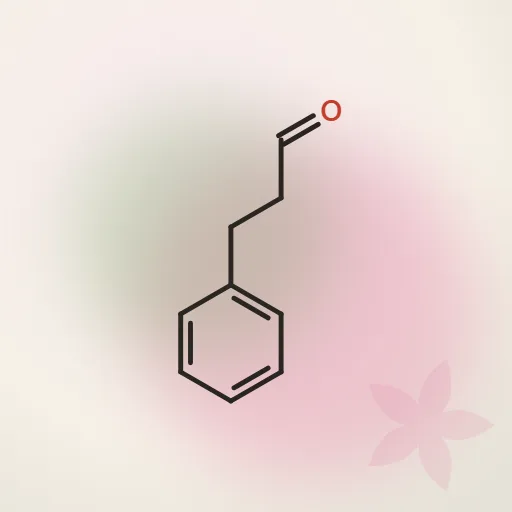
Hydrocinnamaldehyde, 3-phenylpropanal, is an aromatic aldehyde with a green, hyacinth-like floral odour. It is the saturated counterpart of cinnamaldehyde and has none of its spice.
What Hydrocinnamaldehyde smells like
Hydrocinnamaldehyde (3-phenylpropanal) is a strong floral aldehyde with a heavy hyacinth character and a balsamic sweetness. ChemicalBook describes a strong, floral, slightly balsamic, heavy hyacinth-like odour and notes its use in hyacinth and lilac compositions; Perfumer & Flavorist describes it as green, aldehydic, floral and melon-like. In flavour it reads balsamic, green and warm, with melon and fruity notes.
- Leading note
- Heavy hyacinth
- Clear facets
- Balsamic
- Supporting facets
- Green aldehydic
- Faint facets
- Melon
- Character
- Heavy, sweet, green, floral
What makes Hydrocinnamaldehyde distinctive
It is the heavier, balsamic hyacinth. Its isomer hydratropic aldehyde is fresh and leafy; hydrocinnamaldehyde has a sweet, balsamic weight and an unexpected melon-like nuance.
How Hydrocinnamaldehyde is used
Used in hyacinth and lilac compositions, where it gives body as well as greenness.
Typical role: modifier (used in small amounts to change the character of a blend).
How Hydrocinnamaldehyde differs from similar materials
- Hydratropic Aldehyde
- Hydratropic aldehyde is fresher, leafier and more directly hyacinth; hydrocinnamaldehyde is heavier and balsamic, with a melon nuance.
- Phenylpropyl Alcohol
- The corresponding alcohol is milder and softer, sweet-balsamic hyacinth and mignonette; the aldehyde is stronger, greener and more aldehydic.
Each difference compares the published descriptions of the two materials. Smell varies with grade, supplier and dilution; compare them side by side on blotters before substituting one for another.
Formulation considerations
Oxidises in air; store well closed and use within its shelf life.
Identity and classification
- Type
- Aroma chemical
- Origin
- Occurs in nature
- Odour family
- Floral / Green
- Note position
- Heart note
- Physical form at room temperature
- Liquid
- Also known as
- 3-Phenylpropanal, Phenylpropyl aldehyde
- CAS number
- 104-53-0
- Molecular formula
- C9H10O
- Molecular weight
- 134.17 g/mol
- IUPAC name
- 3-phenylpropanal
The CAS number, formula and molecular weight are taken from PubChem compound 7707, whose own record lists this CAS number; checked 19 October 2026.
Safety and compliance
Hazard classification of the neat substance, as PubChem summarises it, read 26 October 2026. Companies notifying the ECHA C&L Inventory classify it (1,717 reports): H315 causes skin irritation (100% of reports); H319 causes serious eye irritation (100% of reports). Unless it is harmonised, this is the notifiers' own classification, not a binding one.
This page is general information, not a safety assessment or a specification. Confirm identity, composition, IFRA status and allergen content from your supplier's documents for the lot you hold.
Materials it works with
-

 Phenylacetaldehyde
Aroma chemical · Green / Floral — green, honeyed, hyacinth, floral
-

 Phenylethyl Alcohol
Aroma chemical · Floral / Green — rose, honeyed, soft, floral
-
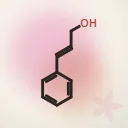 Cinnamyl Alcohol
Aroma chemical · Floral / Spicy — balsamic, floral, hyacinth, sweet
-

 Galbanum Oil
Essential oil · Green / Resinous — green, sharp, bitter, resinous
Hydrocinnamaldehyde is also suggested as a partner on the pages for Dimethyl Hydroquinone, Phenylpropyl Alcohol and Trifernal.
Used in formulas and accords
Used in 1 published formula
Hydrocinnamaldehyde is an ingredient in 1 perfume formula in the Formula & Accord Library.
RUŌOD House Originals
Original compositions by RUŌOD House.
Further reading
Questions about Hydrocinnamaldehyde
Is Hydrocinnamaldehyde natural or synthetic?
The molecule occurs in nature. Commercial Hydrocinnamaldehyde may be made by synthesis or obtained from natural sources, so check the supplier's specification if the distinction matters to you.
What is the CAS number of Hydrocinnamaldehyde?
104-53-0. It was checked against PubChem on 19 October 2026.
Which published formulas use Hydrocinnamaldehyde?
Hydrocinnamaldehyde is used in 1 published formula in the RUŌOD Lab Formula & Accord Library: Cut Stem Atelier. Each is listed with a link under "Used in formulas and accords" on this page.
Sources
- PubChem — compound 7707, checked 19 October 2026.
- PubChem — GHS classification (the ECHA C&L Inventory notifications and any harmonised EU entry), read 26 October 2026.
- ChemicalBook — 3-phenylpropanal (CAS 104-53-0) — odour database.
- Perfumer & Flavorist — phenylpropanals (abstract) — published literature.
- Olfactory profile: the RUŌOD Lab team's synthesis of the published descriptions above, reviewed 20 October 2026. Evidence: more than one published description. Classification and the short description: revision 1. Descriptions of odour are judgement, not measurement.