
In short
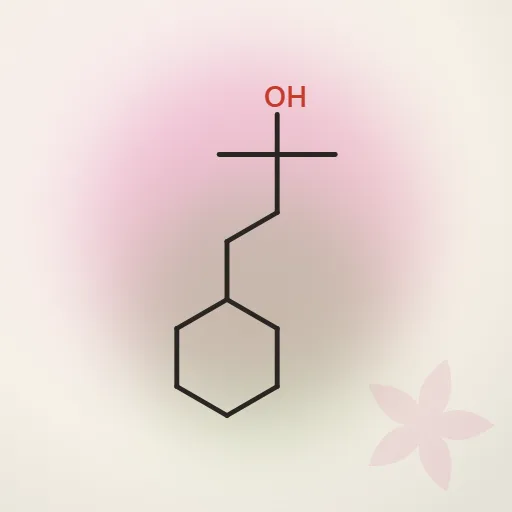
Coranol is a trade name for 4-cyclohexyl-2-methylbutan-2-ol, a tertiary alcohol with a fresh, clean lily-of-the-valley odour. It is stable in demanding bases.
What Coranol smells like
Coranol (Firmenich) is, in Firmenich's words, a floral note reminiscent of linalool from coriander, with technical descriptors floral, lavender, freesia and bergamot; it is much longer-lasting than linalool and very stable. Retailers describe a fresh, diffusive floral with rosy and lily-of-the-valley facets and subtle spicy-metallic nuances, and a transparent floral-green with muguet and lavender qualities.
- Leading note
- Fresh linalool-like floral
- Clear facets
- Lavender
- Supporting facets
- Freesia, bergamot
- Faint facets
- Muguet
- Character
- Fresh, transparent, clean, lasting
What makes Coranol distinctive
It is linalool that lasts: the fresh coriander-linalool floralcy, with lavender and freesia, carried much further into the drydown than linalool itself.
Where the descriptions disagree: Firmenich describes a linalool-type floral; retailers describe it as muguet.
How Coranol is used
Used as a stable floral building block where a fresh linalool-type note must last — in fine and functional fragrance.
Typical role: blender (smooths the joins between other materials).
How Coranol differs from similar materials
- Mayol
- Mayol is a muguet and magnolia; Coranol is a linalool-like floral with lavender, freesia and bergamot.
- Linalool
- Firmenich describes Coranol as reminiscent of coriander linalool but much longer-lasting and very stable; linalool is lighter and fleeting. (compared directly by a cited source)
An asterisk marks a difference that a cited source states directly. The others compare the published descriptions of each material. Smell varies with grade, supplier and dilution; compare them side by side on blotters before substituting one for another.
Identity and classification
- Type
- Aroma chemical
- Origin
- Synthetic
- Odour family
- Floral / Green
- Note position
- Heart note
- Physical form at room temperature
- Liquid
- Also known as
- 4-Cyclohexyl-2-methylbutan-2-ol
- CAS number
- 83926-73-2
- Molecular formula
- C11H22O
- Molecular weight
- 170.29 g/mol
- IUPAC name
- 4-cyclohexyl-2-methylbutan-2-ol
The CAS number, formula and molecular weight are taken from PubChem compound 14434313, whose own record lists this CAS number; checked 19 October 2026.
Safety and compliance
Hazard classification of the neat substance, as PubChem summarises it, read 26 October 2026. It has a harmonised EU classification (Regulation (EC) No 1272/2008, Annex VI): H318 causes serious eye damage; H411 toxic to aquatic life with long lasting effects. Companies notifying the ECHA C&L Inventory classify it (1,588 reports): H411 toxic to aquatic life with long lasting effects (99.7% of reports); H319 causes serious eye irritation (81% of reports); H318 causes serious eye damage (19% of reports). Unless it is harmonised, this is the notifiers' own classification, not a binding one.
This page is general information, not a safety assessment or a specification. Confirm identity, composition, IFRA status and allergen content from your supplier's documents for the lot you hold.
Materials it works with
-

 Mayol
Aroma chemical · Floral / Green — muguet, fresh, clean, floral
-

 Hydroxycitronellal
Aroma chemical · Floral / Green — muguet, floral, soft, sweet
-

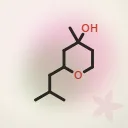 Florol
Aroma chemical · Floral / Green — muguet, fresh, floral, clean
-

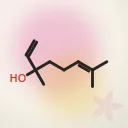 Linalool
Aroma chemical · Floral / Citrus — floral, fresh, woody, citrus
Used in formulas and accords
Used in 8 published formulas
Coranol is an ingredient in 5 perfume formulas, 2 accords and 1 base in the Formula & Accord Library.
Community formulas
RUŌOD House Originals
Original compositions by RUŌOD House.
Further reading
Questions about Coranol
Is Coranol natural or synthetic?
Coranol is synthetic — it is made by chemical synthesis.
What is the CAS number of Coranol?
83926-73-2. It was checked against PubChem on 19 October 2026.
Which published formulas use Coranol?
Coranol is used in 8 published formulas in the RUŌOD Lab Formula & Accord Library, including Bell Glass, Ivy Accord and Magnolia Cartography. Each is listed with a link under "Used in formulas and accords" on this page.
Sources
- PubChem — compound 14434313, checked 19 October 2026.
- PubChem — GHS classification (the ECHA C&L Inventory notifications and any harmonised EU entry), read 26 October 2026.
- dsm-firmenich — Coranol PE 928130 — manufacturer's description.
- The Good Scents Company — Coranol — odour database.
- Fraterworks — Coranol — distributor's description.
- Olfactory profile: the RUŌOD Lab team's synthesis of the published descriptions above, reviewed 20 October 2026. Evidence: more than one published description. Classification and the short description: revision 1. Descriptions of odour are judgement, not measurement.