

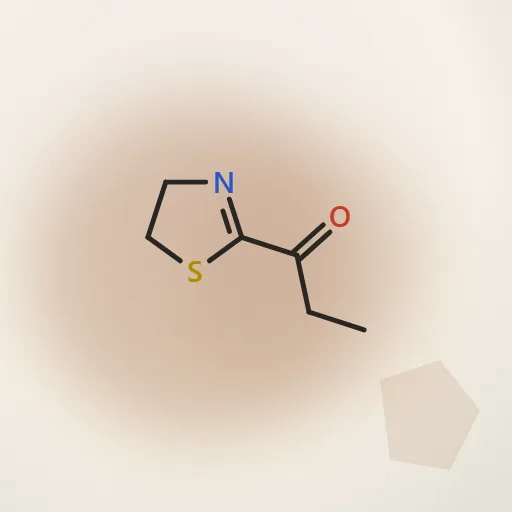
In short
2-Propionyl-2-thiazoline is a roasted flavour molecule found in cooked foods. JECFA describes a meaty, nutty, cooked, brown roasted aroma.
What 2-Propionyl-2-thiazoline smells like
JECFA, as published by PubChem, describes 2-propionyl-2-thiazoline as a colourless to light yellow liquid with a meaty, nutty, cooked, brown roasted aroma. Symrise gives roasted, popcorn, nutty and basmati rice as its descriptors, and a study of cysteine and sugar mixtures roasted in the laboratory, published by the institute now called Leibniz-LSB@TUM, identifies it as an intense roasty, popcorn-like odorant with a very low threshold.
- Leading note
- Roasted
- Clear facets
- Nutty
- Supporting facets
- Meaty, cooked
- Character
- Savoury
What makes 2-Propionyl-2-thiazoline distinctive
A brown, cooked-grain roast note with a savoury, meaty side.
How 2-Propionyl-2-thiazoline is used
Used in traces for roasted, popcorn and cooked-rice effects.
Typical role: modifier (used in small amounts to change the character of a blend).
How 2-Propionyl-2-thiazoline differs from similar materials
- 2-Acetylpyridine
- 2-Acetylpyridine is popcorn and roasted grain; 2-propionyl-2-thiazoline is described as meaty, nutty and brown-roasted.
Each difference compares the published descriptions of the two materials. Smell varies with grade, supplier and dilution; compare them side by side on blotters before substituting one for another.
Formulation considerations
Very potent; usually handled diluted.
Identity and classification
- Type
- Aroma chemical
- Origin
- Synthetic
- Odour family
- Gourmand
- Note position
- Heart note
- Physical form at room temperature
- Liquid
- Also known as
- 2-Propionylthiazoline
- CAS number
- 29926-42-9
- Molecular formula
- C6H9NOS
- Molecular weight
- 143.21 g/mol
- IUPAC name
- 1-(4,5-dihydro-1,3-thiazol-2-yl)propan-1-one
The CAS number, formula and molecular weight are taken from PubChem compound 6428990, whose own record lists this CAS number; checked 24 October 2026.
Safety and compliance
Hazard classification of the neat substance, as PubChem summarises it, read 26 October 2026. Companies notifying the ECHA C&L Inventory report it as not meeting the GHS hazard criteria (114 of 114 reports). Unless it is harmonised, this is the notifiers' own classification, not a binding one.
This page is general information, not a safety assessment or a specification. Confirm identity, composition, IFRA status and allergen content from your supplier's documents for the lot you hold.
Materials it works with
-

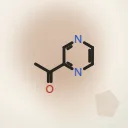 2-Acetylpyrazine
Aroma chemical · Gourmand — popcorn, roasted, nutty, bready
-

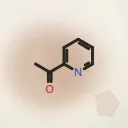 2-Acetylpyridine
Aroma chemical · Gourmand — popcorn, tobacco, fatty
-

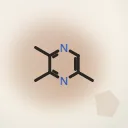 2,3,5-Trimethylpyrazine
Aroma chemical · Gourmand — roasted, nutty, cocoa, earthy
Used in formulas and accords
Used in 1 published formula
2-Propionyl-2-thiazoline is an ingredient in 1 accord in the Formula & Accord Library.
Further reading
Questions about 2-Propionyl-2-thiazoline
Is 2-Propionyl-2-thiazoline natural or synthetic?
2-Propionyl-2-thiazoline is synthetic — it is made by chemical synthesis.
What is the CAS number of 2-Propionyl-2-thiazoline?
29926-42-9. It was checked against PubChem on 24 October 2026.
Which published formulas use 2-Propionyl-2-thiazoline?
2-Propionyl-2-thiazoline is used in 1 published formula in the RUŌOD Lab Formula & Accord Library: Jasmine Rice Accord. Each is listed with a link under "Used in formulas and accords" on this page.
Sources
- PubChem — compound 6428990, checked 24 October 2026.
- PubChem — GHS classification (the ECHA C&L Inventory notifications and any harmonised EU entry), read 26 October 2026.
- PubChem — 2-Propionyl-2-thiazoline (CID 6428990): JECFA organoleptic description — odour database.
- Symrise — 2-Propionyl thiazoline 10% (product sheet) — manufacturer's description.
- Leibniz-LSB@TUM — Identification of key aroma compounds generated from cysteine and carbohydrates under roasting conditions — published literature.
- Olfactory profile: the RUŌOD Lab team's synthesis of the published descriptions above, reviewed 26 October 2026. Evidence: more than one published description. Classification and the short description: revision 1. Descriptions of odour are judgement, not measurement.