

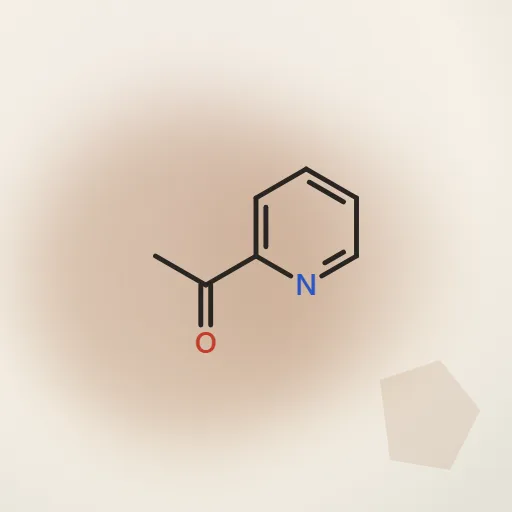
In short
2-Acetylpyridine is a roasted-food heterocycle. JECFA describes its aroma as tobacco-like, popcorn and heavy, oily-fatty.
What 2-Acetylpyridine smells like
JECFA describes 2-acetylpyridine as a colourless to yellow liquid with a tobacco-like, popcorn, heavy oily-fatty aroma. Parchem's listing gives a popcorn odour type, corn-like with a musty, nutty nuance.
- Leading note
- Popcorn
- Clear facets
- Tobacco
- Supporting facets
- Oily-fatty
- Character
- Heavy, oily
What makes 2-Acetylpyridine distinctive
Popcorn with a tobacco and oily-fatty weight, heavier than the clean popcorn of acetylpyrazine.
How 2-Acetylpyridine is used
Used in traces in popcorn, tobacco and roasted gourmand effects.
Typical role: modifier (used in small amounts to change the character of a blend).
How 2-Acetylpyridine differs from similar materials
- 2-Propionyl-2-thiazoline
- 2-Propionyl-2-thiazoline is described as meatier: nutty, cooked and brown-roasted.
Each difference compares the published descriptions of the two materials. Smell varies with grade, supplier and dilution; compare them side by side on blotters before substituting one for another.
Formulation considerations
Potent and food-like; work from dilution.
Identity and classification
- Type
- Aroma chemical
- Origin
- Occurs in nature
- Odour family
- Gourmand
- Note position
- Heart note
- Physical form at room temperature
- Liquid
- Also known as
- Methyl 2-pyridyl ketone
- CAS number
- 1122-62-9
- Molecular formula
- C7H7NO
- Molecular weight
- 121.14 g/mol
- IUPAC name
- 1-pyridin-2-ylethanone
The CAS number, formula and molecular weight are taken from PubChem compound 14286, whose own record lists this CAS number; checked 24 October 2026.
Safety and compliance
Hazard classification of the neat substance, as PubChem summarises it, read 26 October 2026. Companies notifying the ECHA C&L Inventory classify it (438 reports): H315 causes skin irritation (26.9% of reports); H319 causes serious eye irritation (26.3% of reports); H335 may cause respiratory irritation (23.7% of reports). 320 of the reports find it does not meet the hazard criteria. Unless it is harmonised, this is the notifiers' own classification, not a binding one.
This page is general information, not a safety assessment or a specification. Confirm identity, composition, IFRA status and allergen content from your supplier's documents for the lot you hold.
Materials it works with
-

 2-Acetylpyrazine
Aroma chemical · Gourmand — popcorn, roasted, nutty, bready
-

 Tobacco Absolute
Absolute · Leather / Gourmand — tobacco, honey, hay, leathery
-

 Vanillin
Aroma chemical · Gourmand / Amber — vanilla, sweet, creamy
2-Acetylpyridine is also suggested as a partner on the pages for 2-Propionyl-2-thiazoline.
Used in formulas and accords
Used in 3 published formulas
2-Acetylpyridine is an ingredient in 1 perfume formula and 2 accords in the Formula & Accord Library.
Community formulas
RUŌOD House Originals
Original compositions by RUŌOD House.
Further reading
Questions about 2-Acetylpyridine
Is 2-Acetylpyridine natural or synthetic?
The molecule occurs in nature. Commercial 2-Acetylpyridine may be made by synthesis or obtained from natural sources, so check the supplier's specification if the distinction matters to you.
What is the CAS number of 2-Acetylpyridine?
1122-62-9. It was checked against PubChem on 24 October 2026.
Which published formulas use 2-Acetylpyridine?
2-Acetylpyridine is used in 3 published formulas in the RUŌOD Lab Formula & Accord Library: Blueberry Accord, Jasmine Rice Accord and Popcorn Sky. Each is listed with a link under "Used in formulas and accords" on this page.
Sources
- PubChem — compound 14286, checked 24 October 2026.
- PubChem — GHS classification (the ECHA C&L Inventory notifications and any harmonised EU entry), read 26 October 2026.
- PubChem — 2-Acetylpyridine (CID 14286): JECFA organoleptic description — odour database.
- Parchem — 2-acetyl pyridine — distributor's description.
- Olfactory profile: the RUŌOD Lab team's synthesis of the published descriptions above, reviewed 26 October 2026. Evidence: more than one published description. Classification and the short description: revision 1. Descriptions of odour are judgement, not measurement.