

In short
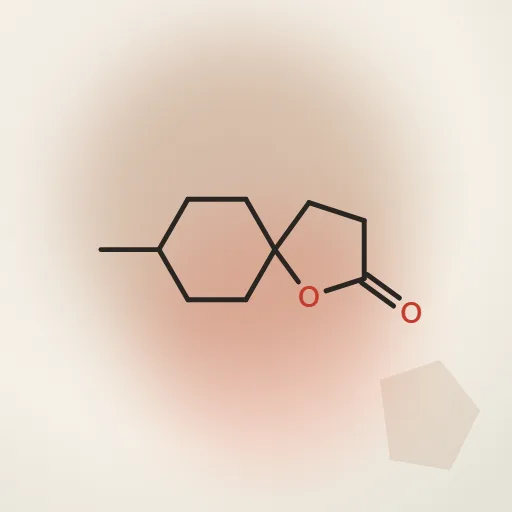
Methyl Laitone is a Givaudan spiro-lactone, 8-methyl-1-oxaspiro[4.5]decan-2-one, with a creamy coconut-milk odour. It is supplied at 10% in DPG or TEC.
What Methyl Laitone smells like
Givaudan describes Methyl Laitone as one of the spiro-lactones it developed and patented, in the fruity family with notes of coconut milk, lactonic and creamy, giving cosmetic body to white flowers such as jasmine, gardenia, tuberose and ylang ylang and to peach and osmanthus accords, milkiness to sandalwood and a good fit with coumarin and tonka. The Good Scents Company lists lactonic, creamy, coconut milk and coumarin.
- Leading note
- Coconut milk
- Clear facets
- Creamy, lactonic
- Supporting facets
- Coumarin
- Character
- Soft, milky
What makes Methyl Laitone distinctive
A coconut-milk lactone rather than a coconut-flesh one: creamy and milky, with a coumarinic side.
How Methyl Laitone is used
Givaudan gives it cosmetic body in white florals and fruity accords and milkiness in sandalwood; it combines with coumarin and tonka.
Typical role: modifier (used in small amounts to change the character of a blend).
How Methyl Laitone differs from similar materials
- Whisky Lactone
- Whisky lactone is coconut over oak wood; Methyl Laitone is coconut milk, creamier and more coumarinic, with no woody side.
Each difference compares the published descriptions of the two materials. Smell varies with grade, supplier and dilution; compare them side by side on blotters before substituting one for another.
Formulation considerations
Supplied by Givaudan as a 10% solution in DPG or TEC; a formula may give its quantity at that strength.
Identity and classification
- Type
- Aroma chemical
- Origin
- Synthetic
- Odour family
- Gourmand / Fruity
- Note position
- Heart to base note
- Physical form at room temperature
- Liquid
- Also known as
- 8-Methyl-1-oxaspiro[4.5]decan-2-one
- CAS number
- 94201-19-1
- Molecular formula
- C10H16O2
- Molecular weight
- 168.23 g/mol
- IUPAC name
- 8-methyl-1-oxaspiro[4.5]decan-2-one
The CAS number, formula and molecular weight are taken from PubChem compound 175596, whose own record lists this CAS number; checked 24 October 2026.
Safety and compliance
Hazard classification of the neat substance, as PubChem summarises it, read 26 October 2026. Companies notifying the ECHA C&L Inventory report it as not meeting the GHS hazard criteria (1,411 of 1,411 reports). Unless it is harmonised, this is the notifiers' own classification, not a binding one.
This page is general information, not a safety assessment or a specification. Confirm identity, composition, IFRA status and allergen content from your supplier's documents for the lot you hold.
Materials it works with
-

 gamma-Nonalactone (Aldehyde C-18)
Aroma chemical · Gourmand / Fruity — coconut, creamy, sweet, fatty
-

 Coumarin
Aroma chemical · Powdery / Fougère — hay, sweet, almond, tobacco
-

 Sandalore
Aroma chemical · Woody / Musky — sandalwood, warm, soft, woody
-

 Tonka Bean Absolute
Absolute · Gourmand / Powdery — coumarinic, hay, almond, sweet
Methyl Laitone is also suggested as a partner on the pages for Tuberolide.
Used in formulas and accords
Used in 19 published formulas
Methyl Laitone is an ingredient in 11 perfume formulas and 8 accords in the Formula & Accord Library.
Community formulas
RUŌOD House Originals
Original compositions by RUŌOD House.
Further reading
Questions about Methyl Laitone
Is Methyl Laitone natural or synthetic?
Methyl Laitone is synthetic — it is made by chemical synthesis.
What is the CAS number of Methyl Laitone?
94201-19-1. It was checked against PubChem on 24 October 2026.
Which published formulas use Methyl Laitone?
Methyl Laitone is used in 19 published formulas in the RUŌOD Lab Formula & Accord Library, including Birch Ghost, Cardamom Crema and Coconut Accord. Each is listed with a link under "Used in formulas and accords" on this page.
Sources
- PubChem — compound 175596, checked 24 October 2026.
- PubChem — GHS classification (the ECHA C&L Inventory notifications and any harmonised EU entry), read 26 October 2026.
- Givaudan — Methyl Laitone 10%/DPG — manufacturer's description.
- The Good Scents Company — methyl laitone — odour database.
- Olfactory profile: the RUŌOD Lab team's synthesis of the published descriptions above, reviewed 24 October 2026. Evidence: more than one published description. Classification and the short description: revision 1. Descriptions of odour are judgement, not measurement.