

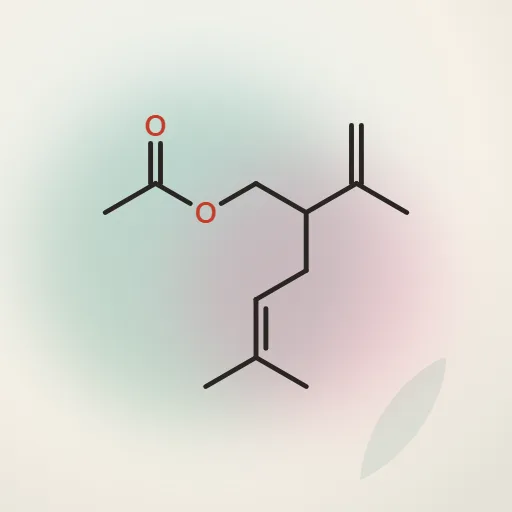
In short
Lavandulyl acetate is an ester found in lavender oil. It has a fresh, herbal-lavender odour with a fruity touch.
What Lavandulyl Acetate smells like
Lavandulyl acetate is a minor constituent of lavender oil, described in supplier listings as having lavender nuances. Its parent alcohol, lavandulol, is described as a weak floral-herbal odour with a slightly lemon-like, fresh citrus-fruity nuance. No detailed independent description of the acetate itself was found, so its profile here is necessarily brief.
- Leading note
- Herbal lavender
- Faint facets
- Fresh citrus-fruity
- Character
- Fresh, light, herbal
What makes Lavandulyl Acetate distinctive
A lavender constituent rather than a lavender substitute: a light, fresh herbal-lavender note used to add realism to lavender reconstructions.
How Lavandulyl Acetate is used
Used in fine fragrance for lavender nuances and in lavender reconstructions.
Typical role: modifier (used in small amounts to change the character of a blend).
How Lavandulyl Acetate differs from similar materials
- Lavender Oil
- Lavender oil is fuller and floral, built on linalool and linalyl acetate; lavandulyl acetate is one of its minor esters, a lighter herbal note.
Each difference compares the published descriptions of the two materials. Smell varies with grade, supplier and dilution; compare them side by side on blotters before substituting one for another.
Identity and classification
- Type
- Aroma chemical
- Origin
- Occurs in nature
- Odour family
- Aromatic / Floral
- Note position
- Top to heart note
- Physical form at room temperature
- Liquid
- CAS number
- 25905-14-0
- Molecular formula
- C12H20O2
- Molecular weight
- 196.29 g/mol
- IUPAC name
- (5-methyl-2-prop-1-en-2-ylhex-4-enyl) acetate
The CAS number, formula and molecular weight are taken from PubChem compound 30247, whose own record lists this CAS number; checked 19 October 2026.
Safety and compliance
No safety data sheet or hazard classification for lavandulyl acetate was found published: PubChem holds no EU GHS notification for it, and The Good Scents Company lists none. That is an absence of published data, not evidence that it is safe; ask the maker for the safety data sheet of the lot you hold.
This page is general information, not a safety assessment or a specification. Confirm identity, composition, IFRA status and allergen content from your supplier's documents for the lot you hold.
Materials it works with
-

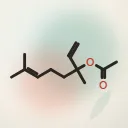 Linalyl Acetate
Aroma chemical · Aromatic / Fruity — fruity, floral, bergamot, lavender
-

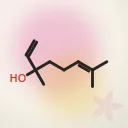 Linalool
Aroma chemical · Floral / Citrus — floral, fresh, woody, citrus
-

 Lavender Oil
Essential oil · Aromatic / Floral — lavender, herbal, floral, fresh
-

 Lavandin Oil (Grosso)
Essential oil · Aromatic / Floral — lavender, camphoraceous, herbal, fresh
Used in formulas and accords
Used in 2 published formulas
Lavandulyl Acetate is an ingredient in 2 perfume formulas in the Formula & Accord Library.
RUŌOD House Originals
Original compositions by RUŌOD House.
Further reading
Questions about Lavandulyl Acetate
Is Lavandulyl Acetate natural or synthetic?
The molecule occurs in nature. Commercial Lavandulyl Acetate may be made by synthesis or obtained from natural sources, so check the supplier's specification if the distinction matters to you.
What is the CAS number of Lavandulyl Acetate?
25905-14-0. It was checked against PubChem on 19 October 2026.
Which published formulas use Lavandulyl Acetate?
Lavandulyl Acetate is used in 2 published formulas in the RUŌOD Lab Formula & Accord Library: Bracken Moon and Lavender in Silk. Each is listed with a link under "Used in formulas and accords" on this page.
Sources
- PubChem — compound 30247, checked 19 October 2026.
- The Good Scents Company — lavandulyl acetate — odour database.
- Wikipedia — Lavandulol — published perfumery reference.
- Olfactory profile: the RUŌOD Lab team's synthesis of the published descriptions above, reviewed 20 October 2026. Evidence: few published descriptions; treat the detail with caution. Classification and the short description: revision 1. Descriptions of odour are judgement, not measurement.