

In short
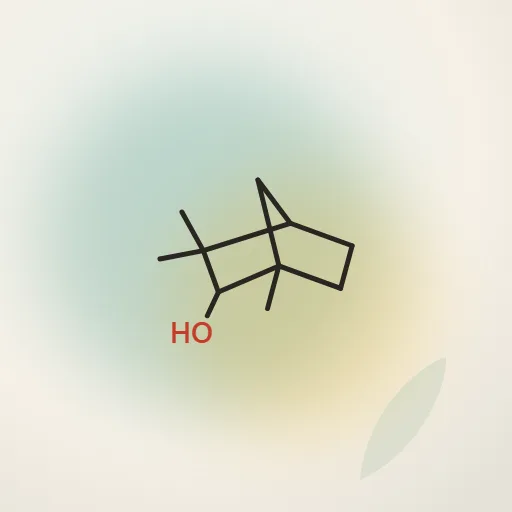
Fenchol is a bicyclic monoterpene alcohol with a camphoraceous, earthy odour and a lime-like freshness. It is a notable constituent of distilled lime oil.
What Fenchol smells like
Fenchol has a clean, cooling, camphoraceous odour, piney with woody-eucalyptol and slight green-herbal-minty nuances at 1%, in ChemicalBook's description; its taste is camphoraceous and piney with an earthy undertone and minty-citrus lime notes. Supplier listings give woody, earthy, citrus-lime; The Good Scents Company camphor, borneol, pine, woody, dry, sweet and lemon. Takasago describes it as powerful and camphor-like, blending well with lemon-lime notes.
- Leading note
- Cool camphor-pine
- Supporting facets
- Lime, earthy
- Faint facets
- Minty
- Character
- Clean, cool, powerful
What makes Fenchol distinctive
Camphor and pine with a lime twist — the note that ties a lime accord to its terpenes.
How Fenchol is used
Used in lime, pine and fresh-herbal accords, and in flavours.
Typical role: modifier (used in small amounts to change the character of a blend).
How Fenchol differs from similar materials
- Fenchone
- Fenchone is warmer and more earthy-bitter; fenchol is cleaner and cooler, with pine and lime.
- Borneol
- Borneol is drier and more angular, camphor-pine with a peppery earthiness; fenchol carries a lime-citrus note.
- Fenchyl Acetate
- Fenchyl acetate is softer and sweeter, fir-like and balsamic; fenchol is the cooler, more camphoraceous alcohol.
Each difference compares the published descriptions of the two materials. Smell varies with grade, supplier and dilution; compare them side by side on blotters before substituting one for another.
Formulation considerations
Low-melting solid; warm gently or predissolve before weighing.
Identity and classification
- Type
- Aroma chemical
- Origin
- Occurs in nature
- Odour family
- Aromatic / Citrus
- Note position
- Top to heart note
- Physical form at room temperature
- Solid
- Also known as
- Fenchyl alcohol, 1,3,3-Trimethylbicyclo[2.2.1]heptan-2-ol
- CAS number
- 1632-73-1
- Molecular formula
- C10H18O
- Molecular weight
- 154.25 g/mol
- IUPAC name
- 1,3,3-trimethylbicyclo[2.2.1]heptan-2-ol
The CAS number, formula and molecular weight are taken from PubChem compound 15406, whose own record lists this CAS number; checked 19 October 2026.
Safety and compliance
Hazard classification of the neat substance, as PubChem summarises it, read 26 October 2026. Companies notifying the ECHA C&L Inventory report it as not meeting the GHS hazard criteria (1,590 of 1,632 reports). Unless it is harmonised, this is the notifiers' own classification, not a binding one.
This page is general information, not a safety assessment or a specification. Confirm identity, composition, IFRA status and allergen content from your supplier's documents for the lot you hold.
Materials it works with
-

 Lime Oil (Expressed)
Essential oil · Citrus / Green — citrus, green, zesty, aromatic
-

 Fenchyl Acetate
Aroma chemical · Aromatic / Citrus — piney, fresh, herbal, citrus
-
 Borneol
Aroma chemical · Aromatic / Woody — camphoraceous, earthy, piney, woody
-

 Eucalyptol
Aroma chemical · Aromatic / Green — camphoraceous, cool, medicinal
Fenchol is also suggested as a partner on the pages for Fenchone.
Used in formulas and accords
Not currently used in any published formula.
The Formula & Accord Library lists Fenchol here as soon as a published formula, accord or base uses it.
Further reading
Questions about Fenchol
Is Fenchol natural or synthetic?
The molecule occurs in nature. Commercial Fenchol may be made by synthesis or obtained from natural sources, so check the supplier's specification if the distinction matters to you.
What is the CAS number of Fenchol?
1632-73-1. It was checked against PubChem on 19 October 2026.
Sources
- PubChem — compound 15406, checked 19 October 2026.
- PubChem — GHS classification (the ECHA C&L Inventory notifications and any harmonised EU entry), read 26 October 2026.
- ChemicalBook — fenchol (CAS 1632-73-1) — odour database.
- The Good Scents Company — fenchol (with Takasago's description) — odour database.
- Parchem — alpha-fenchol — distributor's description.
- Olfactory profile: the RUŌOD Lab team's synthesis of the published descriptions above, reviewed 21 October 2026. Evidence: more than one published description. Classification and the short description: revision 1. Descriptions of odour are judgement, not measurement.