

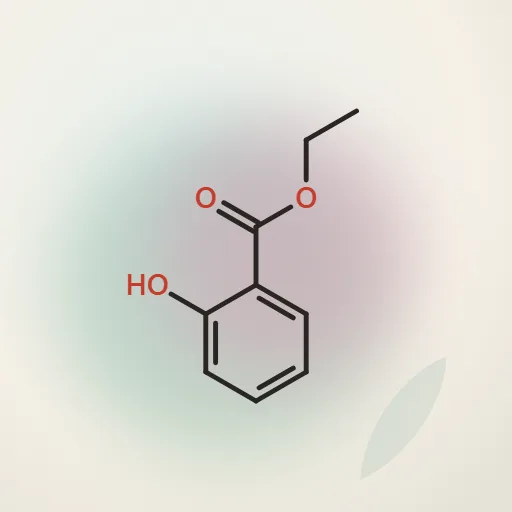
In short
Ethyl salicylate is a salicylate ester with a softer, sweeter wintergreen odour than methyl salicylate. It has a gentle floral facet.
What Ethyl Salicylate smells like
Ethyl salicylate is a gentler wintergreen. Perfumer & Flavorist notes that methyl and ethyl salicylate both read instantly as wintergreen, with the methyl ester the one with a harsh, phenolic undertone; a distributor describes ethyl salicylate as a sweet, balsamic aroma with a minty-wintergreen character and subtle fruity-floral undertones, another as heavy, floral and fruity, a blender for ylang-ylang.
- Leading note
- Soft wintergreen
- Supporting facets
- Balsamic, fruity-floral
- Faint facets
- Minty
- Character
- Soft, sweet, rounded, warm
What makes Ethyl Salicylate distinctive
Wintergreen without the clinic: softer, sweeter and more floral than methyl salicylate.
How Ethyl Salicylate is used
Used for wintergreen effects and to add balsamic sweetness to floral and fruity compositions, including as a blender for ylang-ylang.
Typical role: modifier (used in small amounts to change the character of a blend).
How Ethyl Salicylate differs from similar materials
- Methyl Salicylate
- Perfumer & Flavorist notes the methyl ester's slightly harsh, phenolic undertone; ethyl salicylate is softer, sweeter and more floral-fruity. (compared directly by a cited source)
An asterisk marks a difference that a cited source states directly. The others compare the published descriptions of each material. Smell varies with grade, supplier and dilution; compare them side by side on blotters before substituting one for another.
Identity and classification
- Type
- Aroma chemical
- Origin
- Synthetic
- Odour family
- Aromatic / Floral
- Note position
- Heart note
- Physical form at room temperature
- Liquid
- CAS number
- 118-61-6
- Molecular formula
- C9H10O3
- Molecular weight
- 166.17 g/mol
- IUPAC name
- ethyl 2-hydroxybenzoate
The CAS number, formula and molecular weight are taken from PubChem compound 8365, whose own record lists this CAS number; checked 19 October 2026.
Safety and compliance
Hazard classification of the neat substance, as PubChem summarises it, read 26 October 2026. Companies notifying the ECHA C&L Inventory classify it (1,680 reports): H302 harmful if swallowed (100% of reports). Unless it is harmonised, this is the notifiers' own classification, not a binding one.
This page is general information, not a safety assessment or a specification. Confirm identity, composition, IFRA status and allergen content from your supplier's documents for the lot you hold.
Materials it works with
-

 Methyl Salicylate
Aroma chemical · Aromatic / Floral — wintergreen, minty, sweet, medicinal
-
 Benzyl Salicylate
Aroma chemical · Floral / Powdery — balsamic, floral, faint, sweet
-

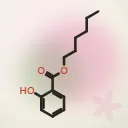 Hexyl Salicylate
Aroma chemical · Floral / Green — green, floral, herbal
-

 Ylang Ylang Oil
Essential oil · Floral / Spicy — floral, creamy, sweet, banana
Used in formulas and accords
Not currently used in any published formula.
The Formula & Accord Library lists Ethyl Salicylate here as soon as a published formula, accord or base uses it.
Further reading
Questions about Ethyl Salicylate
Is Ethyl Salicylate natural or synthetic?
Ethyl Salicylate is synthetic — it is made by chemical synthesis.
What is the CAS number of Ethyl Salicylate?
118-61-6. It was checked against PubChem on 19 October 2026.
Sources
- PubChem — compound 8365, checked 19 October 2026.
- PubChem — GHS classification (the ECHA C&L Inventory notifications and any harmonised EU entry), read 26 October 2026.
- Perfumer & Flavorist — Flavor bites: ethyl salicylate — published literature.
- Fraterworks — ethyl salicylate — distributor's description.
- The Good Scents Company — ethyl salicylate — odour database.
- Olfactory profile: the RUŌOD Lab team's synthesis of the published descriptions above, reviewed 20 October 2026. Evidence: more than one published description. Classification and the short description: revision 1. Descriptions of odour are judgement, not measurement.