
In short
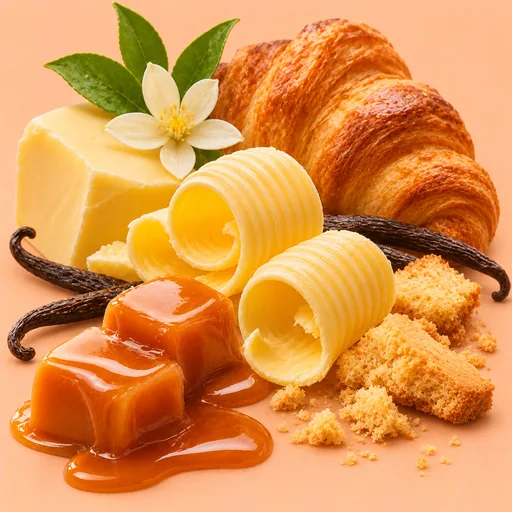
Diacetyl is butane-2,3-dione, the molecule behind the smell of butter. It is intensely buttery in dilution and is used in traces for creamy, buttery and caramel effects in gourmand fragrances.
What Diacetyl smells like
JECFA records a yellow to yellow-green liquid with a powerful, buttery odour in very dilute solution, and the Hazardous Substances Data Bank a very strong buttery odour on dilution. Fraterworks finds unmistakable buttery sweetness — melted butter meeting warm caramel — pungent even in minute amounts, with pastry-like warmth and fruity undertones. Wikipedia notes it occurs naturally in alcoholic beverages and some cheeses.
- Leading note
- Butter
- Supporting facets
- Caramel, pastry, pungent
- Faint facets
- Fruity
- Character
- Pungent, powerful, creamy
What makes Diacetyl distinctive
The smell of butter itself, from a four-carbon molecule, and effective in tiny amounts.
Concentration and dilution
Pungent and chlorine-like neat; only in high dilution does the buttery character come through.
Where the descriptions disagree: Safety sources describe a chlorine-like or quinone-like odour, which is the neat vapour; the buttery note is reported in dilution.
How Diacetyl is used
Fraterworks uses it with extreme restraint in vanilla compositions for creamy depth, with vanillin and tonka for butterscotch, and in gourmand, coffee and chocolate reconstructions.
Typical role: modifier (used in small amounts to change the character of a blend).
How Diacetyl differs from similar materials
- Butter CO2 Extract
- Butter CO2 is the natural extract with a fatty, milky, rounded butter; diacetyl is the single sharp, diffusive butter molecule.
- Butyl Butyryllactate
- Butyl butyryllactate is a soft, creamy, cheesy-buttery ester; diacetyl is far more pungent and powerful, the butter top note.
Each difference compares the published descriptions of the two materials. Smell varies with grade, supplier and dilution; compare them side by side on blotters before substituting one for another.
Formulation considerations
Never smell it neat. Chronic inhalation of its vapour causes the lung disease bronchiolitis obliterans ("popcorn lung"); handle it only with good ventilation. Extremely strong: use traces.
Identity and classification
- Type
- Aroma chemical
- Origin
- Occurs in nature
- Odour family
- Gourmand
- Note position
- Top note
- Physical form at room temperature
- Liquid
- Also known as
- Butane-2,3-dione, Butanedione, 2,3-Butanedione
- CAS number
- 431-03-8
- Molecular formula
- C4H6O2
- Molecular weight
- 86.09 g/mol
- IUPAC name
- butane-2,3-dione
The CAS number, formula and molecular weight are taken from PubChem compound 650, whose own record lists this CAS number; checked 7 November 2026.
Safety and compliance
Hazard classification of the neat substance, as PubChem summarises it, read 7 November 2026. Companies notifying the ECHA C&L Inventory classify it (1,782 reports): H315 causes skin irritation (99.7% of reports); H225 highly Flammable liquid and vapor (98.3% of reports); H318 causes serious eye damage (97.4% of reports); H331 toxic if inhaled (97.1% of reports); H302 harmful if swallowed (87.4% of reports); H373 may causes damage to organs through prolonged or repeated exposure (84.1% of reports); H317 may cause an allergic skin reaction (84% of reports). 6 of the reports find it does not meet the hazard criteria. A skin sensitiser classification concerns handling the neat material and the dose in a finished product; the IFRA Standards, where they apply, set the limits. Unless it is harmonised, this is the notifiers' own classification, not a binding one.
This page is general information, not a safety assessment or a specification. Confirm identity, composition, IFRA status and allergen content from your supplier's documents for the lot you hold.
Materials it works with
-
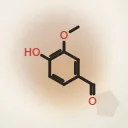 Vanillin
Aroma chemical · Gourmand / Amber — vanilla, sweet, creamy
-
 Tonka Bean Absolute
Absolute · Gourmand / Powdery — coumarinic, hay, almond, sweet
-
 Butter CO2 Extract
CO2 extract · Gourmand — buttery, creamy, milky, butyric
-
 Beeswax Absolute
Absolute · Gourmand / Animalic — beeswax, honey, soft, waxy
-
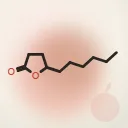 gamma-Decalactone
Aroma chemical · Fruity / Gourmand — peach, fruity, creamy
-
 Benzoin Resinoid (Siam)
Resinoid · Amber / Gourmand — vanillic, balsamic, sweet, warm
Used in formulas and accords
Not currently used in any published formula.
The Formula & Accord Library lists Diacetyl here as soon as a published formula, accord or base uses it.
Further reading
Questions about Diacetyl
Is Diacetyl natural or synthetic?
The molecule occurs in nature. Commercial Diacetyl may be made by synthesis or obtained from natural sources, so check the supplier's specification if the distinction matters to you.
What is the CAS number of Diacetyl?
431-03-8. It was checked against PubChem on 7 November 2026.
Sources
- PubChem — compound 650, checked 7 November 2026.
- PubChem — GHS classification (the ECHA C&L Inventory notifications and any harmonised EU entry), read 7 November 2026.
- PubChem — butanedione (JECFA and HSDB descriptions) (CID 650) — odour database.
- Fraterworks — Diacetyl — distributor's description.
- Wikipedia — Diacetyl — published perfumery reference.
- Olfactory profile: the RUŌOD Lab team's synthesis of the published descriptions above, reviewed 7 November 2026. Evidence: several independent published descriptions, which agree. Classification and the short description: revision 1. Descriptions of odour are judgement, not measurement.