
In short
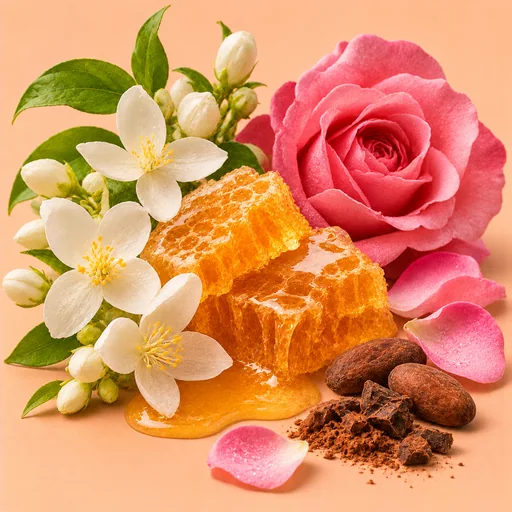
Benzyl phenylacetate is an ester with a sweet, honeyed floral odour. It gives a complex, slightly animalic honey interwoven with jasmine and rose, and is used for honey accords and warm white florals.
What Benzyl Phenylacetate smells like
JECFA records a colourless liquid with a sweet, honey-floral odour, and the US National Toxicology Program a clear liquid with a honey-like odour. Fraterworks finds golden honey with the waxy, slightly fermented, animalic warmth of real honeycomb, interwoven with lush jasmine and rose, and a subtle cocoa undertone that keeps the sweetness from cloying.
- Leading note
- Floral honey
- Supporting facets
- Jasmine, rose, waxy
- Faint facets
- Cocoa, animalic
- Character
- Sweet, warm, rich
What makes Benzyl Phenylacetate distinctive
Honey with flowers in it: honeycomb rather than honey water, and floral where phenylacetic acid is animal.
How Benzyl Phenylacetate is used
Fraterworks uses it for honey accords, in white florals for warm sweetness, in orientals with resins and balsams, and in tobacco and leather accords.
Typical role: modifier (used in small amounts to change the character of a blend); fixative (slow to evaporate; helps a blend last and holds lighter notes).
How Benzyl Phenylacetate differs from similar materials
- Phenylethyl Phenylacetate
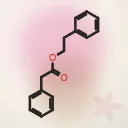
- Phenylethyl phenylacetate is the rosier, more apricot-tea honey; benzyl phenylacetate is more jasmine-floral, waxier and slightly cocoa-like.
Each difference compares the published descriptions of the two materials. Smell varies with grade, supplier and dilution; compare them side by side on blotters before substituting one for another.
Identity and classification
- Type
- Aroma chemical
- Origin
- Synthetic
- Odour family
- Floral / Gourmand
- Note position
- Heart to base note
- Physical form at room temperature
- Liquid
- Also known as
- Benzyl 2-phenylacetate
- CAS number
- 102-16-9
- Molecular formula
- C15H14O2
- Molecular weight
- 226.27 g/mol
- IUPAC name
- benzyl 2-phenylacetate
The CAS number, formula and molecular weight are taken from PubChem compound 60999, whose own record lists this CAS number; checked 7 November 2026.
Safety and compliance
Hazard classification of the neat substance, as PubChem summarises it, read 7 November 2026. Companies notifying the ECHA C&L Inventory report it as not meeting the GHS hazard criteria (1,636 of 1,676 reports). Unless it is harmonised, this is the notifiers' own classification, not a binding one.
This page is general information, not a safety assessment or a specification. Confirm identity, composition, IFRA status and allergen content from your supplier's documents for the lot you hold.
Materials it works with
-
 Phenylethyl Phenylacetate
Aroma chemical · Floral / Gourmand — honey, rose, balsamic
-
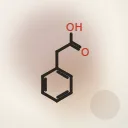 Phenylacetic Acid
Aroma chemical · Animalic / Gourmand — honey, animalic, sweet, waxy
-
 Jasmine Absolute (Grandiflorum)
Absolute · Floral / Animalic — jasmine, floral, indolic, fruity
-
 Beeswax Absolute
Absolute · Gourmand / Animalic — beeswax, honey, soft, waxy
-
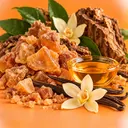
 Benzoin Resinoid (Siam)
Resinoid · Amber / Gourmand — vanillic, balsamic, sweet, warm
-
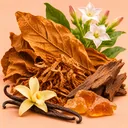
 Tobacco Absolute
Absolute · Leather / Gourmand — tobacco, honey, hay, leathery
Used in formulas and accords
Not currently used in any published formula.
The Formula & Accord Library lists Benzyl Phenylacetate here as soon as a published formula, accord or base uses it.
Further reading
Questions about Benzyl Phenylacetate
Is Benzyl Phenylacetate natural or synthetic?
Benzyl Phenylacetate is synthetic — it is made by chemical synthesis.
What is the CAS number of Benzyl Phenylacetate?
102-16-9. It was checked against PubChem on 7 November 2026.
Sources
- PubChem — compound 60999, checked 7 November 2026.
- PubChem — GHS classification (the ECHA C&L Inventory notifications and any harmonised EU entry), read 7 November 2026.
- PubChem — benzyl phenylacetate (JECFA and NTP descriptions) (CID 60999) — odour database.
- Fraterworks — Benzyl Phenylacetate — distributor's description.
- Olfactory profile: the RUŌOD Lab team's synthesis of the published descriptions above, reviewed 7 November 2026. Evidence: several independent published descriptions, which agree. Classification and the short description: revision 1. Descriptions of odour are judgement, not measurement.