

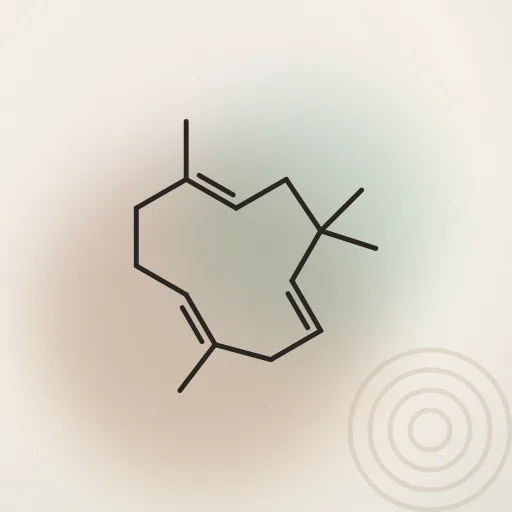
In short
alpha-Humulene is a sesquiterpene and an isomer of beta-caryophyllene, notable in hops, sage and ginseng. It has a woody, earthy and herbal odour.
What alpha-Humulene smells like
alpha-Humulene is named for the hop (Humulus lupulus), in which it occurs. The Good Scents Company lists a supplier description of woody, oceanic-watery and spicy-clove; Van Aroma gives woody and slightly bitter; BASF's Isobionics sheet dry, woody and resinous with cedar and piney tones and slightly grapefruit and herbal notes. A hop-like, beery edge is reported mainly by non-perfumery sources.
- Leading note
- Dry woody
- Supporting facets
- Resinous, piney
- Faint facets
- Spicy-clove, watery, hoppy
- Character
- Dry, bitter, soft
What makes alpha-Humulene distinctive
The hop's own sesquiterpene: dry, slightly bitter wood with a resinous edge.
Where the descriptions disagree: Descriptions range from oceanic-watery and spicy to dry, resinous and bitter.
How alpha-Humulene is used
Used as a dry woody modifier and in hop and herbal reconstructions.
Typical role: modifier (used in small amounts to change the character of a blend).
How alpha-Humulene differs from similar materials
- Hop Oil
- Hop oil combines humulene with myrcene's fresh, citrusy note; alpha-humulene alone is dry, bitter wood. (compared directly by a cited source)
- beta-Caryophyllene
- beta-Caryophyllene, its close relative, is drier and more clove-like; humulene is more resinous and bitter.
An asterisk marks a difference that a cited source states directly. The others compare the published descriptions of each material. Smell varies with grade, supplier and dilution; compare them side by side on blotters before substituting one for another.
Identity and classification
- Type
- Aroma chemical
- Origin
- Occurs in nature
- Odour family
- Woody / Aromatic
- Note position
- Heart to base note
- Physical form at room temperature
- Liquid
- Also known as
- Humulene, alpha-Caryophyllene
- CAS number
- 6753-98-6
- Molecular formula
- C15H24
- Molecular weight
- 204.35 g/mol
- IUPAC name
- (1E,4E,8E)-2,6,6,9-tetramethylcycloundeca-1,4,8-triene
The CAS number, formula and molecular weight are taken from PubChem compound 5281520, whose own record lists this CAS number; checked 19 October 2026.
Safety and compliance
Hazard classification of the neat substance, as PubChem summarises it, read 26 October 2026. Companies notifying the ECHA C&L Inventory classify it (306 reports): H315 causes skin irritation (52.9% of reports); H319 causes serious eye irritation (52.9% of reports); H335 may cause respiratory irritation (52% of reports). 131 of the reports find it does not meet the hazard criteria. Unless it is harmonised, this is the notifiers' own classification, not a binding one.
This page is general information, not a safety assessment or a specification. Confirm identity, composition, IFRA status and allergen content from your supplier's documents for the lot you hold.
Materials it works with
-

 beta-Caryophyllene
Aroma chemical · Spicy / Woody — spicy, woody, peppery, dry
-

 Hop Oil
Essential oil · Green / Spicy — green, herbal, spicy, resinous
-

 Myrcene
Aroma chemical · Green / Aromatic — herbal, balsamic, green, resinous
-

 Sage Oil (Dalmatian)
Essential oil · Aromatic / Green — herbal, camphoraceous, fresh, warm
Used in formulas and accords
Not currently used in any published formula.
The Formula & Accord Library lists alpha-Humulene here as soon as a published formula, accord or base uses it.
Further reading
Questions about alpha-Humulene
Is alpha-Humulene natural or synthetic?
The molecule occurs in nature. Commercial alpha-Humulene may be made by synthesis or obtained from natural sources, so check the supplier's specification if the distinction matters to you.
What is the CAS number of alpha-Humulene?
6753-98-6. It was checked against PubChem on 19 October 2026.
Sources
- PubChem — compound 5281520, checked 19 October 2026.
- PubChem — GHS classification (the ECHA C&L Inventory notifications and any harmonised EU entry), read 26 October 2026.
- The Good Scents Company — alpha-humulene — odour database.
- Cosmetics & Toiletries — Isobionics natural alpha-humulene 90 — manufacturer's description.
- UL Prospector — Alpha humulene (Van Aroma) — distributor's description.
- Olfactory profile: the RUŌOD Lab team's synthesis of the published descriptions above, reviewed 26 October 2026. Evidence: more than one published description. Classification and the short description: revision 1. Descriptions of odour are judgement, not measurement.