

In short
Acetal CD is the glyceryl acetal of phenylacetaldehyde, a soft, long-lasting floral-green material with nuances of hyacinth, rose and honey. It gives a gentle floral heart where restricted florals are hard to use.
What Acetal CD smells like
Givaudan places Acetal CD in the floral family with green, honey and rose notes, blending with hyacinth, rose and lilac, with green accords and in linden blossom and chypre compositions; it lasts two days on a blotter. JECFA records a colourless viscous liquid with a very faint, sweet-green rosy odour. Fraterworks describes a light floralising material for a soft but long-lasting heart, with delicate nuances of dried rose, honey, black tea and hyacinth.
- Leading note
- Soft hyacinth-rose
- Supporting facets
- Honey, green, dried rose
- Faint facets
- Black tea
- Character
- Faint, soft, tenacious
What makes Acetal CD distinctive
Phenylacetaldehyde's green-honeyed hyacinth tamed: soft and stable where the aldehyde itself is sharp and reactive.
How Acetal CD is used
Fraterworks suggests it can be overdosed in a soft floral heart where traditional florals are heavily restricted; Givaudan uses it in hyacinth, rose, lilac, linden and chypre compositions.
Typical role: blender (smooths the joins between other materials).
How Acetal CD differs from similar materials
- Phenylacetaldehyde Dimethyl Acetal
- Both tame phenylacetaldehyde as an acetal. The dimethyl acetal is greener and more pungent, a sharper hyacinth; Acetal CD is far fainter, softer and longer-lasting, with honey and dried rose.
Each difference compares the published descriptions of the two materials. Smell varies with grade, supplier and dilution; compare them side by side on blotters before substituting one for another.
Formulation considerations
Faint in odour; its value is softness and persistence rather than impact.
Identity and classification
- Type
- Aroma chemical
- Origin
- Synthetic
- Odour family
- Floral / Green
- Note position
- Heart note
- Physical form at room temperature
- Viscous liquid
- Also known as
- Phenylacetaldehyde glyceryl acetal, Hyacinth acetals
- CAS number
- 29895-73-6
- Molecular formula
- C11H14O3
- Molecular weight
- 194.23 g/mol
- IUPAC name
- (2-benzyl-1,3-dioxolan-4-yl)methanol
The CAS number, formula and molecular weight are taken from PubChem compound 21895, whose own record lists this CAS number; checked 7 November 2026.
Safety and compliance
Hazard classification of the neat substance, as PubChem summarises it, read 7 November 2026. Companies notifying the ECHA C&L Inventory classify it (1,839 reports): H302 harmful if swallowed (100% of reports). Unless it is harmonised, this is the notifiers' own classification, not a binding one.
This page is general information, not a safety assessment or a specification. Confirm identity, composition, IFRA status and allergen content from your supplier's documents for the lot you hold.
Materials it works with
-

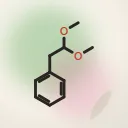 Phenylacetaldehyde Dimethyl Acetal
Aroma chemical · Green / Floral — green, hyacinth, earthy, floral
-

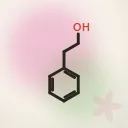 Phenylethyl Alcohol
Aroma chemical · Floral / Green — rose, honeyed, soft, floral
-
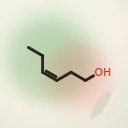 cis-3-Hexenol
Aroma chemical · Green / Fruity — green, cut grass, leafy, fresh
-
 Linden Blossom Absolute
Absolute · Floral / Green — honey, green, floral, hay
-

 Hydroxycitronellal
Aroma chemical · Floral / Green — muguet, floral, soft, sweet
Used in formulas and accords
Not currently used in any published formula.
The Formula & Accord Library lists Acetal CD here as soon as a published formula, accord or base uses it.
Further reading
Questions about Acetal CD
Is Acetal CD natural or synthetic?
Acetal CD is synthetic — it is made by chemical synthesis.
What is the CAS number of Acetal CD?
29895-73-6. It was checked against PubChem on 7 November 2026.
Sources
- PubChem — compound 21895, checked 7 November 2026.
- PubChem — GHS classification (the ECHA C&L Inventory notifications and any harmonised EU entry), read 7 November 2026.
- Givaudan — Acetal CD — manufacturer's description.
- Fraterworks — Acetal CD — distributor's description.
- PubChem — 2-benzyl-1,3-dioxolane-4-methanol (JECFA description) (CID 21895) — odour database.
- Olfactory profile: the RUŌOD Lab team's synthesis of the published descriptions above, reviewed 7 November 2026. Evidence: several independent published descriptions, which agree. Classification and the short description: revision 1. Descriptions of odour are judgement, not measurement.