


In short
Tarragon oil is distilled from Artemisia dracunculus. It gives a sweet, aniseed-green herbal note.
What Tarragon Oil smells like
Tarragon oil is sweet, spicy and anise-like with a green, herbaceous edge. A supplier gives sweet anise, spice, woody and herbaceous, like anethole and sweet basil but less sweet; a chemical database a delicate, spicy odour like liquorice and sweet basil. Estragole is its main constituent and largely determines its character. Glossaries note a green-spicy quality with celery-like undertones, and perfumery sources warn that it resinifies with age and that a cut oil lacks the herbaceous undertone.
- Leading note
- Sweet green anise
- Clear facets
- Herbaceous
- Supporting facets
- Celery, spicy
- Faint facets
- Woody
- Character
- Fresh, sweet, green
What makes Tarragon Oil distinctive
Anise with a green, celery-like edge — less sweet than anethole, more herbal than star anise.
How Tarragon Oil is used
Used in herbal, fougère and green-spicy compositions within IFRA's estragole limits, and in flavours.
Typical role: modifier (used in small amounts to change the character of a blend).
How Tarragon Oil differs from similar materials
- Estragole
- Estragole is the oil's main constituent alone; the oil adds a green, herbaceous, celery-like edge. (compared directly by a cited source)
- Basil Oil
- Estragole-type basil resembles tarragon; linalool basil is fresher and more floral. (compared directly by a cited source)
- Sweet Fennel Oil
- Fennel is anethole-led, sweeter, with fenchone's camphor edge; tarragon is estragole-led, greener, with celery.
An asterisk marks a difference that a cited source states directly. The others compare the published descriptions of each material. Smell varies with grade, supplier and dilution; compare them side by side on blotters before substituting one for another.
Formulation considerations
Typically high in estragole, which is covered by an IFRA Standard; check the supplier composition.
Identity and classification
- Type
- Essential oil
- Origin
- Natural
- Odour family
- Aromatic / Spicy
- Note position
- Top note
- Physical form at room temperature
- Liquid
- Also known as
- Estragon oil
- Botanical source
- Artemisia dracunculus L.
- CAS number
- 8016-88-4
The CAS number was checked on 19 October 2026 against a PubChem substance record that gives it for this material. A natural material is a mixture, so it has no single formula; its composition varies with origin and processing.
Safety and compliance
This page is general information, not a safety assessment or a specification. Confirm identity, composition, IFRA status and allergen content from your supplier's documents for the lot you hold.
Materials it works with
-
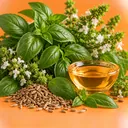
 Basil Oil
Essential oil · Aromatic / Spicy — herbal, green, aniseed, fresh
-

 Lavender Oil
Essential oil · Aromatic / Floral — lavender, herbal, floral, fresh
-
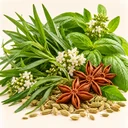
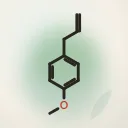 Estragole
Aroma chemical · Aromatic / Green — anise, tarragon, herbal, sweet
Used in formulas and accords
Not currently used in any published formula.
The Formula & Accord Library lists Tarragon Oil here as soon as a published formula, accord or base uses it.
Further reading
Questions about Tarragon Oil
Is Tarragon Oil natural or synthetic?
Tarragon Oil is natural. It is a volatile oil obtained from plant material by steam distillation or, for citrus peels, by cold expression.
What is the CAS number of Tarragon Oil?
8016-88-4, the registry number for the essential oil as a substance rather than a single molecule. It was checked against PubChem on 19 October 2026.
Sources
- PubChem — substance 135358337, checked 19 October 2026.
- The Good Scents Company — tarragon oil — odour database.
- ChemicalBook — tarragon oil (CAS 8016-88-4) — odour database.
- Premiere Peau — Tarragon — published perfumery reference.
- Olfactory profile: the RUŌOD Lab team's synthesis of the published descriptions above, reviewed 21 October 2026. Evidence: more than one published description. Classification and the short description: revision 1. Descriptions of odour are judgement, not measurement.