

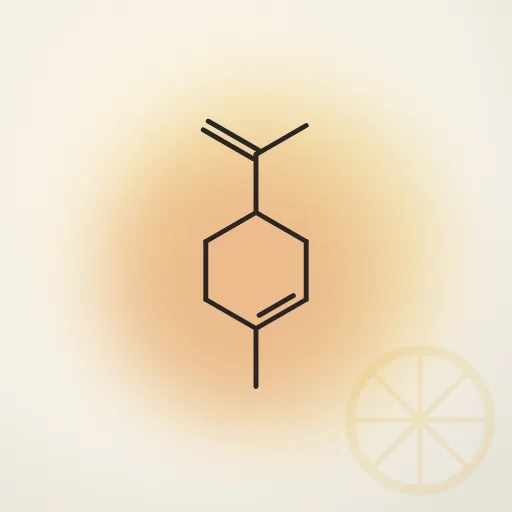
In short
d-Limonene is the main constituent of most citrus peel oils and is usually obtained from orange oil. It gives a light, fresh orange note and is used as a cheap, volatile citrus building block.
What d-Limonene smells like
d-Limonene, the main constituent of most citrus peel oils, smells light, fresh and sweet, with a strong resemblance to orange peel oil. Suppliers describe a fresh, light, sweet citrus odour, or orange peel, lemon zest and juicy citrus. On its own it has little body, and how strong it seems is judged differently — one technical sheet calls it a strong citrus, a fragrance supplier rates it moderate. Its mirror-image form, l-limonene, is sharper and more turpentine-like, and the racemic dipentene is a piney-citrus blend.
- Leading note
- Light orange peel
- Supporting facets
- Sweet
- Faint facets
- Lemon zest
- Character
- Light, fresh, sweet, thin
What makes d-Limonene distinctive
It is the bulk of a citrus oil without its personality: fresh orange peel, but thin. The minor constituents — aldehydes, esters, sulphur compounds and sesquiterpenes such as valencene and nootkatone — are what make an orange, a grapefruit or a lemon recognisably itself.
Where the descriptions disagree: Its strength is judged differently: strong in one technical sheet, moderate in a fragrance supplier's rating.
How d-Limonene is used
Used as a fresh citrus top note and as the base of citrus reconstructions, usually blended with longer-lasting materials because its own persistence is short.
Typical role: lift (adds diffusion and radiance, especially at the top).
How d-Limonene differs from similar materials
- gamma-Terpinene
- One supplier describes gamma-terpinene as more herbal than limonene; it is lime- and thyme-like and oilier, where limonene is plain, sweet orange peel. (compared directly by a cited source)
- Valencene
- Valencene is the sweet, woody orange sesquiterpene that lasts for days; limonene is the light, fleeting orange-peel top.
- Sweet Orange Oil
- Sweet orange oil is mostly limonene, but its trace aldehydes and esters give it the juicy, rounded character that limonene alone lacks.
- Limonene (isomer not specified)
- The unspecified record is for limonene whose isomer is not stated; d-limonene is the defined, orange-peel isomer that most citrus oils contain.
An asterisk marks a difference that a cited source states directly. The others compare the published descriptions of each material. Smell varies with grade, supplier and dilution; compare them side by side on blotters before substituting one for another.
Formulation considerations
Oxidises in air to hydroperoxides that are skin sensitisers, which is why IFRA sets a specification on its peroxide value; store with an antioxidant, cold and with little headspace. Limonene is a declarable allergen.
Identity and classification
- Type
- Aroma chemical
- Origin
- Occurs in nature
- Odour family
- Citrus / Fruity
- Note position
- Top note
- Physical form at room temperature
- Liquid
- Also known as
- (R)-(+)-Limonene
- CAS number
- 5989-27-5
- Molecular formula
- C10H16
- Molecular weight
- 136.23 g/mol
- IUPAC name
- (4R)-1-methyl-4-prop-1-en-2-ylcyclohexene
The CAS number, formula and molecular weight are taken from PubChem compound 440917, whose own record lists this CAS number; checked 19 October 2026.
Safety and compliance
The IFRA Standards Library lists a Standard covering d-Limonene:
- "Limonene" — Specification, 29th Amendment, published 1995-01
Limits differ by product category and are set out in the Standard itself; this page does not reproduce them. The list above reflects the library as read on 19 October 2026.
d-Limonene is one of the 26 fragrance allergens listed individually in Annex III of the EU Cosmetics Regulation (label name: Limonene), which must be named on cosmetic labels above 0.001% in leave-on and 0.01% in rinse-off products. Regulation (EU) 2023/1545 extended the list; see the fragrance allergens list.
Hazard classification of the neat substance, as PubChem summarises it, read 26 October 2026. It has a harmonised EU classification (Regulation (EC) No 1272/2008, Annex VI): H226 flammable liquid and vapor; H304 may be fatal if swallowed and enters airways; H315 causes skin irritation; H317 may cause an allergic skin reaction; H400 very toxic to aquatic life; H412 harmful to aquatic life with long lasting effects. Companies notifying the ECHA C&L Inventory classify it (2,981 reports): H317 may cause an allergic skin reaction (100% of reports); H400 very toxic to aquatic life (96% of reports); H410 very toxic to aquatic life with long lasting effects (94.1% of reports); H304 may be fatal if swallowed and enters airways (32.6% of reports); H412 harmful to aquatic life with long lasting effects (12.5% of reports). A skin sensitiser classification concerns handling the neat material and the dose in a finished product; the IFRA Standards, where they apply, set the limits. Unless it is harmonised, this is the notifiers' own classification, not a binding one.
This page is general information, not a safety assessment or a specification. Confirm identity, composition, IFRA status and allergen content from your supplier's documents for the lot you hold.
Materials it works with
-

 Sweet Orange Oil
Essential oil · Citrus / Fruity — citrus, sweet, juicy, orange peel
-
 Citral
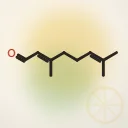
Aroma chemical · Citrus / Green — lemon, sharp, fresh, green
-

 Aldehyde C-10 (Decanal)
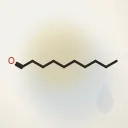
Aroma chemical · Aldehydic / Citrus — aldehydic, waxy, orange peel, fatty
d-Limonene is also suggested as a partner on the pages for alpha-Phellandrene, alpha-Terpinene, Citral Dimethyl Acetal, delta-3-Carene, Limonene (isomer not specified) and Perillaldehyde.
Used in formulas and accords
Used in 6 published formulas
d-Limonene is an ingredient in 1 perfume formula and 5 accords in the Formula & Accord Library.
Community formulas
RUŌOD House Originals
Original compositions by RUŌOD House.
Further reading
Questions about d-Limonene
Is d-Limonene natural or synthetic?
The molecule occurs in nature. Commercial d-Limonene may be made by synthesis or obtained from natural sources, so check the supplier's specification if the distinction matters to you.
What is the CAS number of d-Limonene?
5989-27-5. It was checked against PubChem on 19 October 2026.
Which published formulas use d-Limonene?
d-Limonene is used in 6 published formulas in the RUŌOD Lab Formula & Accord Library, including Aperol Spritz Accord, Finger Lime Accord and Orange Soda Sunset. Each is listed with a link under "Used in formulas and accords" on this page.
Is d-Limonene covered by an IFRA Standard?
Yes. The IFRA Standards Library lists a Standard covering it: "Limonene" — Specification, 29th Amendment. The limits depend on the product category; read the Standard itself before formulating.
Sources
- PubChem — compound 440917, checked 19 October 2026.
- PubChem — GHS classification (the ECHA C&L Inventory notifications and any harmonised EU entry), read 26 October 2026.
- IFRA — Standards Library, read 19 October 2026.
- EUR-Lex — Regulation (EC) No 1223/2009, Annex III.
- The Good Scents Company — d-limonene — odour database.
- Fraterworks — d-limonene — distributor's description.
- Wikipedia — Limonene — published perfumery reference.
- Olfactory profile: the RUŌOD Lab team's synthesis of the published descriptions above, reviewed 26 October 2026. Evidence: several independent published descriptions, which agree. Classification and the short description: revision 1. Descriptions of odour are judgement, not measurement.